A wall of white ice can steal freezer space so slowly that you barely notice it. Then a drawer jams, a package will not fit, and the motor seems to run all day. The tempting solution is to attack the frost with a knife or blast it with a hair dryer. Both shortcuts can turn a simple cleaning job into a damaged appliance, an electric shock, or a painful injury.
There is a faster, calmer way. The best freezer defrosting trick uses preparation, gentle warmth, and patience. It will not clear every freezer in exactly five minutes, but it can loosen thick ice quickly without putting the liner or cooling system at risk.
Why Thick Freezer Ice Is Worth Removing
Manual-defrost freezers naturally build frost as moist air enters through the open door. A weak door seal, uncovered food, or frequent opening can speed up the process. Once the layer grows thick, baskets may stop moving and the freezer loses usable room.
Check your model’s manual before starting. Some frost-free units should never need a full manual defrost. Heavy ice in one of those appliances may point to a blocked vent, damaged gasket, or service problem.
The Safe Freezer Defrosting Trick
Gather Everything Before You Switch It Off
You will need insulated coolers or thermal bags, frozen gel packs, several towels, a shallow tray, a plastic scraper, a sponge, and a bowl or pan that can safely hold hot water. Having these ready keeps the food cold and stops meltwater from reaching the floor.
Move the food straight into the coolers. Group frozen packages together because they hold their temperature better as a block. Put raw meat in a separate leakproof bag so its juices cannot touch other food.
Unplug, Protect, and Add Gentle Warmth
- Turn the freezer off and unplug it. Moving the control to “off” may not disconnect electricity, so remove the plug unless the manual says otherwise.
- Open the door, remove loose drawers, and place towels around the base. Set the drain hose or pan as the manual directs.
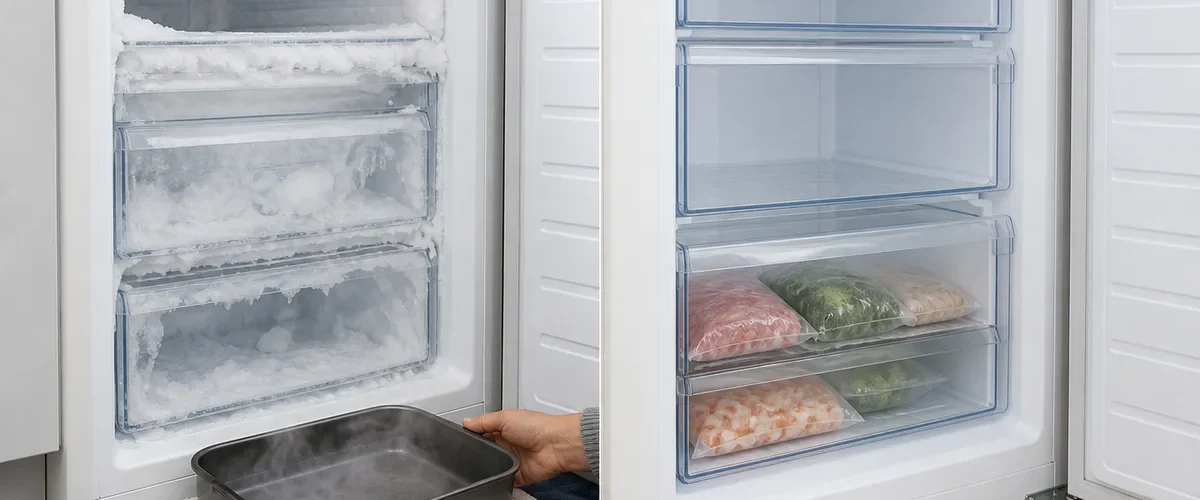
- Place a folded towel or heat-safe board on a shelf, then set a pan of hot, not violently boiling, water on it.
- Close the door for five to ten minutes. The trapped warmth softens the outer layer of ice.
- Open the door and gently lift only the ice that releases with a plastic scraper. Never force it.
- Replace the cooled water and repeat until the remaining frost melts.
This is where the surprising result happens. Large sheets often slide away once warm air reaches the gap behind them. The exact time depends on ice thickness, freezer size, and room temperature, so let the appliance set the pace.
Three Dangerous Shortcuts to Skip
Do not chip with a knife, screwdriver, or ice pick. A sharp tool can puncture the inner wall or a refrigerant line. It can also slip toward your hand.
Do not aim a hair dryer into a wet freezer. Water and a plugged-in electrical tool are a dangerous pair. Concentrated heat can also warp plastic parts.
Do not press a heated metal spatula against the liner. It may melt plastic, damage hidden parts, or burn you. A plastic scraper should guide loose ice, not carve through solid frost.
Clean and Restart It the Right Way
When the ice is gone, wipe up every pool of water. Wash the interior with warm water and a little mild dish detergent, unless the manual recommends another mixture. Use a clean damp cloth to rinse, then dry the walls, shelves, drain, and door seal completely. Never combine cleaners.
Reconnect the freezer and allow it to return to its normal setting before restocking. An appliance thermometer removes the guesswork. A freezer intended for long-term storage should reach 0°F (-18°C).
Keep the Food Safe While You Work
Cold food safety matters more than saving a package. The USDA advises that food can generally be refrozen if it still contains ice crystals or remains at 40°F (4°C) or below. Perishable food held above that temperature for more than two hours should be discarded. Do not taste food to decide whether it is safe.
If the job is taking longer than expected, add more ice packs or move the food to another working freezer. Soft, melted ice cream should go. When in doubt about a high-risk item, throw it out.
Stop the Ice From Coming Back So Quickly
- Check that nothing prevents the door from closing.
- Clean crumbs from the gasket with mild soapy water.
- Replace a torn or flattened seal.
- Cool hot food before freezing it in covered containers.
- Label packages so the door stays open for less time.
- Defrost when the manual’s recommended frost thickness appears.
The real freezer defrosting trick is not brute force. It is giving gentle heat a controlled place to work while the power stays disconnected. A little planning can turn a thick frozen wall into loose sheets, a dry interior, and a freezer that closes properly again.