A plain wooden clothespin can make a room smell fresher in minutes, but only if it is placed on the right kind of vent. The popular trick is simple: add a tiny amount of fragrance to the wood and clip it where moving air can carry the scent.
What videos often leave out is the difference between a warm-air register, a return grille, and a hot radiator. That difference turns a clever little idea into either a gentle home fragrance or a real safety problem.
Here is the careful version that keeps the charm and removes the risk.
Why the Wooden Clothespin Works
Unfinished wood is porous. A drop of fragrance can soak into it, then evaporate slowly as room air passes around the pin. The clothespin is easy to remove, cheap to replace, and less messy than pouring scented liquid into a vent.
The pin does not clean the air or remove an odor source. It simply adds another smell. Before using it, empty trash, wash fabrics, clean pet areas, check damp spots, and replace the heating or cooling filter when required. Fresh air should begin with a clean room.
Choose the Correct Air Outlet
Use this trick only on a cool or mildly warm supply register from a forced-air system. That is the vent that blows conditioned air into the room. The metal should remain comfortable to touch during normal operation.
Do not attach anything to an electric baseboard heater, space heater, wood stove, fireplace, boiler pipe, or a radiator that becomes hot. Do not place a pin inside ductwork. Never block the grille or let the clothespin fall through it.
Avoid the Return Grille
A return grille pulls room air back toward the system and its filter. A clothespin there can restrict airflow, collect dust, or come loose. Supply air should move past the pin; the system should not pull the pin inward.
How to Make the Scented Clothespin
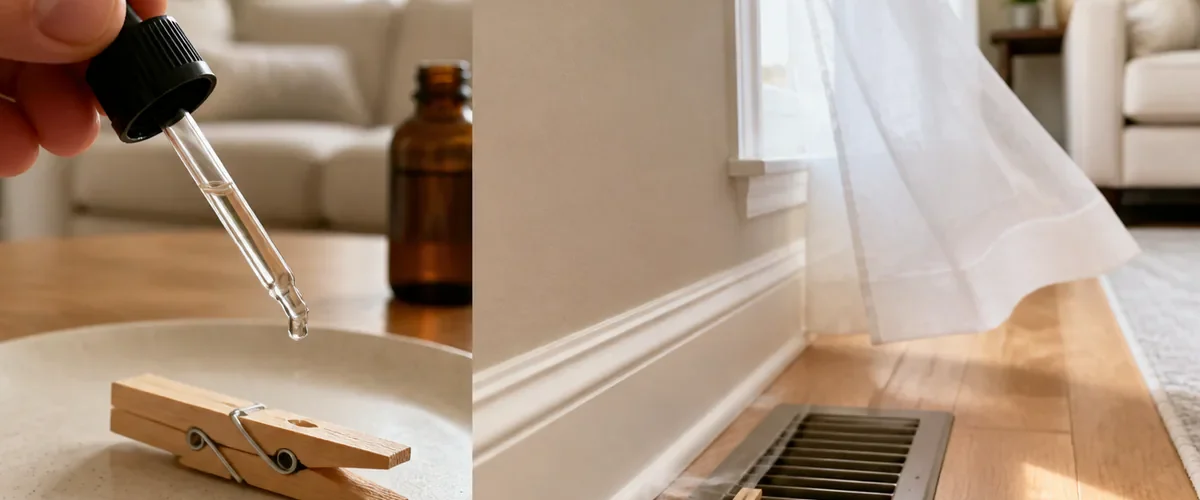
Choose a clean, sturdy, unfinished wooden clothespin. Put it on a washable plate and add only one drop of a fragrance product intended for home scenting. Let the drop soak in completely for at least 15 minutes. The pin should feel dry, not oily.
Clip it securely to the outside edge of a cool supply register without covering more than a tiny part of the opening. Run the fan for a few minutes, then leave the room and return. If the scent is already obvious, do not add more.
Remove the pin when the heating system is serviced, when children or pets can reach it, or when the wood begins to split. Store used pins in a sealed glass jar away from heat.
Test the Finish First
Painted and plastic registers can react to oils. Before attaching the pin, hold it against an unseen scrap of similar material or keep it clipped where only dry wood touches bare metal. If any softening, discoloration, or oily mark appears, remove it and use a fragrance-free method instead.
Use Fragrance With Restraint
Essential oils and fragrance oils are concentrated. Some people develop headaches, coughing, eye irritation, or asthma symptoms around them. Pets may also be sensitive, and safe exposure depends on the specific product and animal.
If anyone in the home has breathing trouble, migraines, allergies, or fragrance sensitivity, skip the trick. A bowl of baking soda cannot replace ventilation, but opening windows briefly, cleaning soft surfaces, and using an appropriate air purifier may improve the room without adding perfume.
Never mix oils, soak the pin, or drip liquid directly onto painted metal. Concentrated oil can stain finishes, soften some plastics, and create a slippery residue.
Mistakes That Spoil the Result
Using a Wet Pin
A dripping clothespin can stain the floor or vent. Excess scent also becomes harsh rather than welcoming. One absorbed drop is a starting point, not a challenge.
Trying to Cover a Serious Smell
A musty, burning, sewage-like, or gas odor needs investigation. Turn off equipment if you smell overheating and contact the right professional. Added fragrance can hide an early warning.
Leaving It Forever
Dust settles on the wood. Inspect the pin every few days and remove it when the scent fades. Clean the register according to the equipment maker’s instructions before using a fresh pin.
Label pins if different fragrances are used. Mixing old oils on the same piece of wood often creates a muddled odor, and an unlabeled scented pin is easy to mistake for an ordinary laundry item.
A Small Trick, Used in the Right Place
The clothespin method works because it is modest. A dry piece of scented wood sits outside a cool supply register and moving air spreads a light fragrance. There is no need to pour, spray, or fill the duct with anything.
Keep it away from hot heaters and return grilles, use one drop, and stop if the scent bothers anyone. Done carefully, that ordinary laundry pin can make the next warm breeze through the room feel surprisingly inviting.