The towel at the back of the cupboard had lost its soft edge years ago. One corner was frayed, the color was faded, and nobody wanted it in the bathroom. Yet ten minutes with scissors and a few simple stitches turned it into the cleaning tool I reached for most.
Old towels are thick, washable, and good at holding water. Before you throw one away, check whether the fabric is still strong and clean. With four practical projects, one worn towel can replace paper products, protect your knees, and solve small jobs around the house.
Start with a safety and cleanliness check
Wash the towel on the warmest setting that its care label allows and dry it fully. Reject fabric with mildew, a lasting sour smell, or weak areas that tear when pulled. Towels used with paint, fuel, solvents, pesticides, or heavy machine grease should not become household or pet items.
Shake loose lint outdoors before cutting. Terry loops can fray, so use sharp fabric scissors and finish raw edges with a sewing machine, hand stitches, or cotton binding. This small step keeps fibers out of drains and makes each project last longer.
Project 1: make washable cleaning cloths
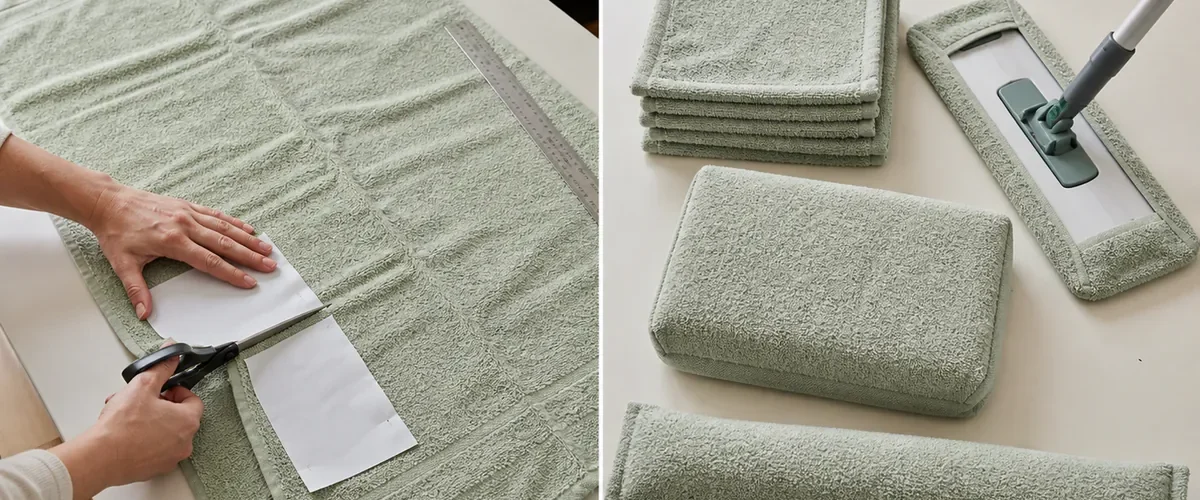
Lay the towel flat and cut it into squares that fit your hand, usually about 10 to 12 inches across. Round the corners if you want easier binding. Hem or zigzag around every edge.
Use separate colors or add a small thread mark for different jobs. One set can handle kitchen counters, another the bathroom, and another dusty furniture. This prevents a cloth used near the toilet from returning to the kitchen.
Rinse dirty cloths after use and let them dry before placing them in a laundry basket. Wash heavily soiled pieces separately. Never combine bleach with ammonia, vinegar, or other cleaners, and do not assume a reused towel makes unsafe chemical mixing acceptable.
Project 2: cut reusable mop or sweeper pads
Place the removable pad from your mop on the towel as a pattern. Add enough fabric around the edge to fold over the mop head or attach to its grips. Cut two matching pieces if a thicker pad suits the tool.
Sew the edges and add elastic only if your machine needs it. Test the dry pad before applying water or cleaner. It should stay flat and secure, because a loose pad can twist underfoot and cause a fall.
Use only the floor solution recommended for the surface. Too much water can swell wood and laminate. A damp towel pad is often enough for a routine pass, while stubborn spills should be treated according to the flooring maker’s advice.
Project 3: build a simple kneeling pad
Fold a clean section into a rectangle thick enough to cushion your knees. Stitch around three sides, add more folded towel pieces inside, then close the final edge. For outdoor use, place the towel insert inside a washable cover made from sturdy leftover fabric.
This pad is useful for container gardening, cleaning low cupboards, or working beside a bathtub. Let it dry completely after use. A wet pad stored in a shed or closed cabinet can develop mildew quickly.
Do not use a soft towel pad as protection from sharp stones, nails, hot surfaces, or chemicals. It provides comfort, not industrial knee protection.
Project 4: stop a cold draft at the door
Cut a long strip slightly wider than the door. Fold it lengthwise with the terry side inward and sew one short end plus the long edge. Turn the tube right side out, then fill it with narrow scraps from the same towel.
Pack the filling evenly, but keep the stopper flexible enough to sit against the gap. Close the final end securely. Place it on the indoor side of a dry exterior door and move it out of the way before opening the door.
A draft stopper can improve comfort, but it must never block a required vent, heater opening, emergency exit, or door that needs to close securely. If a large gap remains, adjust the door sweep or weatherstripping instead.
Can old towels become pet bedding?
A whole towel may work as a temporary washable layer for some pets, but inspect it closely. Long loops and loose threads can catch claws or be swallowed. Animals that chew fabric should not have access to towel stuffing or a homemade pad.
Use fragrance-free washing products if a pet is sensitive, and ask a veterinarian about bedding for an animal recovering from surgery or living with allergies. Practical reuse should never come before safety.
Common mistakes that make projects look messy
- Cutting without a template, which creates pads that bunch or slip.
- Leaving raw terry edges, which shed and unravel in the wash.
- Making pieces too large to rinse and dry quickly.
- Mixing cloths from toilet, kitchen, pet, and workshop jobs.
- Saving every towel even when mold or contamination makes disposal wiser.
Give the fabric one more useful life
The best reuse projects are not decorative clutter. They solve a task you already have. Choose one project, measure carefully, finish the edges, and put the new item where it will be used.
That faded towel may never return to the bathroom shelf. As a sturdy cleaning cloth, fitted floor pad, kneeling cushion, or draft stopper, however, it can keep working for years and save a surprising number of disposable products.