A mouse in the pantry can make any quick solution feel reasonable. Online videos sometimes suggest mixing toothpaste with bread, sugar, or flour to create homemade poison. The promise is cheap and dramatic. The danger is that the bait is not a reliable rodent control, while it may still expose children, pets, and wildlife to harmful ingredients.
Do not make toothpaste mouse bait. You can solve the problem more effectively by blocking the route inside, removing food, and using the right trap in a protected place. The most important clue is usually not the mixture on the plate. It is the small gap behind the cabinet.
Why the toothpaste mouse poison trick is risky
Toothpaste is made for brushing teeth in a small amount and then spitting it out. It is not a registered rodenticide, so there is no tested bait dose, reliable result, or label explaining safe placement and cleanup.
A sweet food mixture can attract a curious dog, cat, or child. A poisoned rodent may crawl into a wall and die where it cannot be removed. Wildlife can eat exposed bait or a sick animal. Meanwhile, mice may ignore the mixture and continue nesting nearby.
Never mix household products into homemade poison. Use only legal pest products exactly as labeled, and consider a licensed professional when an infestation is large or the building is difficult to seal.
Find the route before setting any trap
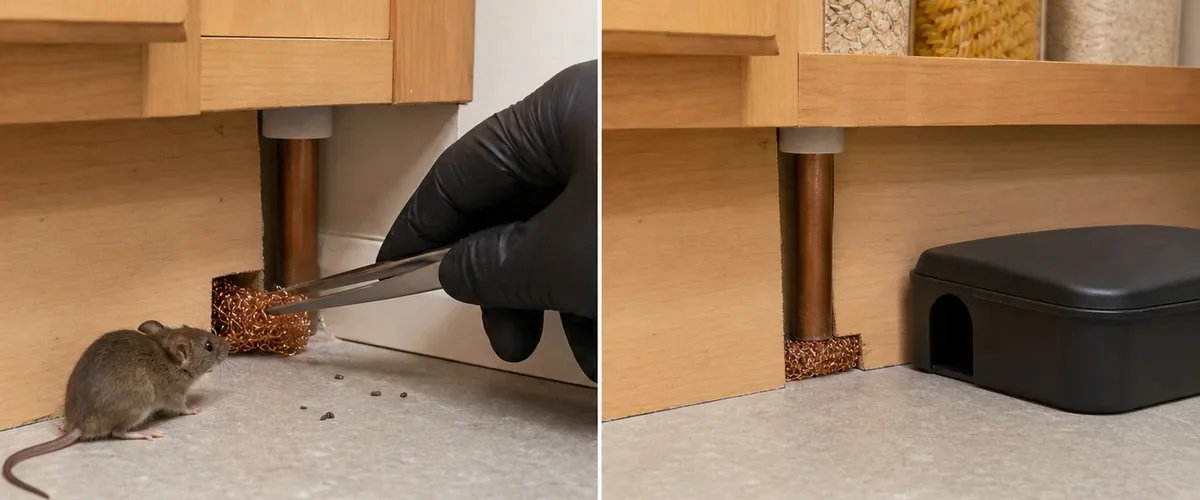
Look for dark droppings, gnaw marks, shredded paper, greasy rub marks, and gaps along walls. Check beneath sinks, behind appliances, around pipe openings, inside lower cabinets, and where utility lines enter. Mice can squeeze through an opening about a quarter inch wide.
Do not reach blindly into a nest area. Wear gloves, use a bright light, and keep children and pets away. If wires have been chewed, turn off the affected circuit when safe and call a qualified electrician.
Seal the gap with materials rodents cannot chew easily
Small holes around pipes can often be packed with copper mesh or another rodent-resistant filler and sealed with a suitable hard patching material. Larger openings may need metal flashing, hardware cloth, mortar, or a professional repair. Foam alone is easy for rodents to chew.
Add a tight door sweep where light shows beneath an exterior door. Repair damaged vents and screens without blocking required airflow. Trim branches touching the roof and remove clutter beside the foundation.
Before sealing a large active opening, make sure animals are not trapped inside a wall or attic. A pest professional can identify one-way exclusion options and local rules.
Remove the reason mice stay
Store grains, cereal, pet food, and birdseed in hard containers with tight lids. Clean crumbs under the toaster and stove. Do not leave pet bowls out overnight, and repair dripping pipes. Keep recycling rinsed and rubbish covered.
Cardboard boxes and piles of paper provide sheltered nesting areas. Move stored items onto shelves and leave a small inspection space beside walls. Outdoor compost should be managed properly and kept away from the house where possible.
Use traps more safely and effectively
Quality snap traps can work when placed correctly. Put them along walls where activity is seen, with the trigger end facing the wall. Mice tend to travel beside edges rather than across open floors.
In a home with children or pets, place traps inside tamper-resistant trap stations that are designed for the device. Follow the trap maker’s directions and check every station daily. Wear gloves when handling a trap or rodent, then clean and disinfect the area.
Avoid glue boards, which can cause prolonged suffering and may catch nontarget animals. Do not place loose poison, homemade bait, or traps where a child or pet can reach them.
Clean droppings without sending dust into the air
Do not sweep or vacuum dry droppings. Ventilate the space first when appropriate. Wearing gloves, wet the droppings and surrounding area with an effective disinfectant used according to its label. Allow the stated contact time, then wipe the material up with paper towels and seal it for disposal.
Wash gloved hands before removing the gloves, then wash bare hands. Extensive contamination, ventilation systems, and enclosed spaces may require professional cleanup. Local public-health guidance should take priority.
Know when the problem needs an expert
Call a licensed pest professional if you continue finding fresh droppings after sealing and trapping, hear activity throughout walls, see rodents during the day, or cannot reach the nesting space. A professional should explain the entry points, control method, and follow-up plan.
The real quick fix is the gap
Toothpaste bait promises a dramatic ending but leaves too much to chance. A sealed opening, clean pantry, and protected trap remove the three things the mouse needs: a route, a reward, and a hiding place.
Skip the dangerous recipe. Put your effort into finding the quarter-inch opening behind the cabinet. That less sensational step is the one most likely to keep the next mouse outside.