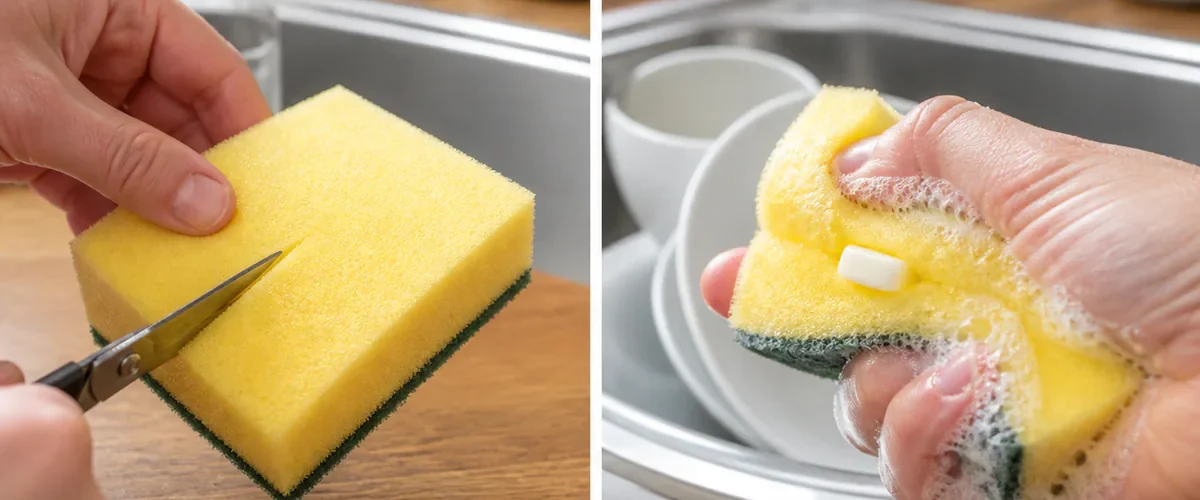
A thin sliver of dish soap is hard to hold and easy to lose beside the sink. One small cut in a fresh kitchen sponge can turn that annoying scrap into a useful cleaning pocket. The soap stays inside the sponge, lathers as you squeeze, and lasts longer than it does when sliding around the basin.
The trick is simple, but it does not make a sponge self-cleaning. A damp sponge can still hold food and microbes. Make the pocket shallow, use it only for dishes, rinse it well, and replace the sponge when it smells or breaks down.
What the hole actually solves
The goal is to hold a small, clean piece of solid dish soap. The sponge becomes easier to grip, and the soap is less likely to fall into dirty water. You can also control the amount of lather by wetting and squeezing the sponge instead of rubbing a large bar over every item.
This method is not meant for liquid cleaner capsules, dishwasher tablets, bleach, or mixed cleaning products. Use only a solid soap intended for hand-washing dishes and follow its label.
Choose the right sponge and soap
Start with a new rectangular sponge that is thick enough to hold a small pocket without tearing. A soft cellulose or foam side with a separate non-scratch scrub surface is practical for many kitchens. Check the cookware maker’s advice before using any abrasive side on nonstick pans, glass, or polished surfaces.
Choose a small sliver cut from a solid dishwashing bar. Do not use body soap, laundry bar, or an unknown homemade product on food-contact items. Keep the main soap bar dry and clean between uses.
How to make the soap pocket
- Place the dry new sponge flat on a clean cutting board.
- Set the soap sliver on the center and mark a pocket slightly smaller than the piece.
- Using clean scissors or a short utility blade, make one shallow slit in the soft side.
- Do not cut through to the scrub side or within half an inch of the sponge edge.
- Slide the soap into the opening and press gently until it sits below the surface.
Cut away from your hands and keep fingers out of the blade’s path. If the sponge tears or the soap falls through, discard it rather than trying to close the cut with glue or staples.
Use less soap without leaving greasy dishes
Scrape food scraps into the bin or compost system before washing. Wet the sponge and squeeze it several times to build a light lather. Wash cleaner items first, followed by greasy pans. Add more soap only when the lather and cleaning power truly fade.
Hotter water is not always better for your hands or cookware. Use a comfortable temperature and the method recommended for the item. For raw meat tools and heavily contaminated surfaces, follow current food-safety guidance rather than relying on visible bubbles alone.
The hygiene step people forget
After each washing session, remove trapped food under running water. Squeeze the sponge thoroughly and store it where air can reach all sides. Do not leave it flat in a wet sink or sealed inside a container.
Clean or sanitize the sponge only by a method approved for its material and your appliances. Sponges containing metal, certain scrubbers, or unknown materials should never go into a microwave. Heating a dry sponge can cause a fire, and home heating does not make a worn sponge last forever.
Replace the sponge when it smells, becomes slimy, tears around the pocket, or stays dirty after rinsing. In a busy kitchen, that may be sooner than expected. A cheap sponge is not worth spreading old food across clean plates.
Common mistakes that ruin the trick
- Cutting a large circle: A wide hole weakens the sponge and releases the soap.
- Stuffing in a whole bar: Too much soap wastes product and makes rinsing harder.
- Mixing cleaners: Never place bleach, ammonia, vinegar, or dishwasher chemicals inside.
- Using one sponge everywhere: Keep dishwashing separate from counters, floors, bathrooms, and pet bowls.
- Keeping it for months: The pocket is a holder, not a preservation system.
When a soap dispenser is the better choice
If several people wash dishes, a pump dispenser may be easier to keep consistent. People with skin sensitivity may prefer gloves and a fragrance-free liquid labeled for dishes. A brush with a replaceable head can dry faster than a thick sponge and keeps hands farther from hot water.
The sponge pocket works best when you already use a solid dish bar and have clean soap scraps to finish. It is not a reason to buy extra products.
A tiny cut with a useful result
The surprising benefit is not a magical cleaning formula. It is simple control. The shallow pocket holds a slippery soap sliver, gives you a steady light lather, and helps use the final piece instead of throwing it away.
Make the cut carefully, let the sponge dry, and replace it without hesitation when it wears out. That small routine solves the waste problem while keeping the sink practical and clean.