The brightest part of a lemon often goes into the bin before anyone notices it. That yellow peel holds fragrant oil, useful zest, and organic material for compost. The mistake is waiting until the squeezed half is old, dirty, or moldy before deciding to reuse it.
Save the peel while the fruit is fresh, choose a use that fits its condition, and follow a few safety rules. Four simple options can add flavor, freshen a room, support routine cleaning, or return the scraps to garden soil through compost.
Use 1: save the zest before squeezing
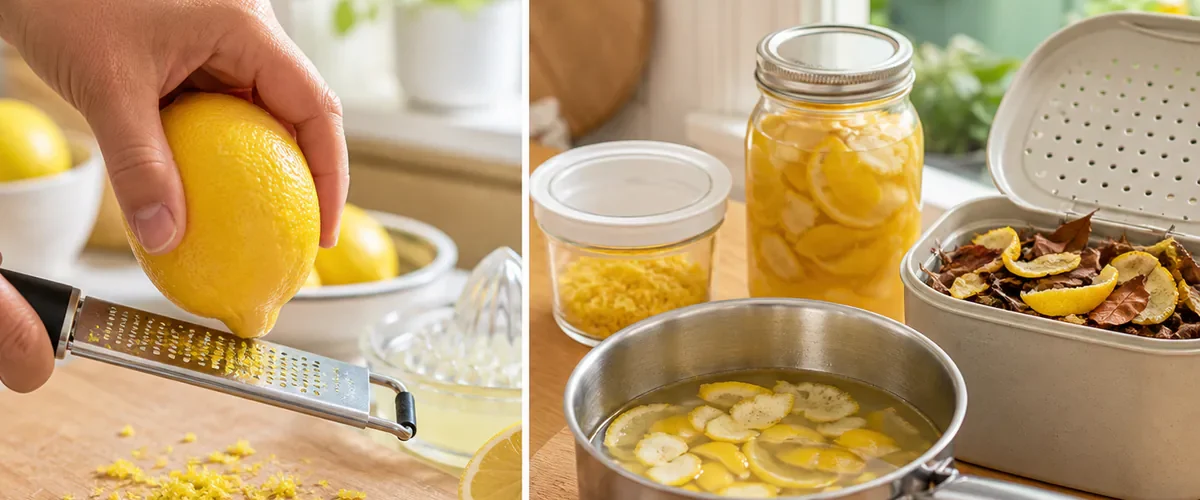
If you plan to eat the peel, wash the whole lemon under running water and scrub it gently before cutting. Dry it well. Use a fine grater or peeler to remove only the thin yellow layer. The white pith underneath is safe but bitter.
Add fresh zest to baked goods, salad dressing, grain dishes, or marinades. Freeze extra zest in a labeled airtight container. Small portions thaw quickly, so there is no need to freeze it in a wet clump.
Only use sound food-grade fruit. Discard peel with mold, soft rot, or an unknown surface coating that cannot be cleaned according to its label. Anyone with a citrus allergy should avoid skin and food contact.
Use 2: make a brief stovetop fragrance
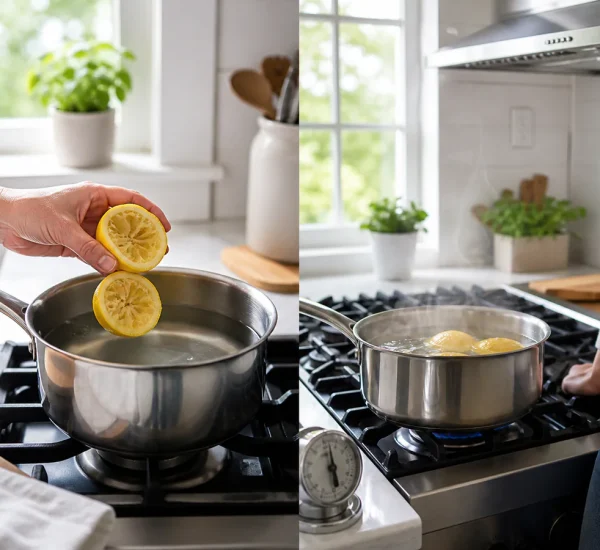
Place a few clean squeezed peels in a small pan of water and bring it to a gentle simmer. The warmth releases a fresh citrus scent. Add a cinnamon stick or a few cloves if those fragrances are safe for everyone in the home.
Stay in the kitchen and keep enough water in the pan. Never leave simmering peels unattended, and turn the heat off before the pan dries. The liquid is not a disinfectant or medicine. Let it cool before disposal and keep it away from children and pets.
Fragrance can bother people with asthma, migraines, or scent sensitivity. Ventilate the room and stop if anyone feels uncomfortable.
Use 3: infuse vinegar for limited cleaning jobs
Fill a clean glass jar loosely with fresh lemon peels and cover them fully with plain white vinegar. Close the jar, label it, and leave it in a cool place for about one to two weeks. Strain the liquid and dilute it for a small test according to the surface you plan to clean.
This citrus-vinegar solution can help loosen light soap film or grease on some sealed, acid-safe surfaces. It is not a registered disinfectant, and it should never be used on natural stone, marble, granite, unsealed grout, waxed wood, electronics, or any surface whose maker warns against acid.
Never mix vinegar with bleach or other cleaners. The combination can release dangerous fumes. Label the bottle clearly and store it away from food, children, and pets.
Use 4: compost what remains
Chop untreated lemon peels into small pieces and add a modest amount to a varied outdoor compost pile. Mix them with other food scraps and cover them with dry leaves or shredded plain cardboard.
Citrus peel breaks down more slowly than soft fruit. Small pieces, moisture like a wrung-out sponge, and regular airflow help. Do not bury a thick pile of raw peel beside plant roots or cover indoor potting mix with it. Raw scraps can smell, mold, and attract pests.
Use only finished compost that is dark, crumbly, and earthy-smelling. Keep it away from direct contact with tender stems.
Popular lemon-peel claims to skip
Rubbing peel on skin can cause irritation, and citrus oils may increase sun sensitivity. Do not use kitchen peel as a skin treatment. Do not put it in a garbage disposal unless the appliance maker specifically allows that use; tough peel can contribute to clogs and does not clean the machine.
Lemon peel does not permanently repel every insect, remove toxins from a room, or sterilize a cutting board. Clean with methods suitable for the task, and call a pest professional for a serious infestation.
How to store peels without creating waste
Decide on the use when you cut the lemon. Zest can go straight to the freezer. Peels for a simmer pot can be refrigerated briefly in a covered container. Cleaning peels should go directly into vinegar, while compost pieces should leave the kitchen soon.
Do not keep a growing bag of wet lemon halves for weeks. If they become slimy or moldy, seal and discard them rather than trying to rescue them for food or indoor fragrance.
The part worth its weight in usefulness
Lemon peels are not gold because they perform miracles. They are valuable because one fresh peel can serve a clear second purpose before it returns to the waste stream.
Zest first, simmer carefully, clean only acid-safe surfaces, or compost in balance. The surprising result comes from choosing early and using the peel safely, not from saving every squeezed lemon forever.