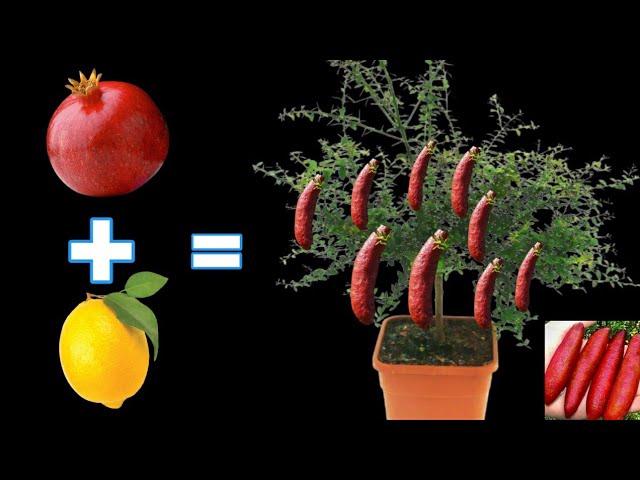
Creating a new variety of fruit, such as a hybrid between pomegranates and lemons, involves complex and time-consuming breeding processes. Typically, this work is carried out by professional horticulturists and plant breeders who have the knowledge and resources to manage the intricacies of cross-breeding.
If you’re interested in experimenting with growing pomegranates and lemons together, you might consider a more straightforward approach:
1. Planting:
- Plant a pomegranate tree and a lemon tree in close proximity, ensuring they both receive adequate sunlight.
2. Cross-Pollination:
- Pomegranates and lemons are usually self-pollinating, but planting them close together can increase the chances of cross-pollination through natural means (e.g., bees or other pollinators). Cross-pollination doesn’t necessarily create a hybrid, but it might influence the characteristics of the fruits.
3. Observe and Document:
- Observe the plants closely, looking for any unique characteristics or traits in the fruits. Keep in mind that any changes might be due to natural variation or environmental factors rather than cross-breeding.
4. Save Seeds:
- If both trees produce fruits, save the seeds from the pomegranates and lemons separately.
5. Germinate Seeds:
- Germinate the seeds in a controlled environment, such as a greenhouse or indoor growing space.
6. Monitor Seedlings:
- Monitor the seedlings as they grow, paying attention to any variations in characteristics compared to typical pomegranate and lemon plants.
7. Evaluate Grown Plants:
- Once the plants mature, evaluate their fruits for any unique features. Keep in mind that it’s not guaranteed that a cross will occur or result in a viable and fruitful hybrid.
8. Patience:
- Creating new plant varieties through cross-breeding is a long-term process. It may take several years to see significant results, if any.
It’s essential to note that creating a new fruit variety is a complex and intricate field, and success is not guaranteed with amateur experimentation. Moreover, the specific genetics of pomegranates and lemons may present challenges to cross-breeding.
For more reliable and controlled breeding efforts, it’s advisable to seek guidance from horticulturists or plant breeders who have expertise in the field. They can employ techniques like controlled pollination, selective breeding, and genetic analysis to increase the likelihood of success in creating a new variety.