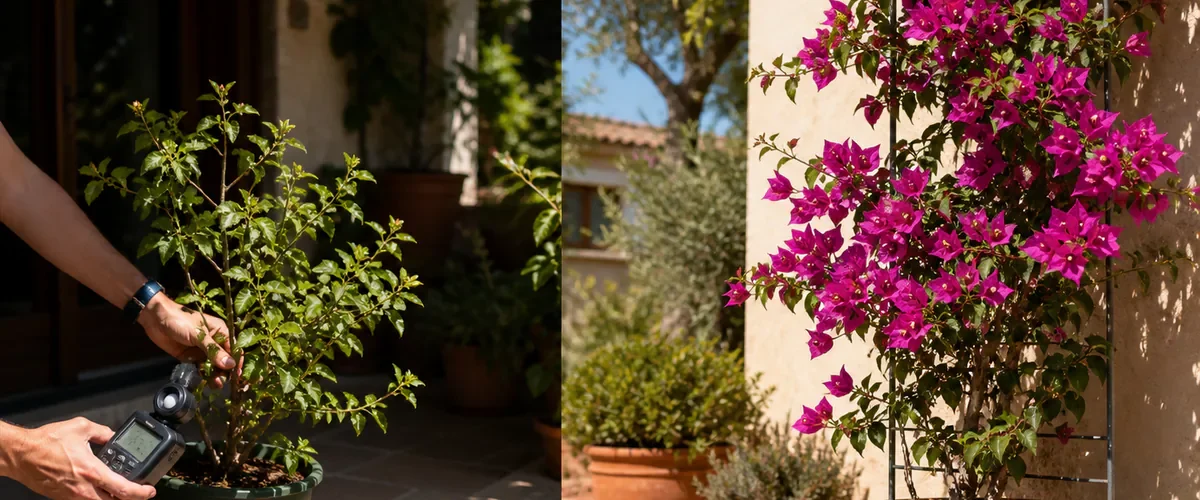
A bougainvillea can grow an impressive curtain of green leaves and produce almost no color. Gardeners often respond with more fertilizer and water, which makes the vines even greener. The one condition that changes the display is stronger direct sun, supported by warmth, drainage, and restrained care.
The brilliant pink, purple, orange, red, or white “flowers” are actually bracts surrounding small true flowers. They appear most generously when a mature plant receives intense useful light and is not pushed into soft leafy growth.
Count Direct Sun, Not Just Brightness
Bougainvillea usually needs at least six hours of direct sun for strong blooming, with more often producing better color. A bright-looking porch under a roof may still be too shaded.
Move a container plant into stronger sun gradually to prevent leaf scorch. Watch where buildings and trees cast shadows through the season. In a cool climate, choose the warmest protected exposure.
Protect This Heat Lover From Cold
Bougainvillea is tropical to subtropical and can suffer when temperatures approach freezing. In cold regions, grow it in a container that can move into a bright protected area before frost.
Reduce water as winter growth slows but do not let roots remain bone dry for months. Indoor winter light should be as strong as practical. Move the plant back outside gradually after frost danger passes.
Use a Pot and Mix That Drain Fast
Choose a container with generous drainage holes and a fast-draining mix. Bougainvillea roots dislike prolonged waterlogging and can be sensitive to rough disturbance.
Repot only when needed and move up modestly. A slightly snug root system can support flowering, but a dangerously root-bound plant that cannot absorb water needs attention. Do not place gravel in the bottom as a substitute for drainage holes.
Water Deeply, Then Let the Mix Dry
Soak the root ball until water drains, then wait until the mix dries substantially before watering again. Established plants tolerate some drought, but repeated severe wilt can damage roots and drop bracts.
Constant shallow watering keeps the surface wet and encourages weak roots. Empty saucers and protect outdoor pots from days of heavy rain where possible.
Stop Feeding Leaves at the Expense of Color
Too much nitrogen produces long green vines. Use a fertilizer labeled for bougainvillea or flowering container plants according to directions. A soil or media test can prevent unnecessary additions.
Do not fertilize weekly unless the product label and plant conditions support it. High doses burn roots, and a “bloom booster” cannot overcome shade.
Prune at the Right Moment
Bougainvillea blooms on new growth, so selective pruning after a flowering cycle can encourage branching. Remove dead or damaged stems and shorten unruly vines with clean tools.
Wear thick gloves and eye protection because thorns can injure. Do not perform a severe cut just as buds are forming. Light pinching can shape young shoots, while major pruning is best timed for the climate and growth cycle.
Support the Vine Safely
Bougainvillea does not cling by itself like ivy. Tie canes loosely to a strong trellis and check ties as stems thicken. Keep thorny growth away from walkways, doors, children, and pets.
Do not lean a heavy container against a weak railing. Mature vines and wet pots carry substantial weight.
Catch Pests Early
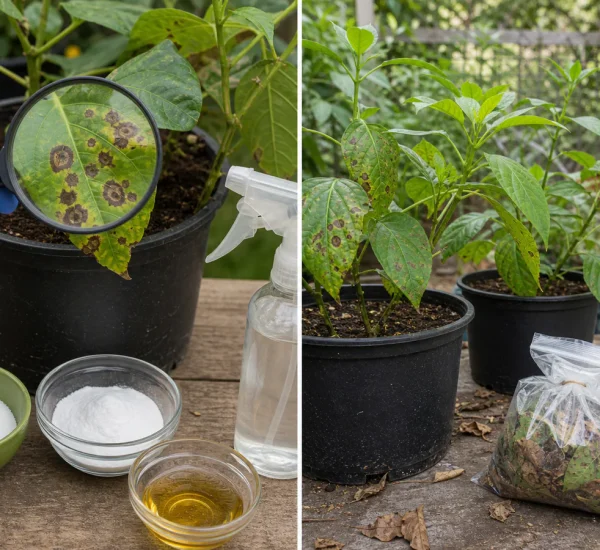
Aphids, scale, mealybugs, caterpillars, and mites can attack new growth. Inspect leaf undersides and stems. Identify the pest before applying neem oil or another product, and follow labels for temperature and sun restrictions to avoid leaf burn.
Yellow leaves may also come from wet roots, cold, or sudden environmental change rather than insects.
Propagate Without Weakening the Display
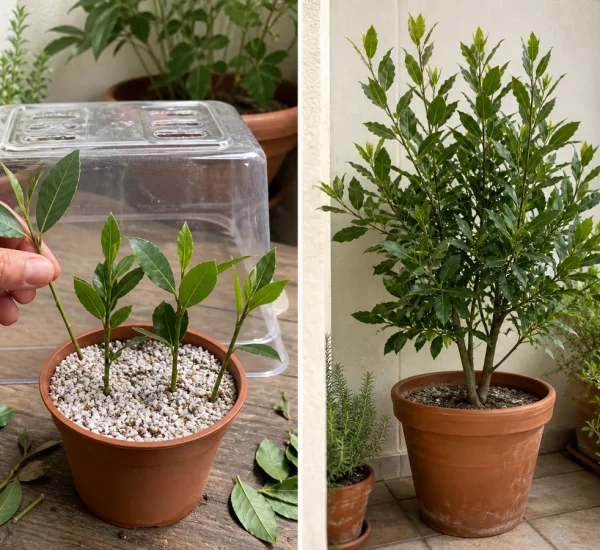
Healthy semi-ripe cuttings can sometimes root in warm weather, but success varies. Take material from a vigorous plant after the main color show, use clean pruners, and place the cutting in a sterile draining medium. Maintain humidity around the cutting without saturating it. Rooting hormone may help when its label includes the plant. Do not cut every flowering shoot for propagation; the parent needs leaves and mature branches to rebuild its next display.
Adapt the Method to Your Region
In tropical climates, rain and vigorous year-round growth may require drainage and pruning attention. In Mediterranean climates, summer drought and winter chill shape the schedule. In cold regions, container size must balance root room with the ability to move the plant. Ask a local extension or reputable nursery about frost dates and the best pruning window. Generic monthly rules cannot account for every climate.
The Color Condition Cannot Be Replaced
Full sun is the foundation of a flower-filled bougainvillea. Warmth, fast drainage, deep but spaced watering, restrained nitrogen, timely pruning, and sturdy support help the plant use that light.
When new shoots stop stretching softly and bracts begin coloring at their tips, resist the urge to add another treatment. Keep the sunny conditions steady, and the green vine can finally transform into the brilliant wall of color you expected.