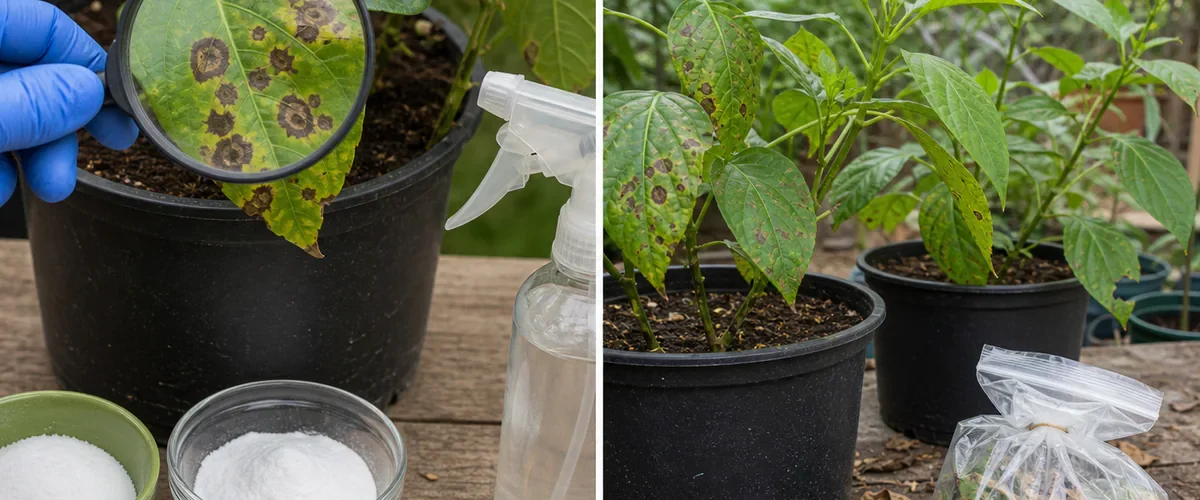
A spreading leaf spot can make a three-ingredient homemade fungicide feel like an emergency answer. Baking soda, soap, and oil are often mixed in the kitchen and sprayed heavily. By morning, the original spots remain and the leaf edges may be burned.
Fungicides usually protect healthy tissue; they do not turn damaged leaves green again. Before spraying anything, identify whether the problem is fungal, bacterial, insect-related, or caused by water, sun, or fertilizer. The correct diagnosis is the most powerful ingredient.
Not every spot is a fungus
Sun scorch creates bleached dry patches. Edema can produce corky bumps after water imbalance. Bacterial spots, nutrient trouble, mites, and spray damage can resemble fungal disease. A photo alone may not be enough.
Inspect both sides of leaves, stems, fruit, soil moisture, and recent weather. Ask a local extension plant clinic or reputable nursery to identify the pattern. Keep the affected plant away from others while investigating.
Remove conditions disease uses
Space plants for airflow and prune only what the species tolerates. Water at soil level early in the day. Avoid handling wet foliage, which can spread spores and bacteria on hands and tools.
Remove fallen leaves and badly affected material. Bag or dispose of diseased debris according to local guidance; do not automatically compost it. Sanitize tools between plants with an appropriate method.
Why the three ingredients can burn
Baking soda contains sodium, which can accumulate and injure plants or soil. Household dish detergent varies in concentration and may strip protective leaf wax. Oils can magnify damage in heat or on sensitive plants.
Kitchen measurements are inconsistent, and water hardness changes the mixture. Combining “natural” ingredients does not create a tested fungicide label or a safe harvest interval for food crops.
Choose a product for the exact disease
If a fungicide is needed, use one registered for the diagnosed disease and listed plant. Read the full label for dilution, timing, temperature, protective clothing, reentry, pollinator, and harvest instructions.
Some products based on sulfur, copper, oils, or biological organisms can fit lower-input gardening, but each has limits. Copper can accumulate in soil, sulfur may injure plants in heat or near oil use, and biological products need correct storage.
Test before treating the whole plant
Apply the labeled product to a small section if the instructions permit. Wait the recommended time and check for spotting or wilt. Do not spray a drought-stressed plant, open flowers with visiting pollinators, or leaves in strong heat.
More concentration does not improve control. It increases residue, plant injury, and environmental risk.
Understand prevention timing
Many fungicides work best before infection or at the first confirmed signs. Established dead tissue cannot heal. Remove the worst leaves and protect clean new growth according to a disease forecast or local guidance.
Repeated applications may be required by a label, but rotate modes of action when recommended to slow resistance. Never repeat a homemade mixture daily because spots still look visible.
Protect people, pets, and useful insects
Keep children and animals away during mixing and application. Store products in original containers. Never pour leftovers into drains or reuse a food bottle for pesticide.
Even plant-based or food-based sprays can irritate eyes and skin. Wear the label’s protective equipment and wash exposed skin and clothing afterward.
Common mistakes after seeing leaf spots
- Spraying before identifying the cause.
- Coating the plant at midday in heat.
- Mixing several fungicides or household cleaners.
- Expecting old lesions to disappear.
- Ignoring infected debris and overhead watering.
Build next season’s protection now
Choose resistant varieties, rotate crop families, provide recommended spacing, sterilize reused pots, and start with clean seed or transplants. Mulch can reduce soil splash when kept away from stems.
Record the disease, weather, and treatment. A repeated pattern gives next year’s prevention plan a head start.
Match common patterns to professional diagnosis
Powdery growth, rusty pustules, concentric rings, black stem lesions, and soft water-soaked spots each point in different directions. A fungal-looking coating may even be residue from hard water or spray. Do not use appearance alone to choose a chemical.
A plant clinic may request several leaves showing early and late symptoms, photos of the site, and the roots. Package samples exactly as instructed so spores or insects do not spread through the mail or office.
Use weather to reduce infection pressure
Rain, long leaf-wetness periods, cool nights, and humid crowded growth favor many diseases. Check a local disease forecast when available. Delay pruning until leaves are dry, disinfect supports, and avoid splashing soil onto lower foliage.
Keep food-crop records
Write down the product, active ingredient, dilution, date, treated crop, and required harvest interval. Keep the label until the crop is finished. If produce was sprayed with an unknown mixture, do not guess that washing removes every risk; seek qualified advice before eating it.
The powerful step happens before mixing
A three-ingredient spray cannot cure every spot and may create a second injury. Diagnosis tells you whether fungicide belongs in the plan at all.
Improve airflow, water roots, remove infected debris, and choose a labeled disease-specific product when needed. That careful sequence protects new leaves far better than an unknown kitchen mixture applied overnight.