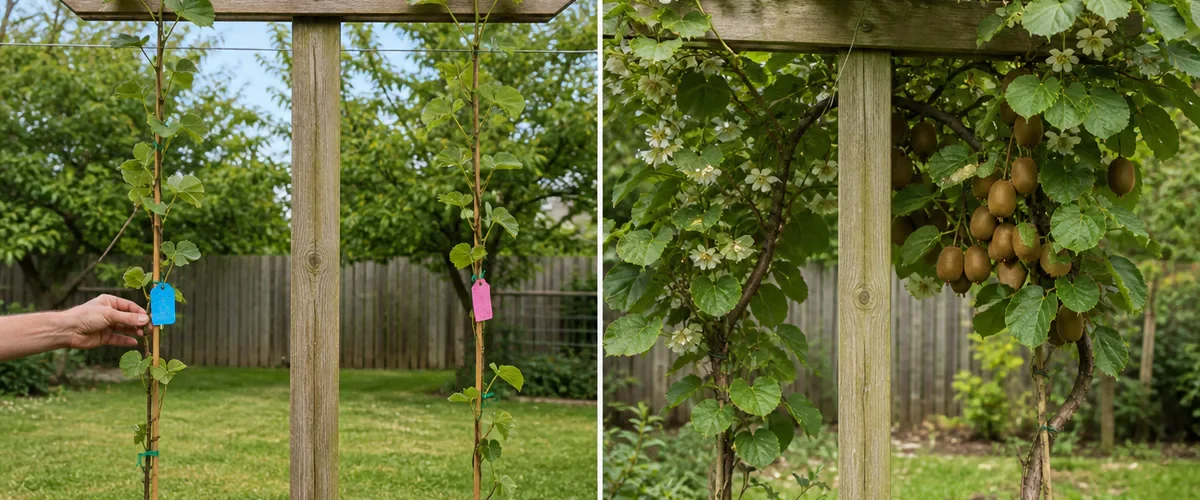
A kiwi vine can cover a trellis with heart-shaped leaves and still never carry fruit. The plant may be perfectly healthy. The missing piece is often another vine: most traditional kiwis have separate male and female plants, and only pollinated female flowers develop fruit.
Growing kiwi at home is possible, but it is a long-term project rather than a windowsill trick. Choose a variety suited to your winter, buy known plants, and build support before planting. One vine can become beautiful; fruit requires the right biology.
Understand male and female kiwi plants
Many fuzzy and hardy kiwis are dioecious, meaning male and female flowers grow on separate vines. A compatible male can pollinate several females when they flower at the same time. The exact ratio and compatible variety should come from the nursery supplying the plants.
Some cultivars are sold as self-fertile, but even these may crop better with a pollination partner. Read the full label instead of assuming any seedling will fruit.
Why supermarket kiwi seed is a gamble
Seeds can germinate, yet seedlings may take many years to flower. You cannot know whether a young seedling is male or female by looking at its leaves. Its fruit may also differ from the supermarket parent.
Grow seed for curiosity, not for a reliable harvest. For fruit, buy a named grafted or cutting-grown vine from a reputable nursery. Confirm its sex, pollination partner, hardiness, and mature size.
Choose kiwi for your climate
Fuzzy kiwi needs a long growing season and winter conditions within its variety’s range. Hardy kiwi tolerates colder winters but can begin growth early and suffer spring frost. Both need enough winter chill to flower normally, depending on cultivar.
Ask a local nursery or extension service which varieties produce in your area. A vine surviving winter is not the same as fruit ripening before autumn cold.
Build a support that lasts
Mature kiwi vines are heavy, especially when wet and carrying fruit. A decorative bamboo fan is not enough. Install a strong pergola, T-bar, or wire system anchored into suitable posts before planting.
Keep the structure away from gutters, weak fences, and overhead utility lines. Allow room for pruning and harvest. If the support is attached to a building, confirm that the structure can carry the load.
Plant in sun and draining soil
Choose a site with full sun, shelter from harsh wind, and deep well-drained soil. Kiwi roots need steady moisture but can fail in standing water. A soil test helps guide pH correction and fertilizer.
Plant at the nursery depth, spread roots gently, and water well. Keep mulch a few inches from the trunk. Protect young stems from pets, mowers, and sunscald according to local advice.
Water and feed without forcing soft growth
Young vines need consistent moisture while roots establish. Water deeply and check the soil rather than sprinkling daily. Drought during flowering or fruit growth can reduce the crop, while soaked soil encourages root trouble.
Use fertilizer only from a soil-informed or locally recommended plan. Excess nitrogen creates long soft shoots, delays maturity, and increases pruning work.
Train and prune with a purpose
Select one strong trunk and guide it to the main wire. Develop permanent arms from that framework, then manage fruiting laterals. Remove suckers and tangled shoots before they become heavy.
Pruning rules differ between fuzzy and hardy kiwi and between dormant and summer work. Incorrect heavy cuts can remove next season’s fruiting wood or cause excessive sap flow. Learn the system for your cultivar from a reliable local guide.
Help pollinators find the flowers
Male and female vines must bloom together. Grow pollinator-friendly flowers nearby and avoid insecticide on open blooms. Cold rain or lack of insects during flowering can reduce fruit set.
Hand pollination may help a small planting, but it cannot fix incompatible varieties or mismatched bloom times.
Can kiwi stay in a container?
A large container can hold a young or naturally compact kiwi for a time, but ordinary fruiting vines still need significant root room and permanent support. Pots dry and freeze faster than the ground. Choose a very large draining container, protect roots within the cultivar’s climate limits, and plan regular pruning and repotting.
Do not expect a small indoor pot to supply the sun, winter chill, pollen partner, and structure needed for dependable fruit. A sheltered patio is still an outdoor orchard project.
Common reasons a kiwi vine has no fruit
- The vine is male, or no compatible male grows nearby.
- The plant is a young seedling and has not reached maturity.
- Spring frost damaged flower buds.
- Heavy shade or excess nitrogen produced leaves instead of flowers.
- Pruning removed the wood that would have carried fruit.
Plant for the harvest years ahead
Kiwi rewards planning. The vines need the right partner, strong support, climate fit, water, and careful pruning for years.
Before bringing one home, count the vines and inspect the trellis. That early work prevents the most surprising disappointment: a magnificent green canopy that was never equipped to produce a single kiwi.