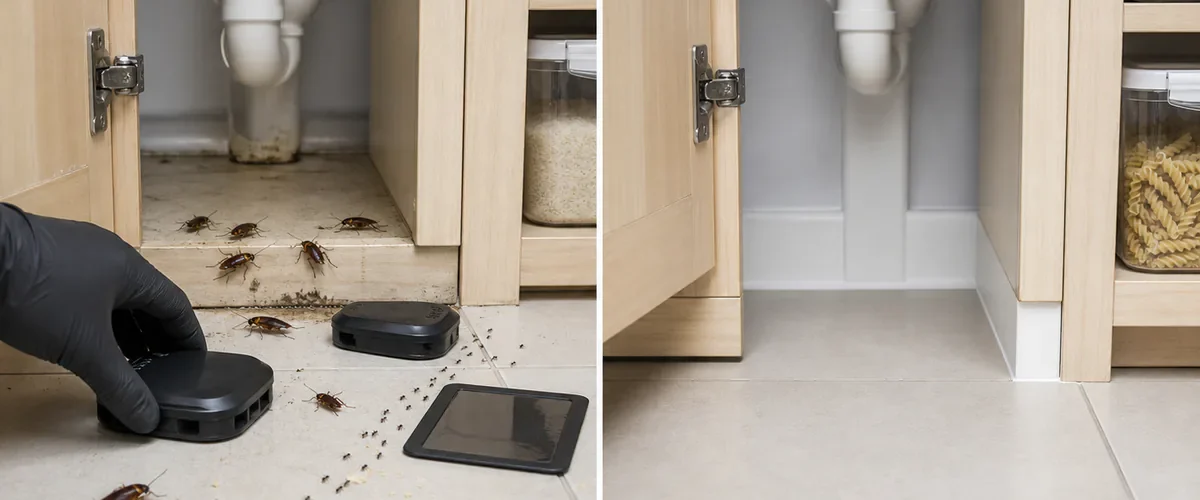
A line of ants near the sugar jar and cockroaches beneath the sink can make one powerful homemade recipe sound irresistible. Yet these pests do not share one hidden source. Ant workers follow a colony trail, while cockroaches shelter near moisture, food, warmth, and cracks. A spray may kill what you see and leave both nests active.
The reliable approach is not one dramatic mixture. It is inspection, sanitation, sealing, monitoring, and carefully placed labeled bait. Treat the two trails separately and protect children, pets, and food along the way.
Do not make a kitchen poison
Recipes using borax, toothpaste, sugar, bleach, vinegar, essential oils, or pesticide concentrates can expose people and animals. Their strength is unknown, and sweet bait may attract a child or pet. Mixing cleaners can release dangerous fumes.
Never spray surfaces where food is prepared unless the product label specifically allows it and explains cleanup. Use only registered products exactly as directed or hire a licensed pest professional.
Map the ant trail
Watch where ants enter and what they collect. Clean spilled food after observing the route, then inspect window frames, pipes, baseboards, and exterior cracks. Different ant species prefer sweet or protein-rich food and may nest indoors or outside.
Do not seal the entry before placing an appropriate bait if the colony is inside, because workers may find a new route. A pest professional can identify species that damage wood or require special treatment.
Find cockroach shelter after dark
Look for droppings like dark specks, shed skins, egg cases, and greasy marks beneath sinks, behind refrigerators, beside motors, and inside cabinet corners. Use sticky monitoring traps along walls to learn where activity is strongest.
Seeing cockroaches in daylight can mean a large infestation or disturbed shelter. Apartments may have movement between units, so building management often needs to coordinate repairs and treatment.
Remove food and water every night
Store sugar, flour, cereal, pet food, and rubbish in tight containers. Wash dishes, wipe grease, sweep crumbs beneath appliances, and dry the sink. Feed pets at set times and lift bowls overnight.
Repair dripping taps and sweating pipes. Empty recycling and rinse containers. Cockroaches can survive on tiny grease films and cardboard glue, while ants return to a reliable crumb trail.
Seal cracks after the route is understood
Close gaps around pipes, cabinet backs, baseboards, doors, and windows with material suitable for the surface. Add door sweeps and repair screens. Reduce cardboard and clutter that create hiding places.
Do not seal required ventilation or appliance openings. Ask a qualified repair person about gaps near electrical equipment and gas appliances.
Use bait without ruining it with spray
Ant and cockroach baits work when pests feed and carry active material into hidden areas. Choose a product labeled for the exact pest and indoor location. Place enclosed stations or gel only where the label permits and where children and pets cannot reach.
Do not spray cleaner or insecticide over bait. Strong odors and quick-kill products can repel insects or kill workers before they reach the colony. Replace bait according to directions and keep the surrounding area free of competing food.
Monitor instead of guessing
Date each sticky monitor and check it weekly. The number and location of catches show whether treatment is working. Remove full traps while wearing gloves and replace them in the same route.
Ant activity may rise briefly around bait. Avoid disturbing the trail unless the label directs otherwise. The goal is colony reduction, not just a clean-looking counter for one hour.
Clean pest evidence safely
Wear gloves when removing sticky traps, droppings, egg cases, or dead insects. Dampen cockroach debris before wiping so fine particles are less likely to enter the air. Use a suitable cleaner for the surface and never apply one over active bait.
Seal waste before disposal, wash reusable tools separately, and wash hands afterward. Vacuum cracks only with equipment and filters appropriate for allergen control, then empty it according to the maker’s instructions. Keep people with asthma away from disturbed debris.
Warnings for a serious infestation
Cockroach droppings and body parts can worsen allergies and asthma. Avoid dry sweeping heavy debris; clean with appropriate moisture and protective equipment. People with breathing conditions should stay away during cleanup and treatment.
Call a licensed professional for repeated daytime sightings, many egg cases, activity in several rooms, inaccessible wall voids, or failed labeled bait. Share monitoring locations and any products already used.
The one-step recipe misses two colonies
Ants and cockroaches may meet at the same crumb, but they do not require the same plan. Follow each trail, remove its rewards, close its route, and use the correct protected bait.
That careful sequence lacks the drama of an “infallible” bowl of poison. It is also far more likely to reach the hidden source without creating a new hazard on the kitchen floor.