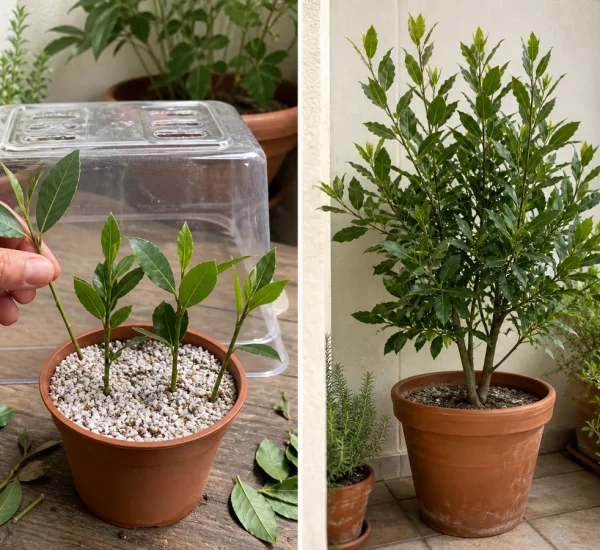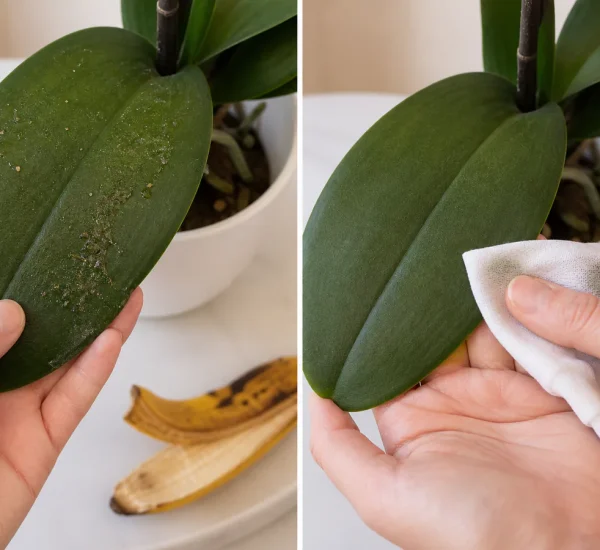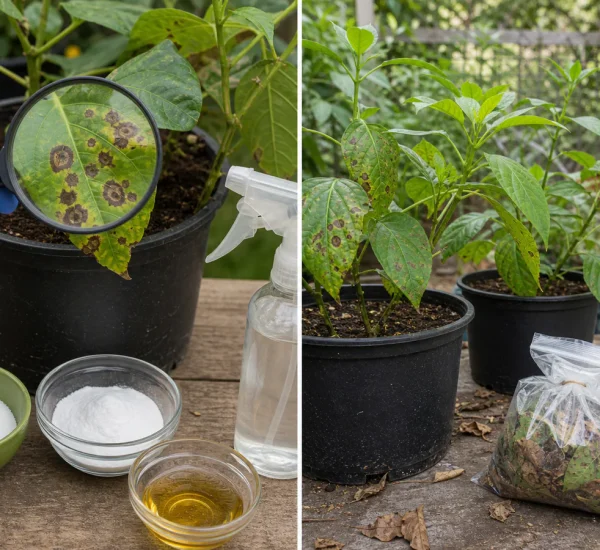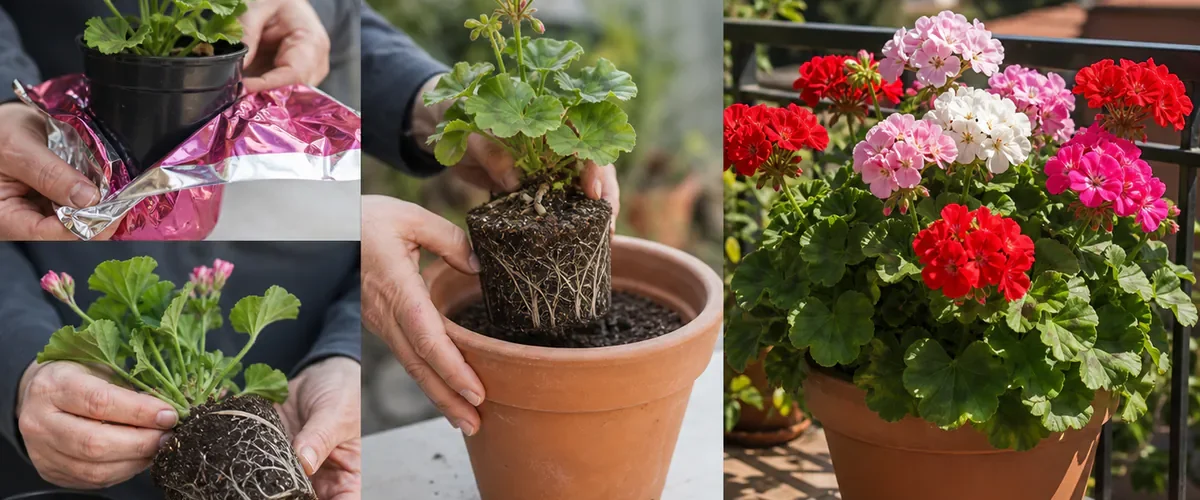
The geranium looks perfect at the store: tight buds, rich leaves, and a pot wrapped in bright paper. At home, it dries by lunchtime and stops opening flowers. The problem often began before the plant reached the windowsill.
Nursery pots are sized for production and transport, not always for a full summer on a windy balcony. The first useful step is not immediate feeding. It is letting the plant acclimate, inspecting the roots, and moving it into a slightly larger draining pot only when needed.
Quarantine the New Arrival
Keep a new pelargonium away from established plants for an observation period. Check leaf undersides, buds, and stems for aphids, whiteflies, mites, caterpillars, rust spots, and gray mold.
Remove decorative foil that traps water. Confirm the inner pot has open drainage holes and empty any standing runoff.
Do not spray preventively with a strong homemade mixture. Identify a real problem and use a treatment labeled for ornamental plants.
Let It Adjust Before Repotting
A plant has already moved through greenhouse, transport, shop, and home conditions. Give it several days in bright suitable light before disturbing roots, unless the pot is waterlogged or severely damaged.
Move gradually toward direct sun. Leaves grown under greenhouse shade can scorch on a hot balcony.
Water according to the root ball during this transition, not the dry appearance of the outer sleeve.
Check Whether a Bigger Pot Is Needed
Slide the root ball out gently when the mix is slightly moist. A dense network of healthy roots circling the outside or water racing straight through can signal that the pot is too tight.
Do not repot solely because the container looks small. Pelargoniums can flower well somewhat snug. A huge new pot holds excess wet mix and delays drying.
Choose a container about 1 to 2 inches wider, stable enough for wind, and fitted with several holes.
Use Fresh Draining Potting Mix
Select a quality mix for flowering containers. It should hold moisture while maintaining air. Do not fill the bottom with a deep gravel layer; it does not replace drainage holes.
Set the geranium at the same depth as before. Burying stems can encourage rot. Fill around roots without packing the mix hard.
Water once to settle the root zone and let excess drain. Do not leave the repotted plant in a full saucer.
Give Sun in the Right Dose
Most zonal and ivy pelargoniums flower best with several hours of sun. Morning light is useful, while hot climates may require afternoon protection.
Rotate a container for even growth. Long pale stems suggest low light; bleached dry patches on the exposed side suggest sudden or excessive sun.
Water Deeply, Not Constantly
Feel the upper mix and lift the pot. When water is needed, soak the full root ball and let it drain. Recheck more often during heat and wind.
Frequent surface sips encourage shallow roots and leave the center dry. Constant saturation causes yellowing and root decline.
Water the soil rather than showering petals, especially late in the day.
Feed After Roots Resume Growth
Fresh potting mix may already contain fertilizer. Read its label before adding more. Once the plant settles and grows, use a complete flowering-container feed at the stated rate.
Too much nitrogen makes leaves at the expense of flowers. Strong fertilizer on dry or damaged roots can burn them.
Coffee grounds are not a measured geranium fertilizer. A wet layer can mold and compact. Compost grounds in a balanced system instead of sprinkling them around the stem.
Deadhead and Shape the Plant
Remove each spent flower stalk near its base. Clear fallen petals from the mix and cut yellow leaves with clean shears.
Pinch growing tips to encourage branching. Shorten long bare stems during a suitable mild period, leaving healthy nodes.
Do not hard-prune immediately after repotting. Let roots stabilize before asking the plant to rebuild everything at once.
Watch the First Two Weeks
Temporary softness after repotting can come from root disturbance, but worsening wilt in wet soil needs investigation. Keep the plant out of punishing midday sun for the first day or two, then return it gradually to its useful exposure.
Do not fertilize a stressed plant immediately unless the potting product specifically directs it. Photograph the leaves and buds on repotting day, then compare new growth rather than judging every old blemish.
Prepare for the Next Season
Pelargoniums are frost tender. Before freezing weather, bring selected pots or rooted cuttings into a bright frost-free place. Inspect for insects first.
Reduce water and fertilizer as growth slows. In spring, refresh the plant, prune, and harden it gradually to outdoor light.
The First Step Echoes Through Every Flower
A geranium does not need immediate rescue simply because it arrived in a small pot. It needs observation, acclimation, and a root check.
Move up only when needed, preserve drainage, and wait for active growth before feeding. That calm first week builds the root system that will support every bright cluster later on.