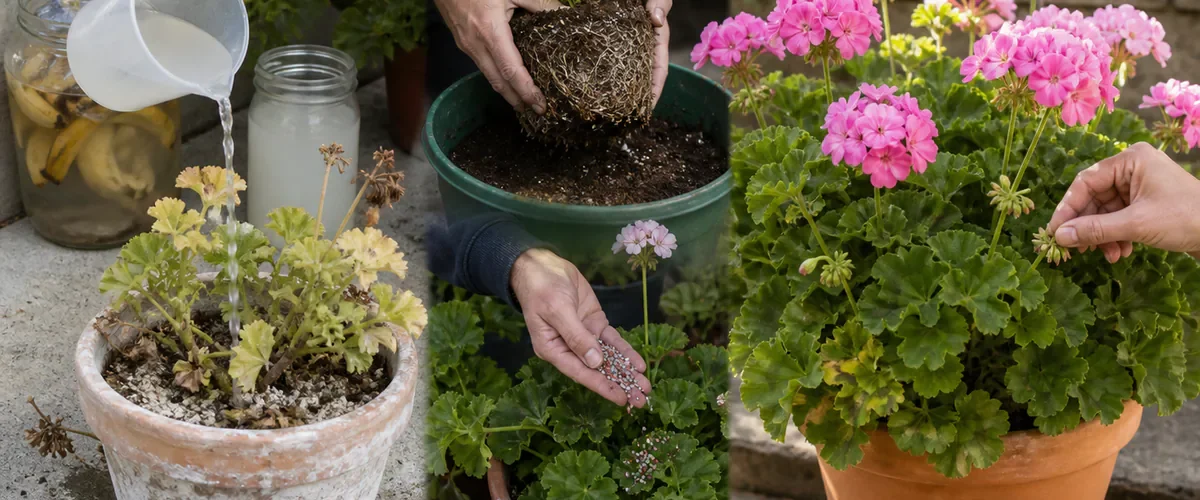
A half teaspoon of baking soda goes into the watering can, followed by banana-peel water and starchy pasta water on another week. The geranium is promised bigger flowers. Instead, the pot develops a crust and the leaves begin to pale.
Baking soda contains sodium bicarbonate, not a balanced flower fertilizer. Repeated use can raise pH and add sodium to a small root zone. Geraniums bloom more reliably when kitchen powders stop and light, drainage, pruning, and measured nutrition take over.
Why Baking Soda Is Not Plant Food
Sodium is not a nutrient most container plants need added in spoonfuls. Excess sodium interferes with water uptake and soil structure.
Bicarbonate can make the root zone more alkaline. A pH shift may lock up iron and other nutrients, causing pale leaves even when fertilizer is present.
A temporary surface effect on some fungi does not make bicarbonate a disease cure or bloom stimulant. Plant-safe fungicide formulas require tested concentrations and directions.
Stop When You See Salt Signs
White crust on the pot rim, brown root tips, dry leaf margins, wilting in moist soil, or slow growth can indicate salt stress. Hard water and excess fertilizer can create similar symptoms.
Stop homemade additives. If the plant and pot drain well, flush with plain water and let all runoff escape. Severe buildup or damaged mix may require repotting.
Do not add vinegar to neutralize baking soda inside the pot. The reaction does not restore a balanced root environment.
Be Skeptical of Banana and Pasta Water
Banana-peel soak contains an unknown amount of nutrients and organic residue. Starchy pasta water can feed microbes and fungus gnats. Salted or oily cooking water must never be used.
Color and cloudiness are not fertilizer measurements. A sour smell, slime, or mold is a reason to discard the liquid safely.
Compost plant scraps in a controlled system and feed containers with a complete labeled product.
Give the Geranium Real Flower Light
Most pelargoniums need several hours of direct sun to build abundant buds. A plant in deep shade may stay green but stretch and flower poorly.
In mild regions, full sun works well. In extreme summer heat, afternoon shade protects leaves and petals. Move the pot gradually when increasing exposure.
Rotate it each week so one side does not lean toward the window or balcony edge.
Keep Roots Moist and Airy
Use a draining potting mix and a container with several holes. Water thoroughly as the upper mix begins to dry, then empty the saucer.
Do not water by a fixed calendar. A windy hot balcony dries faster than a cool indoor room. Lift the pot and feel the soil.
Constant moisture encourages root rot, while repeated drought makes buds drop. Consistency matters more than any additive.
Use a Known Flowering Formula
Select a complete fertilizer labeled for flowering container plants. Follow the rate and active-season schedule. Check whether fresh potting mix already contains slow-release fertilizer.
Extra phosphorus or potassium does not guarantee extra blooms when another factor is limiting. Overfeeding can burn roots and produce weak growth.
Apply to moist soil if the label instructs and periodically flush salts with plain water where appropriate.
Remove Every Spent Cluster
Follow a faded flower stalk to its base and cut or snap it cleanly. Deadheading keeps the plant from spending energy on seed and removes decaying petals.
Pinch soft growing tips above a leaf node to build more branches. More healthy branches can carry more flower clusters.
Use clean shears and inspect for aphids, whiteflies, caterpillars, and rust while working.
Protect the Seasonal Cycle
Pelargoniums flower mainly through suitable warm, bright seasons. Short days, cold, and overwintering conditions naturally slow them.
Move plants to frost-free shelter before a freeze. Reduce water and fertilizer while growth is slow. Resume gradually in spring.
“All year” may be possible in an ideal mild climate or greenhouse, but no powder cancels darkness or cold.
Diagnose Missing Flowers in Order
Check light first, then root health and moisture. Look at pot size, recent pruning, temperature, pests, and fertilizer history.
A lush plant with no flowers may have too much nitrogen or too little sun. A weak yellow plant may have root or pH trouble. A healthy plant between bloom cycles may simply need time.
If repeated baking soda was used, test the potting mix or drainage rather than adding acid by guesswork. Repot into fresh suitable mix when pH or sodium damage is severe, cleaning the container and trimming only dead roots.
The Little-Known Method Is Removing the Guesswork
When kitchen powders stop, every change becomes easier to read. You know what entered the pot, how much, and why.
Give the geranium bright useful light, an airy root zone, complete measured nutrition, and regular deadheading. The flowers will not come from a fizzy spoonful. They will come from a plant no longer fighting its own soil.