The cottony clump disappears with one wipe, and the plant looks cured. A week later, smaller white specks gather at the leaf joints. Scale insects did not return from nowhere; eggs and tiny crawlers were hidden beyond the first cleaning.
The effective “magic trick” is a sequence: isolate, identify, remove visible insects, use a plant-safe labeled treatment, and inspect repeatedly through the pest’s life cycle.
Identify the Type of Scale
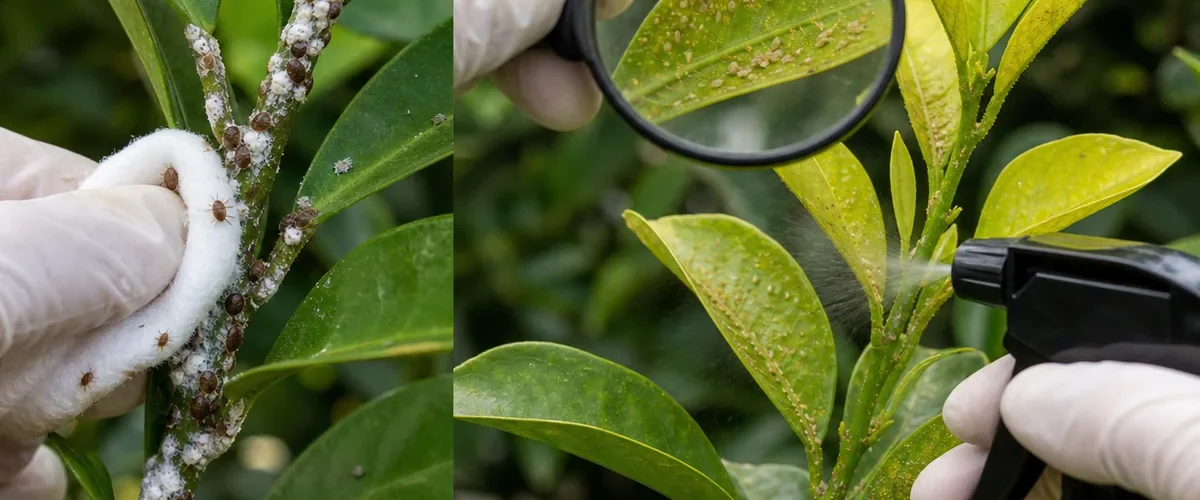
Mealybugs look like small white cottony insects and often hide in leaf axils, roots, and crevices. Soft scales may resemble brown or tan bumps and produce sticky honeydew.
Armored scales form hard covers and may not produce honeydew. The immobile adult stage can look like part of the bark, while young crawlers are tiny and mobile.
Use a magnifier and gently lift one suspicious bump. Plant tissue such as a bud or corky scar will not separate in the same way. Confirm the pest before spraying.
Move the Plant Away From Others
Isolate an infested houseplant immediately. Check every nearby pot, especially where leaves touched. Wash the shelf, saucer, and tools.
Do not carry the plant through the collection uncovered if insects are dropping. Bag or box it loosely for transport without leaving it sealed in heat.
New plants should remain separate for observation before joining the collection.
Remove What You Can See
For a light infestation, wipe insects with a damp cloth or use a soft swab. Prune a heavily covered stem when the plant can spare it and dispose of the cutting in a sealed bag.
A firm water rinse can dislodge crawlers and mealybugs from sturdy plants. Support stems and keep excess water out of crowns and pot covers.
Manual removal reduces the number the treatment must reach, but it rarely finds every egg or crawler.
Use Alcohol Only as a Spot Test
A swab lightly dampened with 70% isopropyl alcohol can kill some exposed mealybugs on contact. Test one hidden leaf area first and wait 24 to 48 hours.
Do not soak the plant or pour alcohol into the soil. Succulents, orchids, tender leaves, waxy coatings, buds, and flowers may be damaged.
Provide ventilation, keep alcohol away from flames, and store it away from children and pets.
Choose Soap or Oil by Label
Insecticidal soap and horticultural oil can control exposed soft-bodied stages when the product lists the plant and pest. Neem-based products vary, so use one registered or labeled for the intended use.
Ordinary dish soap is not the same as insecticidal soap. Fragrances and degreasers may strip protective leaf wax.
Follow dilution, coverage, temperature, and repeat instructions. Oils can burn plants in heat or when combined too closely with sulfur products.
Cover Hiding Places Without Drenching Flowers
Treat stems, leaf undersides, joints, and protected crevices where crawlers settle. Keep the product off open flowers unless the label specifically permits it.
Apply when pollinators are not active and avoid direct hot sun. Move indoor plants to a washable ventilated area and protect surrounding surfaces.
More runoff is not better. Contact products need careful coverage, not a flooded root ball.
Repeat Because Eggs Survive
Many contact treatments do not kill every egg beneath wax or covers. Inspect every few days and repeat only at the label interval.
Look for new crawlers, fresh honeydew, and expanding colonies. Keep the plant isolated until several checks find no active insects.
A single clean-looking week is encouraging, not proof the life cycle ended.
Check Roots and Ants
Root mealybugs create white waxy deposits inside the pot and may require discarding old mix, cleaning the container, and treating according to expert guidance.
Ants protect honeydew-producing scale from predators. Manage ant routes safely and keep branches from touching walls or other plants.
Do not apply sticky barriers directly to tender stems or where wildlife can become trapped.
Know When to Discard the Plant
A valuable large plant may justify months of careful treatment. A small heavily infested plant beside a rare collection may create more risk than value.
Bag it before disposal and clean the area. Never compost active scale unless the compost process is known to destroy the pest.
Help the Plant Recover Without Overfeeding
Scale removes sap and can leave a plant weak, but heavy fertilizer pushes soft growth before roots and leaves recover. Keep light, water, and temperature appropriate, then resume normal feeding only with active healthy growth.
Wash honeydew from sturdy leaves with plain water so photosynthesis is not blocked by sooty mold. Old scars and yellow leaves may not repair. Judge success by clean new growth, firm stems, and the absence of crawlers.
The Trick Works Because You Return
Soap, oil, neem, water, or alcohol can remove exposed stages, but none creates permanent immunity. Hidden insects make follow-up the decisive step.
Isolate today, treat the confirmed pest, and mark the next inspection date. The plant becomes truly clean when several careful checks find no crawlers, not when the first cottony patch vanishes.