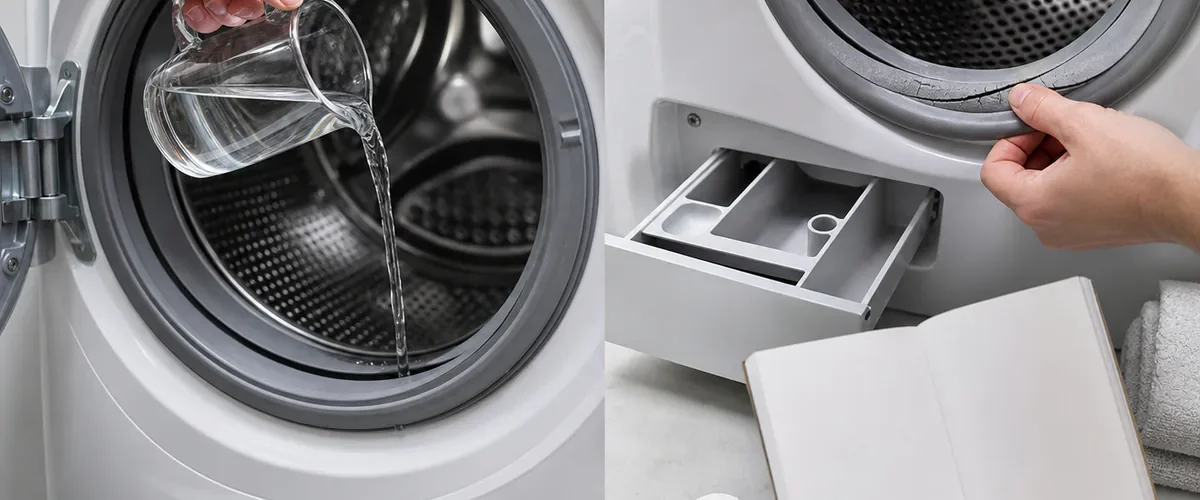
The washer finished its empty cycle and the drum smelled sharp and clean. It was easy to believe the monthly vinegar trick had washed away every trace of grime. But the part that deserves attention is hidden: repeated acid exposure may weaken certain rubber seals and hoses.
White vinegar is useful for many household jobs, yet washing machines differ. Some manufacturers warn against pouring it into the drum because long-term exposure can damage components. Before trying any viral cleaning routine, open the care guide for your exact model. The best monthly washer clean is the one the machine was designed to handle.
Why a Washer Can Smell Even Though It Washes
Detergent residue, fabric softener, lint, body soil, and trapped moisture can collect in a washer. Front-load door gaskets, dispenser drawers, filters, and the space around the drum are common trouble spots.
Using too much detergent makes the problem worse, especially in a high-efficiency machine. Extra suds may not rinse away fully. Closing the door immediately after every load traps humidity and gives odor-causing growth a better setting.
A sour smell is a signal to inspect and clean, not a reason to pour several chemicals together.
Check the Manual Before Adding Vinegar
Find the model number and search the manufacturer’s official care guide. Look for a Clean Washer cycle, approved cleaning product, bleach instructions, and filter access. Follow the amount and location exactly.
Whirlpool, for example, advises that vinegar in the washer can harm rubber components over time and recommends a washer cleaner or an allowed bleach procedure for compatible models. Another brand or model may give different directions. Your manual is the deciding source.
Never mix vinegar with chlorine bleach. Acid and bleach can release toxic chlorine gas. Also keep ammonia away from bleach. If products were added by mistake, leave the area, get fresh air, and contact emergency or poison-control help.
The Safer Monthly Cleaning Routine
Empty the machine completely. Remove coins, hair clips, and debris. Wipe the door or lid, then inspect the rubber gasket without pulling or tearing it. Remove lint, hair, and small objects from folds with a damp cloth.
Take out the dispenser drawer only if the manual shows how. Wash it with warm water and mild detergent, brush away buildup, rinse, dry, and return it correctly.
Next, run the machine’s cleaning cycle with the approved washer cleaner or other product named by the manufacturer. Do not combine cleaners. When the cycle ends, wipe remaining moisture and leave the door or lid open enough for air to move safely.
Clean the Gasket in Small Sections
Wear gloves and work around the fold slowly. A sock, coin, or hair tie can hold moisture against the rubber. Use only the cleaner and cloth type allowed by the manual. Wipe toward yourself so debris does not fall deeper into the machine, then dry the fold completely.
If you see black staining that returns quickly, a torn gasket, or water collecting where it should not, arrange service. Scrubbing harder may damage the seal without reaching growth behind it.
Do Not Forget the Filter
Some washers have a drain-pump or lint filter that owners can clean. Others require service access. Read the guide before opening anything because trapped water can spill quickly. Unplug the appliance when the instructions require it and never remove a panel that is not meant for routine maintenance.
Prevent the Smell Between Cleanings
- Remove wet laundry soon after the cycle ends
- Use the detergent type and amount recommended for the load
- Wipe the gasket and glass when moisture collects
- Leave the door ajar when safe for children and pets
- Clean detergent spills before they harden
Wash heavily soiled items on a suitable cycle instead of adding extra detergent. Separate lint-producing fabrics when practical. If the machine drains slowly, shakes unusually, leaks, or shows an error code, stop treating the symptom and investigate the fault.
Measure detergent with the product cap or dispenser rather than pouring by eye. Soft water and small loads usually need less than hard water or heavily soiled loads. High-efficiency washers require HE detergent because standard formulas can create excess suds and residue.
Can Vinegar Still Help With Laundry?
Some care guides allow diluted vinegar for certain removable drawers or exterior surfaces. It may also be used as a separate pretreatment for some washable fabrics. Check both the washer manual and garment label, test colorfastness, rinse the fabric, and keep the acid away from elastic or delicate finishes.
Do not pour vinegar into a load with detergent and expect stronger cleaning. Acid can disturb the pH the detergent was designed to use. Mixing vinegar with baking soda mostly creates fizz while the two ingredients neutralize each other.
When the Odor Will Not Leave
A persistent sewage smell, leak, standing water, or burning odor needs more than another cleaning cycle. Stop using the washer and check the drain setup, supply hoses, and error guidance. Call an appliance technician or plumber when the source is not accessible or safe to diagnose.
The monthly vinegar wash has a satisfying smell, but the hidden rubber parts matter more. Use your washer’s approved cleaning cycle, clean the gasket and dispenser, control detergent, and let the interior dry. The machine will stay fresher without risking a costly surprise behind the drum.