The aphids looked like the obvious danger. Then a day after the homemade spray, pale patches spread across the leaves and the edges turned crisp. The pests were still present, but now the plant was fighting two problems.
A popular two-ingredient pesticide combines neem oil with baking soda or kitchen soap. It sounds simple, natural, and powerful. Yet neem products have different formulas, baking soda can injure foliage, and dish detergent may strip a leaf’s protective coating. The safest recipe is the one printed on a product labeled for your plant and pest.
Confirm What Is Damaging the Plant
Look closely before reaching for any bottle. Aphids cluster on tender shoots and often leave sticky honeydew. Whiteflies rise from lower leaf surfaces when disturbed. Thrips leave silvery scars and dark specks. Spider mites cause fine pale stippling and may form delicate webbing.
Not every mark comes from an insect. Sunburn, cold injury, overwatering, drought, fertilizer salts, and fungal disease can all change a leaf. A pesticide cannot repair those causes and may make stress worse.
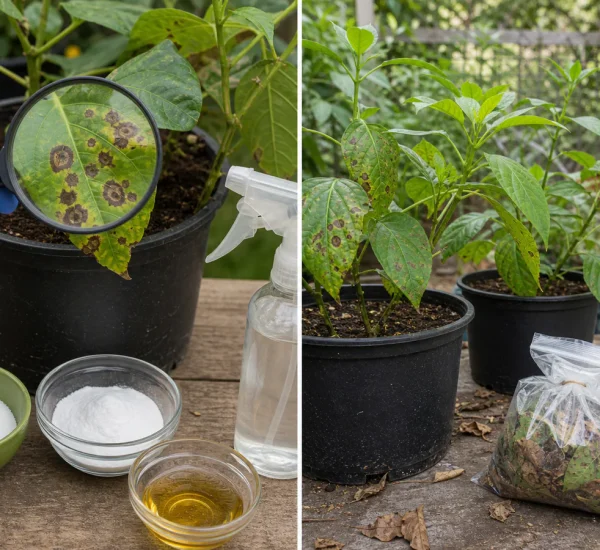
Use a magnifying glass and photograph both sides of the leaf. Check several plants, because one damaged leaf may tell a different story from a growing colony.
Separate Pests From Their Damage
Fresh aphids move when touched. Old whitefly skins may remain stuck after the insects are gone. Spider-mite webbing can collect dust even when numbers are falling. Mark two or three leaves with loose garden ties and count living pests in the same area. New growth is often the best place to judge whether control is improving.
Isolate an affected houseplant before treatment. Inspect the pots that stood beside it and clean the shelf or sill. This reduces spread while you test the gentlest useful control.
Why the Two-Ingredient Mix Can Burn
Oil can block leaf pores and increase damage when it is too concentrated or applied in hot sun. Baking soda leaves alkaline salts behind. Dishwashing liquid is made to cut grease, not protect living plant tissue.
A mixture that seemed gentle on one sturdy plant may burn a tender herb, orchid, seedling, or fresh shoot. Water hardness and measuring errors can change it again. Adding extra ingredients because the infestation looks severe only increases the risk.
Never combine pesticides, fertilizers, soaps, or oils unless the label allows the exact combination. A larger dose does not shorten the pest’s life cycle.
Choose the Exact Neem Product
Read the full package. Some products contain clarified neem oil, while others contain azadirachtin. A ready-to-use spray is not mixed like a concentrate. The label lists approved plants, target pests, dilution, protective equipment, repeat interval, and temperature limits.
For herbs, fruit, or vegetables, confirm that the crop appears on the label and follow the harvest interval. Do not use an ornamental-only product on food plants. Keep the container so instructions remain available.
Patch-Test One Small Area
Treat one lower leaf or a small branch and wait. Follow any label-specific test period; otherwise give the plant at least a full day. Watch for spotting, curling, transparency, or wilt.
Apply during the cooler part of the day, away from strong sunlight and wind. Do not treat a thirsty, heat-stressed, recently repotted, or sick plant until it has recovered enough for the product.
Avoid open flowers and visiting pollinators. Keep children and pets away for the label’s stated time. Cover ponds and prevent runoff into drains or waterways.
Use a Smaller First Step When Possible
A firm stream of water can knock aphids and mites from sturdy leaves. Wipe mealybugs individually, prune a heavily infested tip, and isolate affected houseplants. Remove dead leaves and correct excess nitrogen feeding that creates soft growth.
Then monitor. Count pests on the same marked leaves every few days. A labeled spray may need a correctly timed repeat because eggs can hatch later, but it should never be repeated sooner simply because you can still see damage. Old scars remain after the insect is gone.
What to Do After Leaf Burn Appears
Stop the homemade treatment. Move the plant out of harsh sun and give it normal care without heavy fertilizer. If the product label instructs rinsing after accidental overapplication, follow that advice. Otherwise, avoid another sudden treatment.
Do not remove every marked leaf at once. Green areas still make food for the plant. Trim only tissue that is dead, rotting, or too damaged to keep, using clean tools.
Rinse and clean the sprayer before storing it, following disposal directions on the pesticide label. Never save a diluted mixture in an unmarked drink bottle. Sunlight, time, and contamination can change a leftover spray, while an unlabeled container creates a serious household hazard.
Common Mistakes to Avoid
- Mixing neem by a recipe written for another product
- Adding baking soda or dish detergent without label approval
- Spraying before identifying a living pest
- Treating in full sun or extreme heat
- Coating flowers where bees are feeding
Two ingredients can look like a miracle until the hidden burn appears. Name the pest, choose a product labeled for it, test one leaf, and let monitoring guide the next step. A careful treatment may feel slower, but it protects the plant you were trying to save.