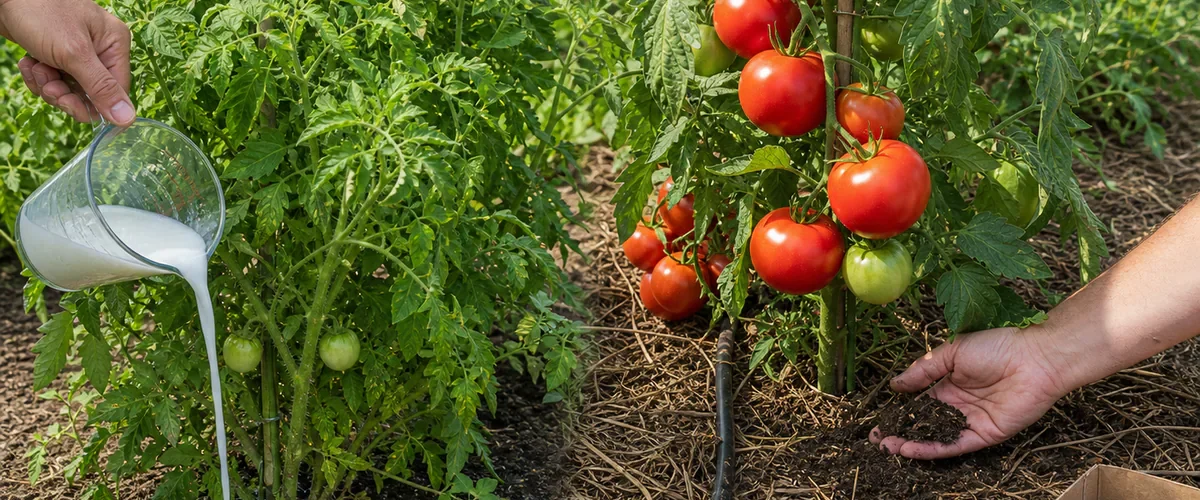
The recipe sounds almost too easy: milk, baking soda, and water. Pour a little beside each tomato plant, mist the leaves, and wait for giant red fruit. The mixture looks gentle enough to trust and unusual enough to feel like a secret.
Yet tomatoes do not become larger because three kitchen ingredients met in a bottle. Fruit size begins with genetics, then depends on roots, sunlight, water, temperature, and balanced nutrition. Before trying the milky tomato mixture, one step matters more than all the rest: learn what the plant and soil actually need.
What the Viral Mixture Gets Wrong
Milk contains calcium, protein, sugars, and other materials. Baking soda is sodium bicarbonate. Neither ingredient, alone or together, creates a complete fertilizer with the known nitrogen, phosphorus, potassium, and micronutrients a tomato crop uses.
Pouring milk into soil can leave an odor while it breaks down and may attract animals or insects. Repeated baking soda adds sodium, a salt that can harm soil structure and plant roots. It does not safely “balance” garden pH from one spoonful.
A Leaf Spray Is Not a Free Treatment
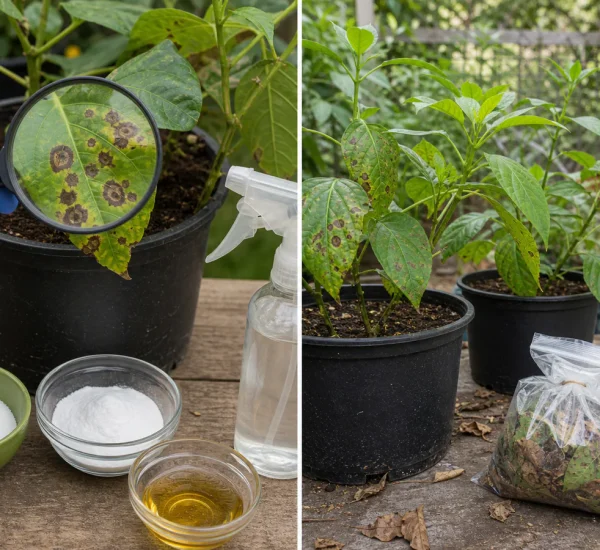
Milk sprays and bicarbonate products have been studied for certain plant diseases under specific conditions. That does not make a homemade combination a universal disease shield. Strong mixtures, frequent spraying, or application in bright heat can spot or burn leaves.
Identify a disease before treating it. When a bicarbonate product is appropriate, a registered or labeled garden product provides directions that a kitchen recipe lacks. Do not spray open flowers or pollinators, and test a small area first.
Start With a Tomato Built for Size
A cherry tomato cannot be fed into becoming a beefsteak. Choose a large-fruited variety suited to the local growing season and common diseases. Read its expected days to maturity, mature plant size, and whether it is determinate or indeterminate.
Large-fruited varieties can be more likely to crack, develop blossom-end rot, or form misshapen fruit. A slightly smaller variety that matches the climate may deliver more usable tomatoes and better flavor.
Test the Soil Before Adding a Miracle
A soil test can reveal pH and nutrient levels. Follow its fertilizer recommendation instead of layering compost, milk, baking soda, eggshells, and several commercial feeds. Too much nitrogen creates a tall leafy plant with fewer flowers and can increase some fruit problems.
Mix finished compost into a new bed to improve soil condition, not as an instant cure. In containers, use fresh high-quality potting mix rather than garden soil, which can compact and drain poorly.
Give Leaves Enough Sun and Space
Tomatoes generally need at least six hours of direct sun, and often perform better with more where summers are not extreme. Shade reduces the energy available for flowering and fruit filling.
Space plants according to variety and support method. Install stakes, cages, or trellises early so roots are not injured later. Moving air helps leaves dry after rain and makes inspection easier.
Keep Moisture Steady While Fruit Expands
Deep watering encourages a useful root zone. Check the soil and water when needed rather than giving a small daily splash. A two- to three-inch organic mulch layer can slow drying and reduce soil splash, but keep it away from the stem.
Large swings from drought to heavy watering can crack fruit. Uneven moisture can also limit calcium movement into developing tomatoes and contribute to blossom-end rot. The soil may already contain enough calcium; the roots simply cannot move it steadily when water changes sharply.
Do Not Pour on More Calcium Blindly
Eggshells and milk do not repair a tomato that already has a black sunken end. Remove badly affected fruit, protect the roots, maintain even moisture, and use a soil test before adding calcium. Later fruit can develop normally on the same plant.
Feed for Fruit, Not Just Leaves
Use the soil-test result or a fertilizer labeled for vegetables and tomatoes. Measure the application and keep it away from direct stem contact. Container tomatoes need more regular feeding because nutrients leave with drainage, but the product label still sets the safe amount.
Watch the newest growth. Excess fertilizer may cause soft, dark foliage, weak flowering, or root injury. Pale plants can also result from wet cold roots, disease, or poor pH, so color alone is not a diagnosis.
Protect Flowers During Heat
Very hot days and warm nights can cause tomato flowers to drop without setting fruit. No fertilizer mixture can force pollination in extreme heat. Keep moisture steady, protect roots with mulch, and choose heat-tolerant varieties where this happens often.
Tomato flowers usually pollinate with movement. Outdoor wind and visiting insects often provide enough. In a protected greenhouse, gently shaking the support during suitable conditions may help.
Keep Enough Healthy Leaves
Remove leaves that touch the soil and confirmed diseased tissue with clean tools. Avoid stripping the plant bare. Leaves power fruit growth and shade tomatoes from sunscald.
Inspect regularly for spots, distortion, and pests. Compare symptoms with reliable local extension guidance before spraying. Rotate tomato-family crops in garden beds and clean up diseased debris at the end of the season.
This milky tomato mixture promises giant fruit, but one step matters more: diagnosing the growing conditions before adding anything. Choose large-fruited genetics, test the soil, keep water even, and protect a healthy leaf canopy. The biggest surprise is that the real “secret” is not inside the bottle at all.