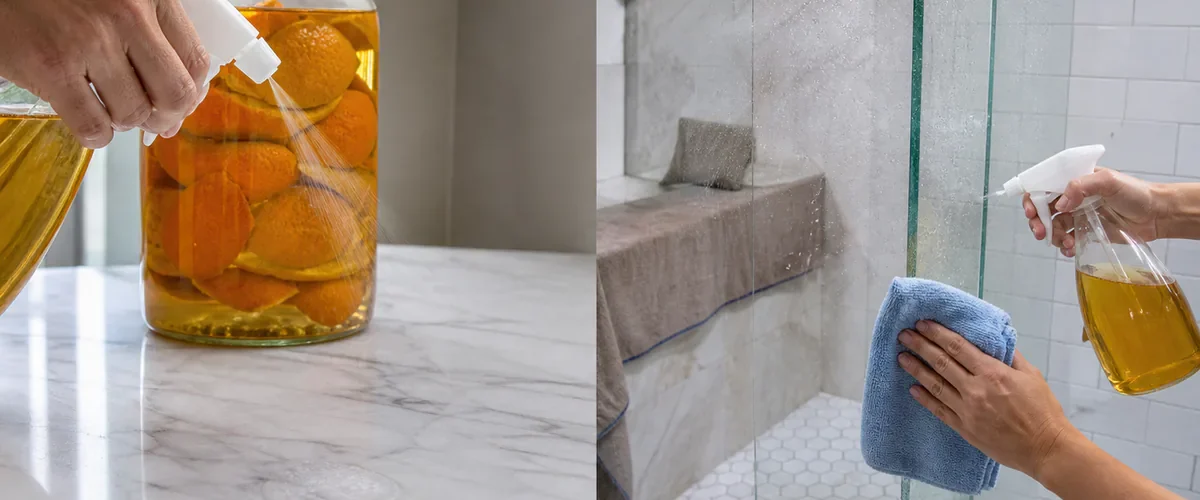
A jar full of orange peels does not look valuable. Cover it with white vinegar, wait two weeks, and the clear liquid turns golden and smells like a cleaner made for a bright kitchen. It can cut through light greasy soil surprisingly well.
But the same acid that helps loosen mineral film can etch a beautiful surface. Orange peels and vinegar become a powerful cleaner, but one wrong test can leave stone dull, grout weak, or a finish cloudy. The secret is knowing where the jar belongs before you spray.
What the Infusion Can Actually Do
White vinegar is acidic and can loosen some mineral deposits and everyday grime. Orange peel contains fragrant oils that may help with greasy residue. Infusing the two creates a scented acidic cleaner, not a new chemical with unlimited power.
It is not a balanced detergent for every soil. Detergents contain surfactants that lift oil and hold dirt in water so it can be rinsed away. For many routine jobs, soap or a labeled all-purpose cleaner will work more predictably.
Cleaning Is Not Disinfecting
A surface can look clean without being disinfected. Homemade orange vinegar is not an EPA-registered disinfectant and should not carry claims that it kills illness-causing germs. In most homes, soap or detergent and water remove dirt and many germs. When disinfection is needed, use a registered product exactly as labeled.
Make a Small Jar Safely
Wash the oranges under running water before peeling. Remove most fruit pulp, because extra sugar and moisture are not needed. Place fresh peels loosely in a clean glass jar and cover them completely with plain distilled white vinegar.
Close the jar, label it as a household cleaner, and write the date. Keep it in a cool place away from children, pets, sunlight, and food. Let the peels infuse for about two weeks, then strain the liquid through a fine filter so small pieces cannot block the sprayer.
Pour only a small amount into a clearly labeled spray bottle. Never reuse a drink container. Do not consume the infusion. If you see mold, unusual bubbling, pressure, slime, or a strange change in odor, discard it according to local guidance.
Never Mix It With Bleach
Vinegar is an acid. Mixing it with chlorine bleach can release dangerous chlorine gas. Do not combine orange vinegar with bleach, toilet cleaner, disinfectant, ammonia, hydrogen peroxide, or another household chemical.
Use one product at a time with good ventilation. If a different cleaner was already used, rinse the surface and tools fully before starting. Leave immediately for fresh air if fumes cause coughing, burning eyes, or breathing trouble, and contact local emergency or poison-control help.
The Surfaces That Need Special Care
Do not use acidic vinegar on marble, limestone, travertine, terrazzo containing stone, or other acid-sensitive natural surfaces. The damage can appear as a dull etched patch that ordinary polishing will not remove.
Also avoid unsealed grout, unsealed wood, waxed floors, cast iron, delicate plated metal, and electronic screens. Vinegar may affect rubber seals and appliance parts over time. Always follow the surface or appliance manufacturer’s care instructions.
Even a “Safe” Surface Deserves a Spot Test
Paint, laminate, tile glaze, metal finish, and sealant age differently. Apply a drop in a hidden area, wait, rinse, and let it dry completely. Check for color change, softening, loss of shine, or a sticky feel before cleaning a visible area.
Where the Cleaner May Be Useful
When the manufacturer permits diluted vinegar, the infusion may help on some plain glass, sealed ceramic tile, or durable nonporous counters. It can also loosen light water spots and greasy fingerprints.
Dilute the strained infusion with water for routine use, beginning with a mild mixture. Spray a cloth rather than the whole surface to control overspray. Wipe the soil, rinse when appropriate, and dry with a clean microfiber cloth.
Do not use it on a food-contact area without checking the material’s care guidance. Clean visible food soil with detergent and potable water, and rinse the surface before preparing food.
Common Mistakes That Waste the Jar
- Packing the jar with juicy fruit instead of mostly peel
- Leaving pieces in a spray bottle until the nozzle blocks
- Assuming natural stone can handle any natural cleaner
- Using the scent as proof that a room was disinfected
- Adding baking soda and storing the foaming mixture
- Spraying near eyes, food, pet bowls, or open flames
Store Less and Clean More Simply
Make an amount you can use within a reasonable period instead of keeping a large jar for a year. Store it closed and labeled, and keep the original vinegar bottle available so you know what went into the infusion.
For heavy grease, mold, sewage contamination, or a surface that needs disinfection, choose the right labeled product and method. A homemade cleaner should make a small task easier, not replace every product in the cupboard.
Orange peels and vinegar become a powerful cleaner, but one surface can be ruined when the acid is used blindly. Infuse a small jar, strain it, dilute it, and test first. The real value is not a magical spray for the whole house; it is turning scraps into one useful tool without damaging the home you meant to brighten.