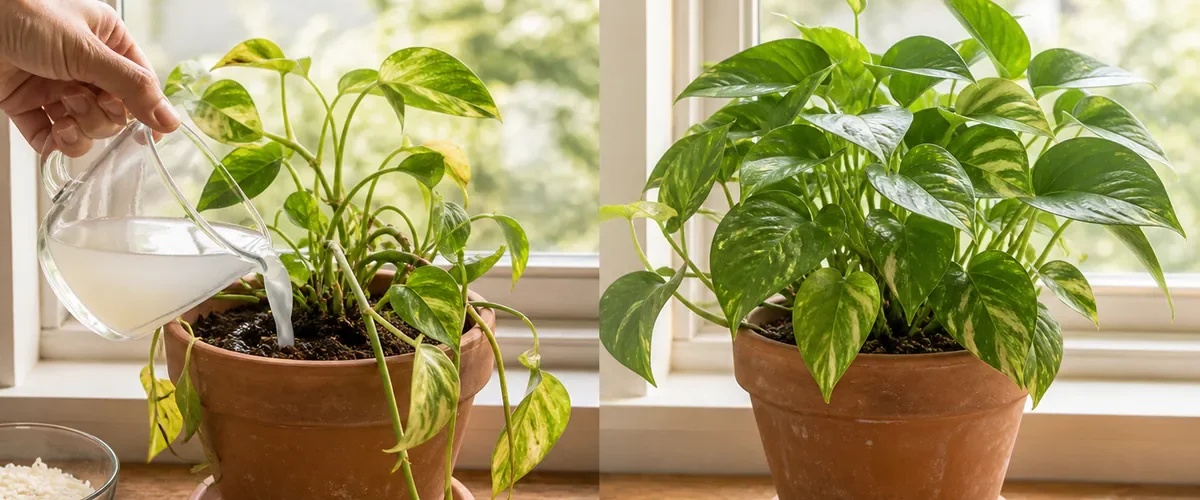
The cloudy water left after rinsing rice looks like kitchen waste. One evening, instead of pouring it down the drain, a gardener carries the bowl to a tired pothos. A few careful uses later, the plant looks brighter. It feels like a free miracle hiding beside the sink.
There is a useful idea inside that story, but it needs sensible limits. Rice water for plants can provide a small amount of starch and trace material washed from the grains. It may be a gentle extra for some actively growing plants. It is not stronger than water, a complete fertilizer, or a cure for poor light, damaged roots, and pests.
What Is Really in Cloudy Rice Water?
When dry rice is rinsed, fine starch particles enter the water and make it milky. Tiny amounts of nutrients may wash off too, but the exact amount changes with the rice, processing, water volume, and number of rinses. That makes homemade rice water impossible to dose like a labeled fertilizer.
The starch can also feed microorganisms in potting mix. That is not automatically good or bad. In a healthy, airy mix, organic material breaks down naturally. In a wet pot with poor drainage, it can encourage sour smells, mold on the surface, or fungus gnats.
How to Make Rice Water for Plants Safely
Use the First or Second Rinse
- Put plain uncooked rice in a clean bowl.
- Add cool tap water and swirl the grains with clean hands for 20 to 30 seconds.
- Strain the cloudy liquid through a fine sieve so no grains remain.
- Dilute it with an equal amount of fresh water for the first trial.
- Use it promptly at room temperature.
Never use rice water containing salt, oil, butter, stock, spices, or sauce. Cooking water can be dangerously hot and may contain concentrated starch. If you collect it, let it cool fully, confirm it is completely plain, and dilute it well.
Test One Healthy Plant First
Choose a common foliage plant in a pot with drainage. Wait until the mix actually needs water, then apply enough diluted rice water to moisten the root ball and let the excess escape. Empty the saucer. Watch the plant and soil for two to three weeks before trying it elsewhere.
Use plain water for the next several waterings. Once every three or four weeks during active growth is a cautious starting point, not a rule. A plant that reacts badly should return to plain water.
The Result You Should Expect
Do not expect a drooping plant to stand up in minutes because starch reached the soil. If a thirsty plant revives soon after rice water, the water itself probably did most of the work. Genuine new leaves take time and depend on light, temperature, roots, species, and nutrition.
A successful trial may support steady growth without obvious problems. That modest result is still valuable: you reused a clean kitchen by-product and learned how your plant responds. The miracle is better understood as a small, nearly free supplement inside a sound care routine.
When Rice Water Can Make Things Worse
- The pot stays wet for days. Adding any liquid on a schedule raises the risk of root rot.
- The soil smells sour. Stop using rice water, improve drainage, and let the mix approach the moisture level the plant prefers.
- Gnats gather near the pot. Their larvae thrive in consistently moist organic material. Reduce watering and address the infestation.
- White or fuzzy growth appears. Remove affected surface material and return to plain water.
- The plant needs special water. Carnivorous plants and other sensitive species have different mineral needs; follow species guidance instead.
Do not pour fermented rice water into indoor pots. Fermentation changes the liquid, creates odors, and makes its effects less predictable. Fresh and diluted is the safer household experiment.
Why It Cannot Replace Fertilizer
Plants require nutrients in usable amounts and proportions. A complete fertilizer label tells you its nitrogen, phosphorus, and potassium content; a bowl of rice rinse does not. Pale leaves caused by a real deficiency need a correct diagnosis, not repeated mystery mixtures.
During active growth, use a fertilizer made for your plant at the label rate if feeding is needed. Never combine full-strength fertilizer and rice water because more is not better. Salt buildup can burn roots, brown leaf tips, and cause wilting even while the soil is damp.
Fix the Basics Before Reaching for the Bowl
Move the plant to suitable light. Make sure its container drains. Check moisture below the surface rather than watering by the calendar. Look under leaves for mites or scale, and repot only when the mix has broken down or roots truly need room.
Rice water for plants is most helpful when treated as an optional experiment, not magic medicine. Use a fresh, unsalted, diluted rinse on one suitable plant, then pay attention. The humble cloudy bowl may give your greenery a gentle second wind, but good roots, good light, and careful watering create the lasting transformation.