The cushion seemed clean once it dried. Two days later, the sharp pet-urine smell returned as if the accident had just happened. The surface had been wiped, but moisture and odor compounds were still hiding deep inside the fabric and padding.
The most dependable way to remove pet urine odor is to absorb a fresh accident quickly, rinse carefully, and use an enzymatic cleaner labeled for that material. Perfume can cover the smell for an hour. Enzymes are designed to break down the waste that keeps calling attention to the spot.
Act Before the Liquid Travels Deeper
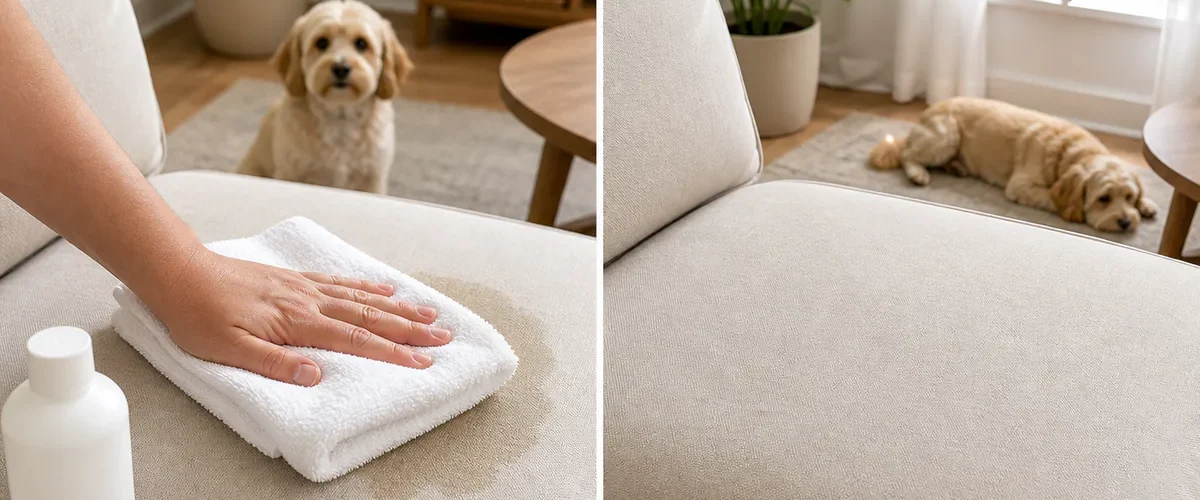
Place a thick layer of plain white paper towels or a clean absorbent cloth over fresh urine. Press firmly, replacing the towels until they come away only slightly damp. On carpet, place absorbent material underneath when the construction allows it.
Blot; do not scrub. Rubbing spreads the liquid across more fibers and pushes it deeper. Do not saturate a mattress, sofa, or carpet because extra moisture can carry the urine into foam, backing, wood, or the subfloor.
Use Cool Water for the First Rinse
Rinse the accident zone with a modest amount of clean, cool water if the care label permits it, then blot again. Test any treatment in a hidden area first for color change, water rings, or damaged texture.
Check the furniture tag or textile instructions. Velvet, silk, wool, leather, memory foam, and specialty finishes can require professional care. Removable machine-washable covers are much easier to treat than fixed upholstery.
The Step That Keeps the Smell From Returning
Choose an enzymatic pet-odor cleaner labeled for the exact surface. Follow its directions for amount, contact time, ventilation, rinsing, and drying. The product must usually reach as deeply as the urine did, but flooding the item can create a moisture problem.
Keep pets and children away while it works and until the treated area is dry. The ASPCA notes that enzyme-based cleaners can cause stomach upset if swallowed, so prevent licking and store the product securely.
Why Vinegar Alone Often Disappoints
Diluted vinegar may reduce some odor and is tolerated by certain washable surfaces, but it is not safe for every fiber, finish, or stone. It also does not replace an enzyme product designed for pet waste.
Never combine vinegar with bleach. Do not mix it in the same bottle with peroxide or other cleaners. One product used according to its label is easier to control than a viral blend with unknown surface effects.
Avoid Heat and Ammonia
Steam cleaning can set urine odor into carpet fibers and backing, making the problem harder to remove. Avoid hair dryers and heaters on a still-smelly spot. Use fans and room ventilation for drying instead of strong direct heat.
Ammonia-based cleaners smell similar to part of urine and may draw a pet back to the same area. The ASPCA recommends an enzymatic cleanser designed to neutralize pet odors rather than ammonia.
Handle Each Surface Differently
Carpet and Rugs
Blot both pile and backing when accessible. Treat an area slightly larger than the visible mark because liquid spreads beneath the surface. A persistent old stain may require a professional extractor and treatment of the pad or subfloor.
Sofas and Mattresses
Use the smallest amount that reaches the affected depth and give the item enough airflow to dry completely. If urine entered thick foam, surface treatment may not reach it. A professional cleaner can assess whether the cushion insert should be replaced.
Machine-Washable Fabric
Rinse and wash according to the care label. Air-dry first so heat does not set a remaining odor. If you can still smell it when dry, repeat with an enzyme laundry product before using the dryer.
Find Old Accidents Methodically
Smell alone can be misleading. Inspect seams, furniture edges, curtains, baseboards, and the floor beneath a rug. A pet-safe ultraviolet flashlight may reveal some stains in darkness, but cleaners and other materials can also fluoresce, so confirm before treating.
After the area is dry, close the room for an hour and return with fresh senses. Odor that appears only during humid weather may be coming from padding or wood below the visible fabric. Mark the boundary lightly with removable tape before deciding whether deeper professional treatment is needed.
Cleaning Is Only Half the Solution
A sudden change in urination can signal a urinary infection, kidney disease, diabetes, pain, stress, or another medical issue. Contact a veterinarian promptly if a trained pet begins having accidents, strains, urinates frequently, shows blood, drinks much more, or seems unwell.
Keep litter boxes clean and accessible, offer enough boxes for cats, and maintain regular outdoor breaks for dogs. Do not punish or rub a pet’s nose in the accident. Fear can worsen the behavior without treating its cause.
The returning smell was not proof that the cleaning failed completely; it was a clue that the treatment never reached the full stain. Blot early, use cool water carefully, apply the right enzyme product, and dry the material fully. That hidden step is what finally lets the room smell clean again.