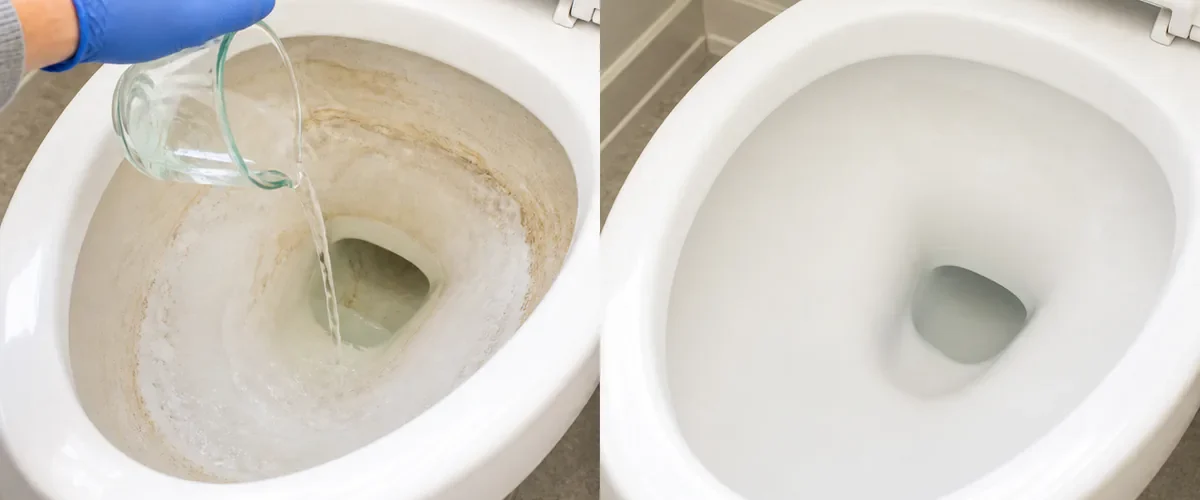
The white ring looked permanent. It had survived quick scrubs, scented tablets, and every rushed weekend cleanup. Then someone suggested leaving a simple descaling treatment in the toilet overnight. By morning, the rough edge finally began to move under the brush.
An overnight toilet limescale treatment can help because mild acid needs contact time to dissolve mineral deposits. The important part is choosing one toilet-safe product, using it alone, and never creating a dangerous cleaner mixture.
Know Whether the Ring Is Scale or Something Else
Hard water leaves calcium and magnesium deposits as water evaporates. The result often feels rough and appears white, gray, yellow, or brown where the water line sits. Rust from iron can add orange color.
A soft dark film may be organic buildup instead. A crack, chipped glaze, or colored mark beneath the surface will not disappear through stronger scrubbing. Wear gloves, ventilate the bathroom, and inspect before reaching for a chemical.
The Overnight Method Starts With One Product
Check the toilet manufacturer’s care instructions first. Choose either a commercial toilet-bowl descaler labeled safe for the fixture or a mild acid method the manufacturer allows, such as plain white vinegar. Do not add another cleaner to make it “stronger.”
Flush, then use a toilet brush to lower the water slightly if needed so the deposit is exposed. Apply the chosen product according to its label. Let it remain for the stated contact time; if an overnight soak is permitted, close the lid and keep the bathroom unavailable to children and pets.
In the morning, scrub with a nylon toilet brush and flush thoroughly. Repeat another day if the scale is thick. Gentle repeated treatment is safer for the glaze than attacking the bowl with metal tools.
Why Vinegar, Lemon, and Salt Should Not Become a Cocktail
The source recipe combines vinegar, lemon juice, and coarse salt. Vinegar and lemon are both acids, so mixing them does not create a special new power. Salt can scratch when rubbed aggressively and may not dissolve well in cool water.
A labeled descaler gives a known dose and contact time. If the toilet maker permits vinegar, plain vinegar is simpler. More ingredients add more uncertainty, especially when residue from a previous product remains in the bowl.
Never Mix Acid With Bleach
Bleach and acidic cleaners, including vinegar and lemon juice, can release toxic chlorine gas. Bleach and ammonia can also create dangerous fumes. Never combine toilet products, even if an online recipe calls each one “natural” or “common.”
If you used bleach or a bleach tablet recently, flush repeatedly and wait until no product remains before using an acid cleaner. Follow every label. If products are mixed accidentally and strong fumes, coughing, chest tightness, or burning eyes develop, leave the area for fresh air and contact emergency or poison-control services.
Tools That Protect the Porcelain
- Use a nylon toilet brush rather than a knife or screwdriver.
- Avoid steel wool and harsh abrasive powder on glazed porcelain.
- Do not use a pumice stone unless the fixture maker specifically permits it.
- Keep cleaning cloths and brushes separate from other household tools.
- Wash hands after removing gloves.
Scratching the glaze makes future deposits easier to hold. A tool that removes the ring today can create a rougher problem next month.
Do Not Pour Boiling Water Into the Bowl
Very hot water can crack cold porcelain through sudden temperature change and may affect seals. Use water only at the temperature recommended by the cleaner and fixture maker. The chemical contact time, not a dramatic burst of heat, does the useful work.
Stop Scale From Rebuilding So Quickly
Brush the water line during regular weekly cleaning before a hard ring develops. Repair a constantly running toilet because moving and evaporating water can leave more mineral marks and wastes water. Clean rim jets only with a method approved for the model.
If every fixture develops heavy scale, test the water hardness and discuss treatment with a qualified water professional. A home softener changes water chemistry and requires informed sizing and maintenance; it is not a casual purchase based on one stained bowl.
Keep a simple cleaning note inside the supply cupboard. Record which product was used and the date. That prevents another person from adding bleach or a different cleaner to a bowl that still contains acid residue, and it shows how quickly the ring returns.
When the Problem Needs a Plumber
Call for help if the toilet drains slowly, clogs repeatedly, leaks at the base, rocks on the floor, or smells like sewage. Bowl cleaner cannot repair a blocked drain, failed wax seal, damaged vent, or cracked fixture.
The overnight trick works when it gives the right descaler time to soften true mineral buildup. Choose one compatible product, keep bleach far away, and let the brush finish gently in the morning. The surprise is not a magic pinch; it is what patience can remove without damaging the bowl.