The first warm evening of winter often brings an unwelcome smell with it: dust waking up on the heater. A viral home trick offers a prettier picture. Place bay leaves on the radiator, wait for the heat to release their scent, and supposedly the house smells wonderful while the heating bill falls.
Bay leaves can give off a mild herbal aroma when warmed. They cannot make a radiator produce the same heat for less money. The useful part of the trick is fragrance, and even that needs a safer setup than dropping dry leaves on a hot surface.
What Warm Bay Leaves Actually Do
Dried bay leaves contain aromatic compounds that become easier to smell as the leaves warm. The result is usually subtle, woody, and clean rather than strong like a plug-in air freshener.
The scent may make a room feel cozy, but it does not change the thermostat, insulation, boiler efficiency, or amount of heat escaping through windows. Any claim that bay leaves alone cut energy use confuses comfort with consumption.
The Safest Way to Try the Trick
First, identify the heater. If it is an electric space heater, electric baseboard, fan heater, fireplace, stove, or any appliance whose instructions say to keep objects away, do not use bay leaves on or near it.
For a traditional water-filled radiator that becomes warm rather than scorching, place two or three whole dried leaves in a stable, heatproof ceramic dish. Set the dish on a nearby table or shelf where gentle room heat reaches it, while keeping the clearance required by the radiator manufacturer.
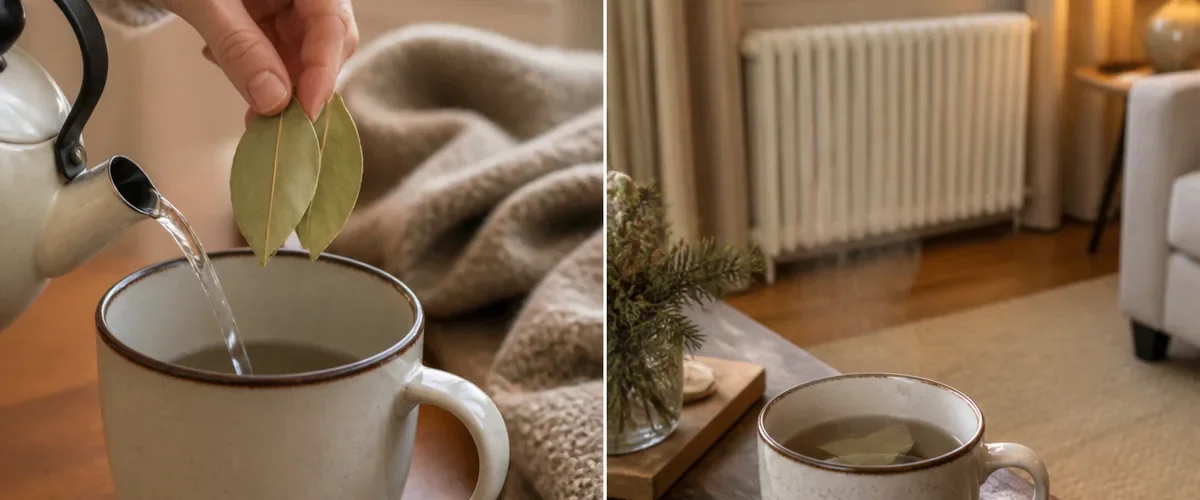
Another option is to pour just-boiled water over two leaves in a heatproof mug and leave the mug on a safe counter. The steam releases the aroma without putting dry plant material on heating equipment.
Make a Gentle Citrus-and-Bay Cup
Add one narrow strip of clean lemon peel to the mug if you want a brighter scent. Use only the colored outer peel, not juice, and keep the cup where it cannot spill. The mixture is for fragrance, not drinking. Discard it when cool instead of reheating the same leaves day after day.
Never Add Essential Oil to the Heater
Bay essential oil is far more concentrated than a dried leaf. It can irritate skin and lungs, damage painted surfaces, and create a flammable residue. Do not drip oil on a radiator, vent, candle, or light bulb.
Clean Before You Add Scent
If the room smells dusty whenever the heat starts, switch the system off and let it cool. Vacuum around and beneath the radiator using a soft brush attachment. Wipe reachable surfaces with a barely damp cloth, then let everything dry before turning the heat back on.
Forced-air systems may need a filter change rather than a fragrance trick. Follow the equipment manual and never cover a vent. A burning smell, repeated electrical odor, or visible smoke is not normal; stop using the heater and arrange an inspection.
How to Save Heating Money for Real
Begin with the thermostat. Lowering the set point slightly when the home is empty or everyone is asleep can reduce unnecessary heating. A programmable or smart thermostat makes the change consistent.
Keep furniture and heavy curtains from blocking radiators and supply registers. Close curtains at night, but do not let fabric rest against heating equipment. Seal obvious drafts around windows and doors with suitable weatherstripping.
Bleed a hot-water radiator only if its upper section remains cool and the system instructions allow it. Schedule boiler or furnace maintenance as recommended. These steps affect heat delivery; bay leaves do not.
Common Bay-Leaf Mistakes
Letting Leaves Become Brittle
Dry leaves can crumble into vents and narrow gaps. Keep them in a dish, inspect them daily, and compost them when the scent fades.
Using Too Many
A large pile will not create a better fragrance. It adds clutter near heat and may cause headaches for sensitive people. Start with two leaves and ventilate the room if the aroma feels heavy.
Masking Damp or Moldy Odors
Herbal fragrance cannot solve moisture damage. Find leaks, condensation, or wet materials and correct the source. Persistent mold should be handled according to local health guidance.
Forgetting Ventilation
Even a pleasant scent can feel stale in a closed winter room. Briefly open a window when weather and safety allow, or use the home’s ventilation system as directed. Fresh air removes accumulated indoor odors instead of covering them.
The Cozy Result Without the Myth
A few bay leaves warmed safely in water or placed in a dish near gentle heat can add a soft winter scent. That is the honest promise, and it is pleasant enough on its own.
Keep dry leaves off hot appliances, clean the heater first, and make energy savings through thermostat habits, clear airflow, and draft control. Your home can smell warmer, while the changes that truly lower the bill happen quietly in the background.