A pothos can survive in a dim corner for months, so it feels mysterious when the vines suddenly stop and new leaves arrive smaller than the old ones. One online remedy promises a quick fix with concentrated hydrogen peroxide poured into the soil.
Do not use that recipe. “130-volume” peroxide is a highly concentrated chemical that can burn skin, eyes, roots, and household surfaces. It is not plant food. The safer secret ingredient for a pothos full of leaves is much less dramatic: a measured, complete houseplant fertilizer used only when the plant has enough light to grow.
Why a Pothos Becomes Thin and Leggy
Pothos stretches when light is too weak. Long spaces appear between leaves, variegation fades, and the vine may hold only a few leaves near its tip. Fertilizer cannot replace light because a plant needs light energy to use nutrients.
Move the pot near a window with bright, indirect light. Avoid harsh midday sun, which can bleach or scorch the leaves. Turn the pot one-quarter turn each week so growth stays balanced.
Give the plant two or three weeks to adjust before deciding it needs more help. A gentle change is kinder than moving it from a dark shelf straight into blazing sun.
The Ingredient That Supports New Leaves
Choose a complete liquid houseplant fertilizer that lists nitrogen, phosphorus, potassium, and micronutrients on its label. Nitrogen supports leafy growth, but the plant also needs the other nutrients in balance.
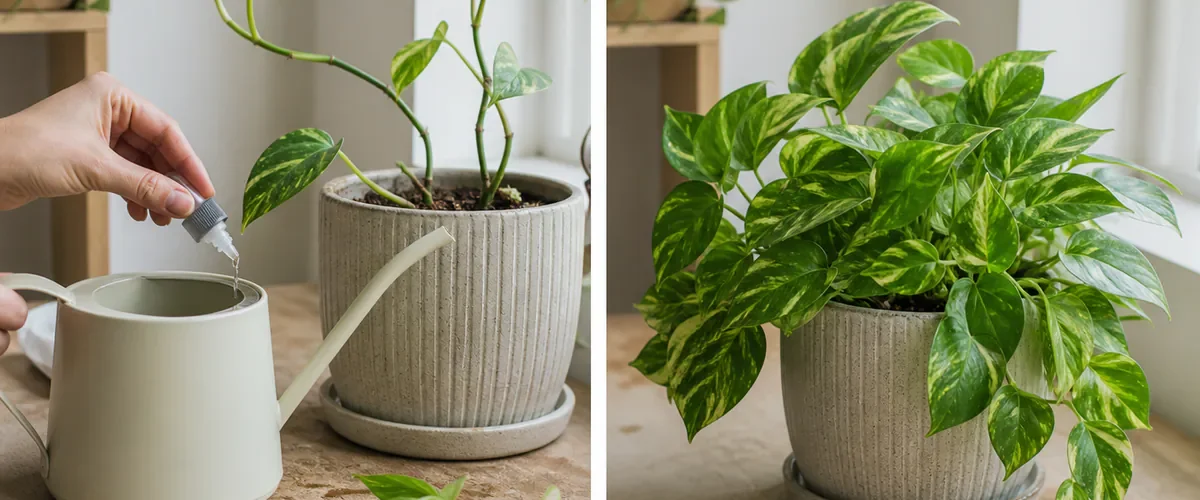
Apply the product according to its label while the pothos is actively growing. For a plant that has not been fed recently, beginning at half the labeled strength is a cautious approach. Fertilize damp soil, never a bone-dry root ball, and allow extra solution to drain away.
Do not keep feeding because you have not seen a new leaf in two days. Plant growth takes time. Wait for the interval stated on the product, and reduce feeding during slow, dark periods.
Make One Vine Turn Into Many
Even perfect fertilizer will not make a single old vine branch at every empty spot. Pruning is what creates a fuller shape.
Use clean scissors to cut a leggy vine just above a node on the mother plant. Leave several healthy leaves behind. The plant can push new growth near the cut.
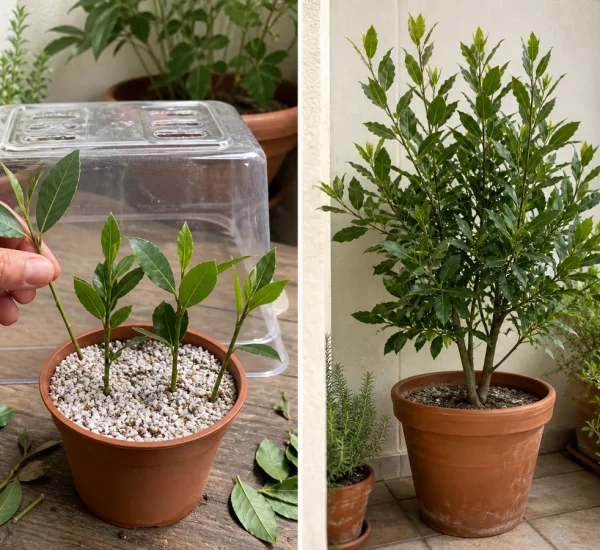
Cut the removed vine into sections, with at least one node on each piece. Root those cuttings in water or moist potting mix. When they have a small healthy root system, plant several back around the edge of the original pot. This fills the bare top far faster than waiting for one vine to do all the work.
Watering Makes or Breaks the Result
Check the potting mix with a finger. Water when the top inch feels dry, then soak the mix until water exits the drainage holes. Empty the saucer.
Do not water on a fixed calendar. A pothos in bright summer light dries faster than the same plant in winter. Constantly wet mix reduces oxygen around roots and can cause yellow leaves, soft stems, and root rot.
If the pot has no drainage, move the plant into a nursery pot with holes and place that inside the decorative container. Never let the inner pot stand in trapped water.
Warnings About the Viral Peroxide Recipe
Household peroxide is sometimes discussed for limited cleaning or horticultural uses, but concentration matters. Industrial-strength peroxide is corrosive and may cause severe injury. Diluting an unknown product by guesswork is not a safe plant-care method.
Peroxide also breaks down quickly and does not provide the balanced nutrients a pothos needs. Repeated soil drenches can injure roots and disrupt the living organisms in the mix.
If fungus gnats are the real concern, let the surface dry appropriately, remove decaying material, use yellow sticky cards to monitor adults, and consider a labeled biological treatment for larvae. Correct the wet conditions that allowed the problem to grow.
Other Mistakes That Keep Leaves Small
Do not jump to a huge pot. Extra wet mix around a small root ball raises the risk of rot. Repot only one size larger when roots circle tightly or emerge from drainage holes.
Wipe dusty leaves with a damp cloth so they receive light efficiently. Check the undersides for scale, mealybugs, and mites. Keep the tropical plant away from cold drafts.
Also check the vine itself. A healthy stem should feel firm. Soft black sections suggest rot, while crisp brown tissue points toward severe drying or damage. Prune back to firm green tissue with cleaned scissors before asking the plant to support fresh growth.
The Full, Green Finish
The transformation comes from a team, not a harsh miracle liquid: bright indirect light, careful watering, a complete fertilizer, and pruning with replanted cuttings.
Start with light, feed lightly during active growth, and give the plant time. New leaves will tell you the plan is working. The result may take weeks rather than minutes, but it creates the thick, cascading pothos that quick-fix recipes only promise.