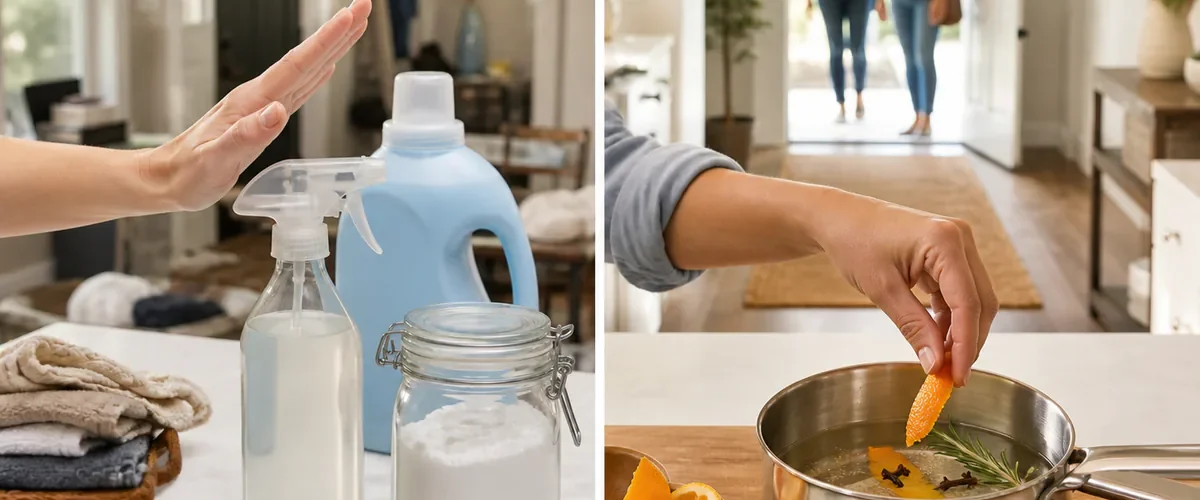
The best-smelling home on the street may not use an air-freshener spray at all. A viral recipe mixes fabric softener, baking soda, and water, then sends the mist over furniture and through every room. It smells powerful at first, but it can also leave slippery floors, spot delicate fabrics, and put concentrated fragrance into the air.
There is a gentler three-ingredient secret. Warm citrus peel, rosemary, and whole cloves in water, and the kitchen fills with a clean, welcoming scent without spraying laundry chemicals around the house.
Why the Fabric-Softener Spray Is a Poor Trade
Fabric softener is designed for a measured laundry cycle, followed by rinsing or drying. It is not automatically approved for breathing as a room spray or coating floors, counters, pet bedding, and upholstery.
Baking soda does not make every ingredient safe. In a spray bottle, it may settle, clog the nozzle, and leave pale residue. Fine droplets can land on hard flooring and create a slick film.
If anyone at home has asthma, migraines, allergies, or fragrance sensitivity, a heavily perfumed mist may make the room feel worse rather than fresher.
The Three-Ingredient Fragrance Pot
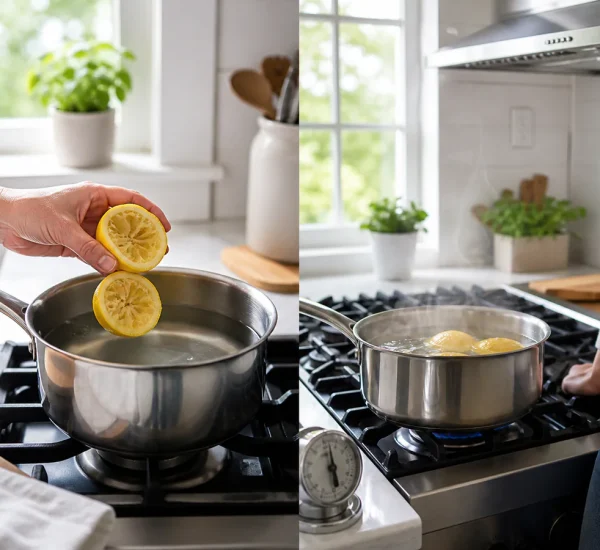
You need the peel from one orange or lemon, one small fresh rosemary sprig, and three whole cloves. Add them to a small saucepan with about three cups of water.
Bring the water just to a gentle simmer, then lower the heat. Keep the pan uncovered and remain in the kitchen. Add more water before the level becomes low. Twenty to thirty minutes is usually enough for a noticeable aroma.
Turn off the heat and let the pan cool. Strain the contents and compost the plant material. Do not store and repeatedly simmer the mixture for days, because old organic water can spoil.
A No-Stove Version
Place the same ingredients in a sturdy heatproof bowl. Pour just-boiled water over them and set the bowl on a stable counter away from the edge. The fragrance will be lighter, but there is no burner left running.
Prepare the Ingredients Without Waste
Save peel only from fruit you were already going to eat. Wash the fruit before peeling, remove any produce sticker, and use only a small strip of the colored outer skin. The thick white pith can make warmed water smell bitter.
Choose rosemary that is still fresh and discard slimy stems. Use whole cloves rather than powder, which floats, clumps, and is harder to strain. Freeze extra clean citrus strips in a labeled container for another day, but do not refreeze peel that has already been warmed.
Clean the Odor Source First
A fragrance trick works only after the source is gone. Empty food waste, wash the trash container, clean the sink strainer, and dry wet cloths. Launder pet bedding and vacuum upholstered furniture if the care label allows it.
Open windows briefly when weather and security permit. Run kitchen and bathroom exhaust fans to the outdoors. Moving stale air out is more effective than layering a sweet smell over it.
Persistent mustiness may signal a leak, condensation, or mold. A sewage, gas, or burning odor needs investigation, not perfume.
Make the Scent Fit the Room
For a brighter aroma, use lemon peel and rosemary. For a warmer evening scent, use orange peel and cloves. Keep the amount small. Natural materials still release chemicals into the air, and stronger is not always more pleasant.
Do not add essential oils to a simmering pan. Oils are concentrated, may irritate people and pets, and can create a residue. Whole kitchen ingredients are easier to control.
Never leave a pan heating while you sleep, shower, work in another room, or leave home. Keep handles turned inward and children and animals away from hot water.
Mistakes That Ruin a Fresh-Smelling Home
Spraying Soft Surfaces Without Testing
Water and fragrance can mark silk, leather, wood, electronics, and upholstery. Skip the spray. Clean each material with a product and method approved by its maker.
Trying to Fragrance the Air Vents
Pouring liquid or dropping peels into ductwork can create stains, dust buildup, and equipment trouble. Keep the fragrance pot in the kitchen, not inside the heating system.
Keeping the House Closed for Too Long
Cooking, cleaning, showers, and people all add moisture and odors. Use proper ventilation even in winter. A fresh home needs air exchange, not only a pleasant recipe.
The Neighbor-Worthy Finish
The memorable smell comes from two quiet steps: remove what is stale, then warm a small amount of citrus, rosemary, and clove while you are present. The aroma feels connected to a clean kitchen instead of a cloud of perfume.
Use the bowl method when you want the safest simple option, and stop if anyone feels uncomfortable. The secret is not a stronger spray. It is a clean home with one gentle scent arriving at exactly the right moment.