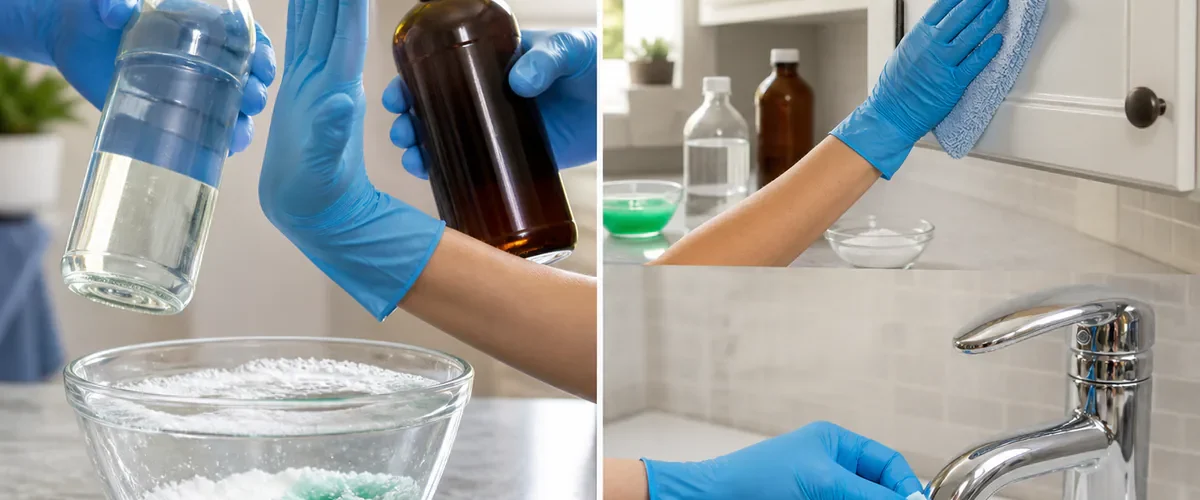
A four-ingredient bathroom mixture promises to beat bleach, melt limescale, cut kitchen grease, and stay useful in a bottle for weeks. The recipe combines vinegar, hydrogen peroxide, baking soda, and dish soap. It sounds powerful because it is doing too much.
Vinegar and hydrogen peroxide should not be combined in a homemade cleaner. Together they can form irritating peracetic acid. Vinegar and baking soda mostly react with each other, creating bubbles while reducing the useful acidity that dissolves mineral scale.
The surprising solution is to separate the jobs. One cleaner tackles grease; another tackles limescale. Neither needs to challenge bleach in a chemical contest.
Use Dish Soap for Grease
Grease responds well to surfactants, the cleaning ingredients in dish soap. Add a few drops of plain dishwashing liquid to a bowl of warm water. Dip a microfiber cloth, wring it well, and wipe cabinets, sealed counters, and appliance exteriors.
Rinse the cloth in clean water and wipe again to remove soap film. Dry the surface. For thick grease, repeat rather than pouring on a stronger homemade mixture.
Always check the care instructions. Unsealed wood, natural stone, painted finishes, and appliance coatings may need special products.
Use One Acid for Limescale
White mineral crust around faucets and shower glass can respond to a mild acid such as white vinegar or a labeled citric-acid descaler. Never use acid on marble, limestone, travertine, cement grout that may be damaged, or any surface whose maker warns against it.
For a compatible faucet, soak a cloth with plain vinegar, wrap only the crusted area for ten minutes, then remove it and wipe gently. Rinse thoroughly and dry. Do not leave acid sitting on metal for hours.
For toilets, use a product labeled for toilet-bowl mineral deposits and follow its contact time. Never mix it with bleach or another cleaner.
Cleaning Is Not Always Disinfecting
Soap, water, and rubbing remove dirt and many germs from everyday surfaces. Disinfection is a separate step usually needed when someone is ill or a surface has a specific contamination risk.
If disinfection is needed, choose one registered product suitable for the surface. Follow its label for ventilation, protective equipment, wet contact time, rinsing, and storage. Do not add vinegar, peroxide, ammonia, or soap unless the label specifically instructs you to.
Bleach can be useful when used exactly as directed, but it must never be mixed with other cleaners or disinfectants.
Why the Viral Bottle Becomes Risky
Vinegar Plus Peroxide
Mixing these in one container may create peracetic acid, which can irritate eyes, skin, throat, and lungs. Use products separately only when a trusted method calls for them, with a full rinse between steps.
Acid Plus Bleach
Never add vinegar, toilet descaler, or another acid to chlorine bleach. Dangerous gas can be released. Leave the area and seek emergency guidance if cleaners are accidentally mixed and fumes develop.
Storing Homemade Chemistry
A reused drink bottle invites mistakes, while gases or reactions can build inside a closed container. Keep products in their original labeled packaging. Mix only simple soap and water when needed, and discard the remainder.
A Two-Cloth Routine for a Fast Shine
Begin with a damp soapy cloth to remove grease and dirt. Follow with a clean damp cloth. Dry with a second microfiber cloth to prevent spots. Treat any remaining mineral crust later with one surface-safe descaler.
This order matters. Removing grime first lets the chosen product touch the deposit it is meant to clean. It also prevents you from using more chemical than necessary.
Label Your Cloths and Tools
Assign one brush to the toilet, one sponge to the bathroom sink, and separate cloths to the kitchen. Store them dry and apart. A beautifully cleaned faucet is not a success if the same cloth carried toilet contamination onto it.
Replace a sponge that smells, breaks apart, or cannot be cleaned according to its instructions. Wash reusable microfiber without fabric softener, which may coat the fibers and reduce their ability to pick up soil.
Common Cleaning Mistakes
Do not use the same cloth on the toilet and kitchen. Color-code cloths and wash them after use. Do not spray cleaners into the air or near your face. Apply to the cloth when the label permits.
Open a window or run an exhaust fan. Wear gloves when directed. Keep products away from children and pets, and never assume “natural” means harmless.
The Cleaner Result Comes From Less Mixing
The viral recipe looks impressive because it foams. Foam does not prove that a cleaner is safer or more effective. A few drops of dish soap remove grease; one compatible acid removes scale; one labeled disinfectant handles special germ concerns.
Separate the jobs, rinse between products, and read every label. The bathroom and kitchen can shine without turning the cleaning bucket into an experiment.