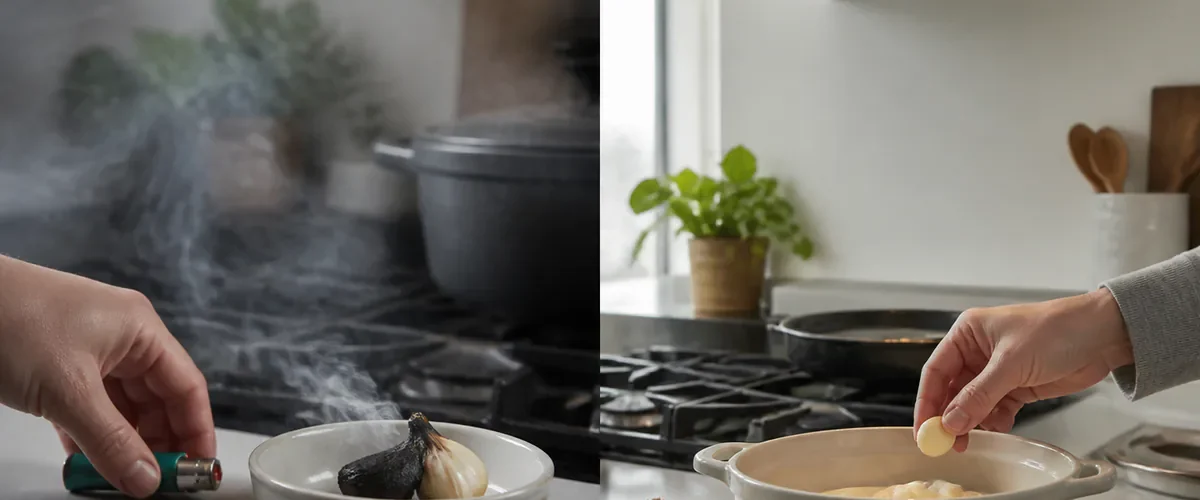
One garlic clove, one flame, and 15 minutes supposedly purify a room and calm a toothache. The smell is certainly powerful. The health promise is not.
Burning garlic creates smoke and tiny particles rather than a tested air-cleaning system. Holding a charred clove against a painful tooth may burn irritated tissue and delay the dental care that solves the real problem.
You can keep the warm garlic aroma without setting food on fire. Roast it safely as part of a meal, ventilate the kitchen, and let proven tools handle air quality and pain.
What Happens When Garlic Burns
Garlic contains sulfur compounds that create its famous smell. Crushing and heating change those compounds. Gentle cooking builds a sweet, savory aroma; charring produces bitter smoke and combustion particles.
A strong odor can make a room feel different, but smell does not prove that bacteria, viruses, mold, or toxins have disappeared. Smoke may irritate eyes and lungs, especially in people with asthma or other breathing conditions.
Do not burn garlic, herbs, paper, or food as a home air purifier.
Try the Safe 15-Minute Garlic Aroma
Preheat the oven according to the recipe you are using. Place several peeled garlic cloves in a small oven-safe dish, add a light coating of cooking oil, and cover the dish. Roast only while an adult is present.
Check at the time given by the recipe. The cloves should soften and turn light golden, not black. Use them in soup, pasta, vegetables, or a spread once safely cooled.
Run the range hood to the outdoors while cooking. The room receives the aroma, but smoke and excess moisture have a path out.
No-Oven Option
Warm a sliced clove gently in a covered pan as part of a sauce. Keep heat low and add liquid ingredients before garlic darkens. Never walk away from oil on a burner.
Garlic Does Not Replace Air Cleaning
For cooking odor, use the exhaust fan and open a window when safe. For particles, a correctly sized air cleaner with a maintained particle filter can help when used according to its instructions.
Control pollution at the source. Do not smoke indoors. Repair moisture problems that support mold. Use carbon monoxide alarms and smoke alarms in the locations required by local guidance.
A garlic clove cannot detect a gas leak or carbon monoxide, both of which may have no useful warning odor. Leave and call the proper emergency service when an alarm sounds or a fuel leak is suspected.
Never Put Burned Garlic on a Tooth
Tooth pain may come from decay, a crack, an abscess, gum disease, grinding, or another cause. A charred clove cannot diagnose or repair it.
Garlic placed directly on gums may cause chemical irritation, while heat can burn. Contact a dentist promptly, especially when pain lasts, interrupts sleep, or returns.
Seek urgent medical or dental help for facial swelling, fever, trouble swallowing, trouble breathing, spreading redness, or severe worsening pain. Those signs should not wait for a kitchen remedy.
Fire Mistakes to Avoid
Do not hold a clove with fingers while using a match or lighter. Do not place smoldering food in a dish and leave it to fill a room. A heatproof plate does not make unattended combustion safe.
Keep burners clear of towels, packaging, and wooden tools. Turn pan handles inward and keep children and pets away. If oil begins smoking, switch off the heat when safe and follow proper kitchen-fire guidance. Never throw water on a grease fire.
If You Already Burned a Clove
Extinguish it without touching hot material, then move the cooled remains to a safe waste container. Open windows and run an outdoor-venting fan when conditions allow. Anyone with coughing, wheezing, chest tightness, dizziness, or ongoing eye irritation should leave the smoky area and seek medical advice.
Wipe soot only after surfaces cool. Do not combine household cleaners to remove the smell. Ordinary dish soap and water may suit washable kitchen surfaces, but always follow the finish maker’s instructions.
Use Garlic for What It Does Best
Garlic adds flavor to food. It can be part of a varied diet, but it is not a substitute for antibiotics, antiviral treatment, dental work, ventilation, or filtration. Supplements and large raw amounts can also interact with medicines or upset digestion, so medical claims deserve professional advice.
Store whole bulbs in a cool, dry, ventilated place, not a sealed damp bag. Discard cloves with rot or unusual mold.
The Surprising Result After 15 Minutes
If garlic is gently roasted, the kitchen smells rich and dinner tastes better. If it is burned, the room gains smoke, irritation, and a fire risk.
Choose the first result. Cook garlic under control, ventilate the space, and call a dentist for tooth pain. The safest version of the old ritual turns the clove into food, not medicine or an air purifier.