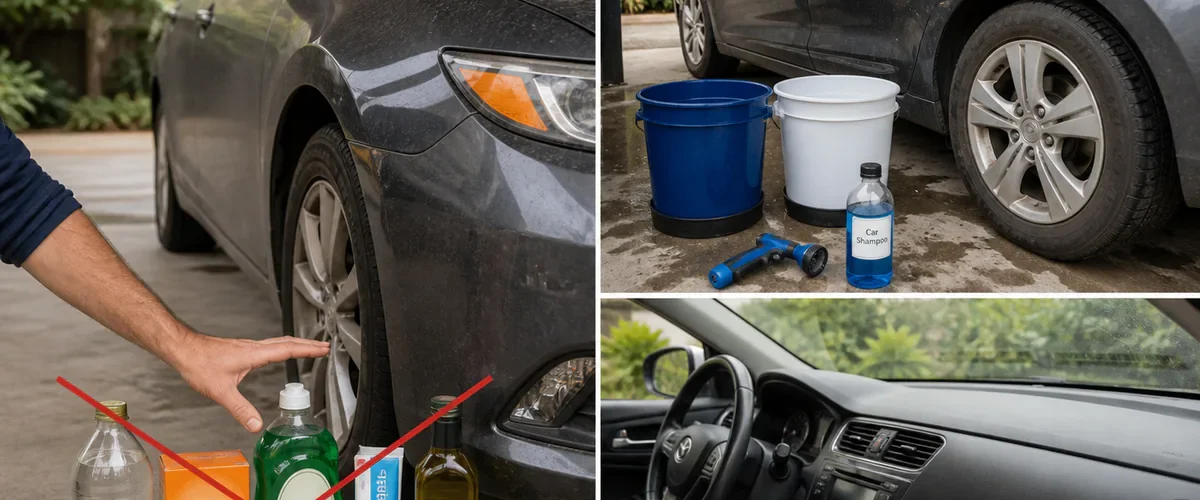
A kitchen cupboard seems to hold everything needed for a sparkling car: dish soap for the paint, vinegar for bird droppings, baking soda for the wheels, toothpaste for leather, and olive oil for the dashboard. That bargain cleaning kit can become expensive when the wrong ingredient dulls clear coat, dries leather, or leaves a slippery film near the controls.
The greener way to clean a car is not to use the most homemade chemistry. It is to use less water, keep dirty runoff out of storm drains, and choose small amounts of products designed for each automotive surface.
Start With the Best Place to Wash
A commercial car wash is often the practical environmental choice. Many facilities capture wash water and send it for treatment rather than letting soap, oil, brake dust, and road grime flow down a street drain.
If washing at home is allowed locally, follow water restrictions and drainage rules. Work in shade on a cool vehicle. Avoid the driveway when runoff can enter a storm drain. Never wash beside streams, wells, or other sensitive water areas.
Use a shutoff nozzle and two buckets: one with properly diluted automotive wash solution and one for rinsing the mitt. This reduces water use and keeps gritty dirt away from paint.
Clean Paint Without Stripping It
Rinse loose grit first. Wash from the roof downward with a clean microfiber mitt and a pH-balanced car shampoo. Use straight, gentle passes instead of hard circles.
Rinse before soap dries, then dry with a clean automotive microfiber towel. Household dish detergent is built to cut kitchen grease and may remove protective wax. Baking soda and toothpaste are abrasives that can scratch clear coat.
Bird droppings should be softened and removed promptly with water and a product approved for automotive paint. Do not scrub a dry deposit.
Give Wheels Their Own Tools
Brake dust can contain sharp particles. Use a separate bucket, brush, and towels so that residue never touches paint. Choose a wheel cleaner labeled for the wheel’s finish and follow its dwell time.
Work on cool wheels and rinse thoroughly. Avoid strong acids and homemade pastes on polished, coated, or specialty metal because a short test cannot always reveal long-term damage.
Reset the Interior With Less Product
Remove trash and take out the floor mats. Vacuum seats, seams, carpets, and vents with suitable attachments. Much of the visible improvement comes from dry cleaning, which uses no spray at all.
Wipe hard surfaces with a slightly damp microfiber cloth. For remaining soil, use an interior cleaner approved by the vehicle maker for that plastic, vinyl, screen, or trim. Spray the cloth, not switches or electronics.
Avoid shiny oil on the steering wheel, pedals, gear selector, and dashboard. Slippery controls are dangerous, while a glossy dashboard can reflect in the windshield.
Handle Seats by Material
Fabric seats should not be soaked because water can reach foam and electronics. Blot spills, test a hidden area, and use a low-moisture upholstery product when needed. Extract moisture according to the equipment instructions and let the car dry with good ventilation.
Leather and coated synthetic leather need different care. Check the manual, then use a compatible cleaner and conditioner. Toothpaste, alcohol, vinegar, and food oils may discolor or dry the finish.
Clean Glass for Clear Vision
Use an automotive glass cleaner that is safe for tint, applied to a clean cloth. Wipe in one direction inside and another outside so streak location is easy to identify.
Do not use ammonia-based glass cleaner on aftermarket tint unless its maker approves it. Keep liquid away from dashboard openings and camera or sensor housings.
Remove Odor Instead of Perfuming It
Find the source: old food, a wet mat, pet hair, a leaking door seal, or a dirty cabin-air filter. Clean and dry the area. Replace the cabin filter on the vehicle’s service schedule.
A persistent sweet smell, fuel odor, exhaust smell, or ongoing dampness may signal a mechanical or water leak. Arrange an inspection. Do not cover a warning with essential oil.
Common “Natural” Cleaning Mistakes
Never mix cleaning products. Do not use vinegar on every surface simply because it is familiar. Acid can affect stone, metal, coatings, and electronics. Do not leave a bowl of liquid in a parked car where it can spill.
Test any new product in a hidden area and read both the product label and vehicle manual. More product usually means more residue and rinsing.
A Cleaner Car With a Smaller Footprint
The best transformation begins with a vacuum, controlled water, two buckets, and surface-specific products used sparingly. Reusable microfiber cloths can be washed separately after the job so grit does not reach household laundry.
Choose a wash site that manages runoff, protect the paint instead of stripping it, and keep controls clean and matte. The car looks new because its materials were respected, not because the entire kitchen cupboard was poured over them.