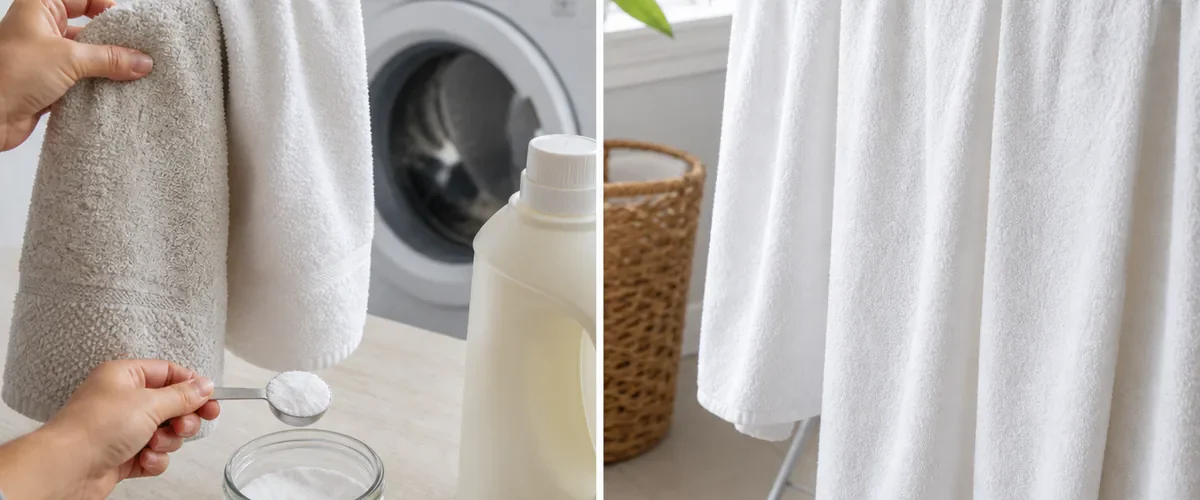
A white towel can look clean and still feel wrong. It comes from the dryer stiff, holds a faint musty smell, and appears grayer than the matching towel you bought last month. The popular answer is to boil it with detergent and baking soda.
Skip the boiling pot. Wet towels are heavy, hot water can cause serious burns, and some fibers, dyes, and trims cannot handle that treatment. Baking soda can still be a useful laundry booster, but the safer method begins with the care label and the correct washer cycle.
Why Towels Turn Gray, Stiff, and Sour
Body oils, skin products, hard-water minerals, detergent residue, and fabric softener can build up in towel loops. Overloading the washer prevents proper movement and rinsing. Leaving towels damp in the drum lets odor-producing microbes multiply.
Too much detergent often makes the problem worse. The extra product does not always rinse away, so fibers feel coated and absorb less water.
Baking soda may help control odor and support cleaning in some wash conditions. It is not a bleach, and it cannot reverse worn fibers or permanent dye changes.
The Safe Baking-Soda Towel Wash
Check the towel’s care label and the washing-machine manual. Separate white towels from dark colors. Shake them open and load the drum no more than loosely full.
Add the normal measured amount of a suitable laundry detergent. If both the appliance manual and baking-soda package allow it, add a small measured amount of baking soda in the location directed for your washer. Do not pour a large mound into a dispenser that was not designed for powder.
Select the warmest water permitted by the towel label, not automatically the hottest setting. Use a full wash and rinse. An extra rinse can help when previous detergent residue is suspected.
Dry Completely and Promptly
Move towels to the dryer or clothesline as soon as the cycle ends. Shake each towel to open the loops. Dry fully at the temperature on the label, then remove promptly.
Do not leave damp towels folded in a basket. Between uses, hang them spread out so air reaches the whole surface.
For White Towels That Need More Help
If washable white towels remain dingy, use a laundry product labeled as color-safe oxygen bleach when the care label permits. Follow the package dose and soaking instructions. Test decorative borders or embroidery first.
Chlorine bleach is a different chemical. It can weaken some fibers, yellow certain fabrics, damage colors, and react dangerously with other cleaners. Use it only when the towel label and bleach label both allow it, and never mix it with vinegar, ammonia, peroxide, or another product.
Rust, cosmetics, mildew, and body-oil stains may require different pretreatments. Identify the stain before reaching for a general whitener.
Why the Overnight Soak Can Backfire
Soaking with a huge quantity of baking soda is not automatically stronger. Undissolved powder can remain in dense fabric, and prolonged exposure may affect color or finishes. A full bathtub or bucket also creates a drowning and spill hazard around children and pets.
Use a labeled laundry soak in a safe container only when the product and textile instructions support it. Keep the container covered or inaccessible, and never combine products during the soak.
Four Mistakes That Make Towels Less Absorbent
Using Fabric Softener Every Time
Some softeners leave a coating that can reduce absorbency. If towels feel waxy, pause the softener and wash according to the label with a correct detergent dose.
Packing the Drum
Towels need room to lift, tumble, and rinse. Split a heavy load into two rather than forcing the door closed.
Measuring With the Bottle Cap by Eye
Concentrated detergents require surprisingly little. Use the marked line and adjust for water hardness and soil.
Hiding Odor With Fragrance
Scent beads may cover a musty smell without removing the dampness or residue behind it. Clean the washer as its manual directs and dry towels promptly.
When the Towel Cannot Be Restored
Old loops eventually break and mat. A towel with thinning patches, permanent mildew damage, or a sour odor that returns after correct washing may be ready for cleaning-rag duty or textile recycling.
No booster can rebuild missing cotton. Replacing one failed towel may use fewer resources than repeatedly rewashing it with extra products.
Before retiring the whole set, compare one problem towel with one correctly washed towel from the same load. If both smell clean but only the older one feels thin, wear rather than washing technique is probably the reason.
The Bright, Fluffy Finish
Baking soda can play a small supporting role, but clean towels come from the whole routine: correct detergent, enough drum space, label-safe temperature, thorough rinsing, and fast drying.
Measure the booster instead of boiling the fabric, and treat stains by type. The reward is not a dramatic bubbling pot. It is a towel that smells clean, absorbs water, and feels comfortable against your skin again.