A clothespin inside the refrigerator sounds like another strange odor trick. In reality, its best use has nothing to do with perfume or absorbing smells. The little clip solves a more ordinary problem: open bags that spill, release odors, and disappear behind containers.
Used correctly, a clean food clip or sturdy clothespin can reseal a folded package and, on certain wire shelves, keep a bottle from rolling. Used badly, it can stop the door from sealing or contaminate food.
The Problem the Clip Actually Solves
An open bag lets salad wilt, cheese dry, and strong food odors move through the compartment. Folding the top and securing it limits exposure and keeps the package upright.
A clip does not make food sterile, reverse spoilage, or extend it beyond safe storage guidance. It simply improves closure and organization. Date leftovers and follow recommended refrigerator times.
Choose a Food-Safe Clip
A washable kitchen bag clip is the best option. If using a laundry clothespin, choose a new one that has never touched dirty clothes, detergent, fragrance oil, paint, or an outdoor line.
Plastic clips should be intact and suitable for cold food storage. Wooden pins can absorb moisture and food residue, making them harder to clean. Replace cracked wood or rusty springs.
Wash the clip with hot soapy water when its material allows, rinse, and dry completely before use.
How to Close an Open Bag
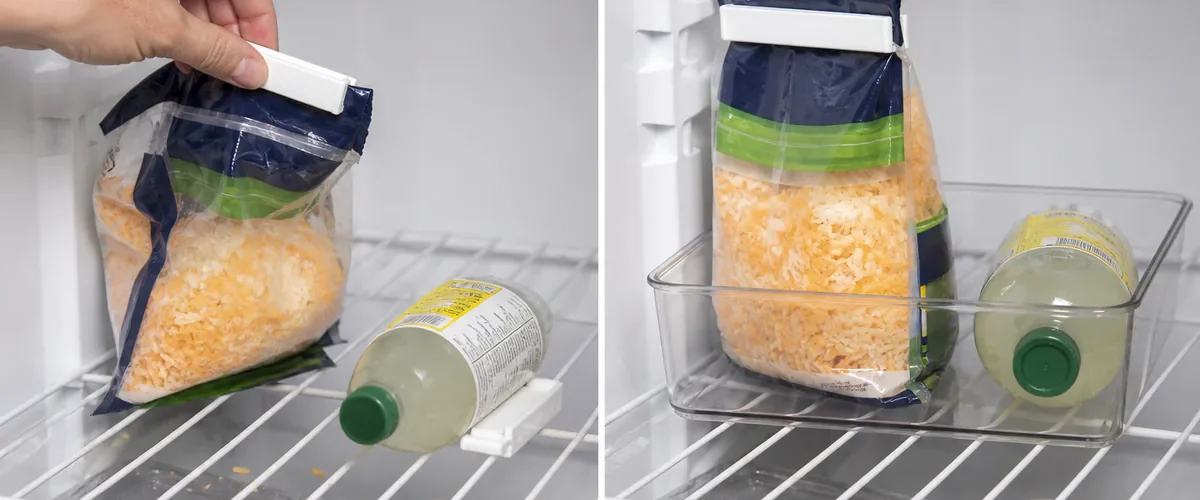
Press excess air from the package without crushing the food. Fold the top down two or three times, then place the clip across the full fold. The closure should sit above the food and remain dry.
Place the bag in a bin or on a stable shelf where it cannot fall. Add a date label for cooked food or anything removed from its original package.
For raw meat, poultry, or seafood, use a leakproof container on the lowest appropriate shelf. A clothespin is not enough protection against dripping juices.
Stop Rolling Bottles on Wire Shelves
On a strong wire shelf, two sturdy clips may act as stops beside a horizontal bottle. This does not apply to glass shelves, door bins, or clips too small to hold the weight.
Place bottles in a rack when possible. Never stack glass bottles where opening the door may send them rolling. Heavy containers belong low and stable, not hanging from improvised clips.
Never Put a Clip in the Door Seal
A bag or clothespin caught in the gasket can prevent the refrigerator door from closing. Cold air escapes, temperature rises, condensation forms, and the appliance works harder.
After organizing, close the door slowly and check the seal all the way around. No package should touch the gasket. If the door pops open, rearrange the shelf rather than forcing it.
What About Refrigerator Odor?
A dry wooden pin is too small to solve serious odors, and adding essential oil near food can transfer fragrance and create an unwanted residue. Do not perfume the refrigerator.
Find the source. Discard spoiled food safely, wipe spills promptly, wash removable shelves according to the manual, and store strong-smelling foods in sealed containers. Check the drip tray or drain only as the appliance instructions allow.
A chemical, burning, or repeated unusual odor may require service. Unplug the appliance only when it is safe and the manual instructs you to do so.
Make the Organization Last
Group open packages in a clear bin. Keep a few clean clips in a small washable cup inside the pantry, not loose beside raw food. Once a week, check dates and wipe sticky containers.
Leave space for cold air to move. An overpacked refrigerator develops warm spots, while an empty one wastes usable organization. Follow the appliance’s loading guidance and keep vents clear.
Common Clothespin Mistakes
Do not clip bags to a shelf if the weight may bend the wire or tear the package. Do not use a pin that smells of laundry fragrance. Do not let small clips become a choking hazard for children.
Never rely on a clip when the original food package requires an airtight container. A folded bag is convenient, but it is not always airtight or leakproof.
When a Container Is the Better Choice
Move moist, oily, crumbled, or strongly scented food into a lidded container instead of adding more clips. A rigid box protects soft food from crushing and catches leaks that a folded bag cannot hold.
Choose a clear container that fits without blocking vents. Label it, place older food in front, and wash it between uses. The goal is a shelf you can scan quickly, because forgotten food creates more mess and odor than a missing clothespin.
The Tiny Fix That Prevents a Big Mess
The refrigerator clothespin earns its place as an organizer, not a magical deodorizer. It closes one bag, stops one lightweight bottle, and keeps a shelf easier to scan.
Use a clean clip, protect the door seal, and keep risky foods in proper containers. That humble tool can end the daily spill problem, as long as it never pretends to replace food safety.