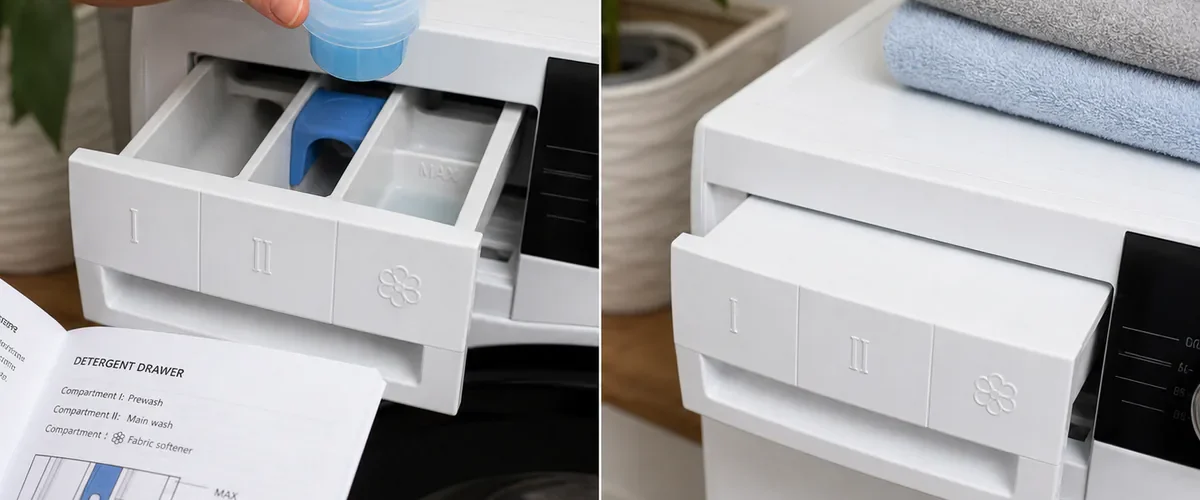
The third compartment in a washing-machine drawer often carries a flower symbol, which makes it look decorative and optional. Fill it with the wrong product, however, and softener may arrive during the wash, detergent may arrive too late, or residue may block the siphon.
On many machines, that flower marks the liquid fabric-softener compartment. But drawer layouts vary. The only answer that is always correct is printed in the manual for your exact model.
Read the Symbols Before Pouring
A common three-part drawer uses “I” for prewash detergent, “II” for main-wash detergent, and a flower for liquid fabric softener. Other washers include a separate bleach compartment, removable liquid-detergent insert, or automatic dosing tank.
Do not identify a compartment only by its left, middle, or right position. Search the model number and read the official use-and-care guide. A diagram should show the product type and maximum level.
The Flower Compartment
When the manual confirms it, add only liquid fabric softener intended for that washer. Measure for the load and never exceed the MAX line. The machine dilutes and releases it during the final rinse.
Overfilling can trigger the siphon early, sending softener onto clothing before the correct stage. Thick product may also leave residue. Dilute only if the softener label and washer manual specifically permit it.
Fabric softener is optional. It may reduce absorbency on towels, affect moisture-wicking sportswear, and be unsuitable for flame-resistant garments. Follow textile labels.
The Main-Wash Compartment
The section marked “II” commonly holds the detergent for the regular wash. Use high-efficiency detergent in an HE machine and measure for load size, soil, concentration, and water hardness.
Some drawers require a selector in one position for liquid and another for powder. Incorrect placement can release detergent too soon or leave powder behind.
Single-dose pods usually go directly in the empty drum before clothing, not in the dispenser, but follow the pod and appliance instructions.
The Prewash Compartment
The “I” section is used only when a selected cycle includes prewash or soak. It is not a second dose for every load. Unnecessary prewashing uses more water, time, detergent, and energy.
Reserve it for heavily soiled washable items when the fabric label and cycle support it. Pretreating a specific stain may be more efficient than prewashing the whole load.
Do Not Add Viral Mixtures
Vinegar and baking soda are often suggested for the softener drawer. They react with each other and may not be approved for dispenser parts, hoses, seals, or the textile.
Never add dish soap, essential oil, powdered oxygen bleach, fragrance crystals, or chlorine bleach to a compartment unless the manual names that product and location. Suds, staining, corrosion, or hazardous chemical reactions can result.
Keep bleach completely separate from acids, ammonia, and other cleaners.
Clean a Sticky Drawer
Switch off the machine. Remove the drawer only as the manual directs, noting the position of inserts and siphon caps. Rinse approved parts under warm running water and use a soft brush for residue.
Do not put parts in a dishwasher unless the manufacturer allows it. Dry and reinstall everything correctly. A missing siphon cap can stop the softener compartment from working.
Wipe the drawer housing without pushing debris into the machine. Arrange service if water leaks or a compartment repeatedly remains full.
Do a One-Load Drawer Check
Before the next load, photograph the drawer and the model label for your own reference. Compare every symbol with the official manual, return each removable insert to the shown position, and select a simple cycle that matches the laundry.
Measure one product at a time. Do not fill the prewash or softener section merely because it is empty. Watch for water leaking from the front, and check the compartments after the cycle. A little moisture can be normal, but a drawer full of product suggests a blocked siphon, low water flow, or incorrect insert placement.
This small test separates a dispenser problem from a product problem without wasting a full bottle of detergent.
Mistakes That Reveal the Wrong Compartment
Clothes that feel greasy may have received too much softener. White streaks may come from undissolved powder or overloading. Heavy suds point to too much detergent or the wrong detergent type.
Rewash affected items according to their care labels without adding more product. Do not stack extra chemicals in an attempt to cancel the first mistake.
The Drawer Finally Makes Sense
The mysterious third section is a timing tool. Each compartment holds a specific product until the cycle needs it.
Keep a photo of the diagram near the detergent shelf if several people share the washer. A simple reference prevents hurried guesses and helps everyone use the same measured routine.
Find the model manual, match the symbols, measure below MAX, and leave unused sections empty. Once the drawer is understood, cleaner laundry comes from less guessing and fewer products, not from filling every space.