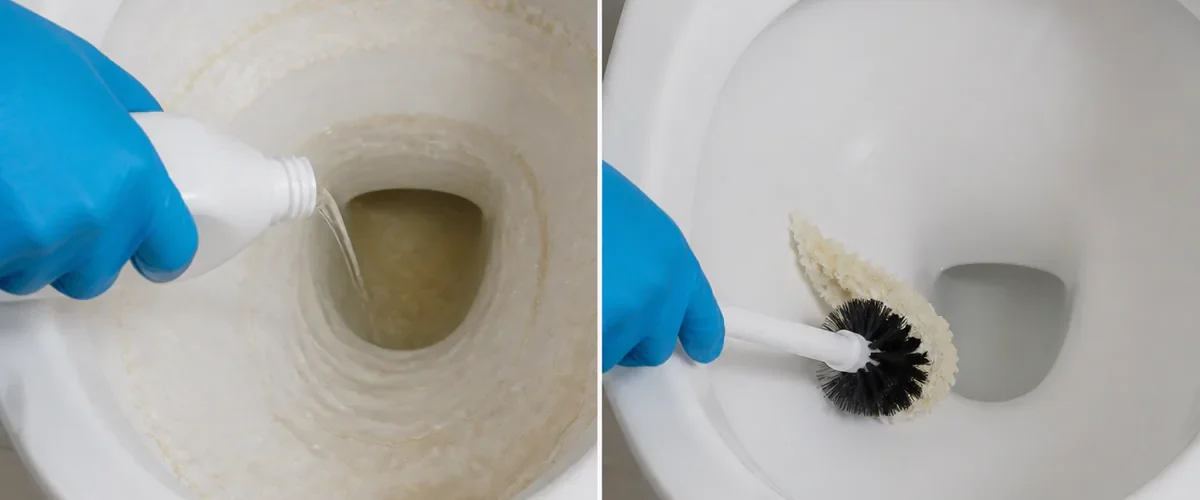
The pale ring at the waterline can survive a fast brush and make a clean toilet look neglected. Scrubbing harder is not always the answer. Hard-water minerals need time to soften before the brush can lift them.
An overnight treatment with a toilet-safe mild acid may help, but only when the fixture maker allows it and no bleach or other cleaner is present. The order matters more than a dramatic homemade mixture.
Make Sure It Is Mineral Scale
Hard-water scale is often white, gray, tan, or rusty where water sits or flows. It may feel rough. Dark growth under the rim, sewer odor, cracks, and stains that return immediately may have a different cause.
A constantly running toilet keeps adding fresh minerals and wastes water. Repair the fill valve, flapper, or seal before deep cleaning. Call a plumber for leaks at the base, repeated clogs, weak flushing, or suspected drain trouble.
Do not try to scrape porcelain with a knife, screwdriver, or metal wool. Scratches hold soil and make later cleaning harder.
Clear Every Other Cleaner First
Read the label of anything already used in the bowl or tank. Flush with the lid closed and ventilate the bathroom. Remove automatic bleach tablets only according to their instructions, using gloves and never touching them with bare hands.
Acids such as vinegar, lemon juice, and citric-acid cleaners must never meet chlorine bleach. The combination can release dangerous chlorine gas. Do not mix acid with ammonia, drain cleaner, peroxide, or a mystery product.
If you cannot identify the old cleaner, stop. Flush it away fully and wait rather than layering chemicals.
Choose One Approved Descaler
Check the toilet manual or manufacturer care page. Some fixtures allow white vinegar or a labeled toilet descaler for mineral deposits. Special coatings, colored finishes, rubber seals, and internal parts may have limits.
Use one product at the label strength. Lemon plus vinegar does not automatically work better, and coarse salt can scratch a delicate glazed surface. Fabric softener does not belong in a toilet or tank.
Wear gloves and protect eyes. Keep the door open or exhaust fan running. Store the product away from children and pets.
Give the Mineral Ring Contact Time
Turn off the toilet’s water supply only if you know how and the fixture instructions allow it. Flush to lower the water level so the approved product can reach the ring. Never leave the bowl dry for an unsafe length of time.
Apply the descaler directly to the mineral line. A few pieces of plain toilet tissue can help hold liquid against a vertical area, but do not use thick paper towels or wipes that may clog plumbing.
Let it sit for the label’s stated time. “Overnight” is suitable only when the product and fixture maker permit that contact. Longer is not always stronger.
Brush With the Right Tool
Use a clean toilet brush or non-scratch tool approved for porcelain. Work around the waterline and under the rim without splashing. The softened scale should lift in layers.
For a stubborn spot, repeat the same approved treatment on another day rather than adding a second chemical. Stop if the glaze looks dull, the surface feels damaged, or fumes cause eye or throat irritation.
Restore the water supply, flush, and rinse the brush in the bowl water without touching other surfaces. Let it dry before returning it to its holder.
Create a Clean Scent Without Perfuming the Bowl
A clean bathroom should smell neutral. Wash the floor around the base, wipe the exterior with a separate cloth and suitable cleaner, empty the trash, and run ventilation.
Never pour fragrance oil, fabric softener, boiling water, or colored homemade liquid into the tank. Oils can damage parts, softener leaves residue, and sudden heat may crack porcelain.
Persistent sewer odor needs plumbing attention. Covering it with lemon scent can delay a repair.
Prevent the Ring From Building Again
Brush the waterline weekly before deposits harden. Fix a running toilet and wipe exterior drips. In very hard-water areas, ask a qualified professional about whole-home treatment instead of putting unapproved tablets in the tank.
Keep one toilet brush for the bowl and separate cloths for the seat and exterior. Wash hands after cleaning, even when gloves were used.
Keep Cleaning Products Out of the Tank
Drop-in tablets can sit against rubber seals for weeks. Some toilet makers warn that in-tank chemicals may damage parts and void coverage. Use only products approved in the manual and place bowl products only where their label directs.
If blue or scented tank water appears around the base, stop using the toilet and check for a leak. A cleaning product should never hide a failed seal.
The Overnight Result Comes From Patience
The useful trick is simple: identify mineral scale, clear other chemicals, use one fixture-approved product, wait the correct time, then brush gently.
That order can turn a stubborn rough ring into loosened deposits by morning. It also keeps the bathroom safer than any bottle filled with vinegar, lemon, salt, softener, and wishful thinking.