The dark patch disappeared after one hard cleaning. Two weeks later, it returned in the same corner, wider than before. The cleaner was not the missing step. The wall was still getting wet.
Wall mold grows when spores meet moisture and a surface they can use. Washing the color away may improve the room for a moment, but the problem returns until the leak, condensation, or high humidity is fixed.
Find the Water Before Touching the Mold
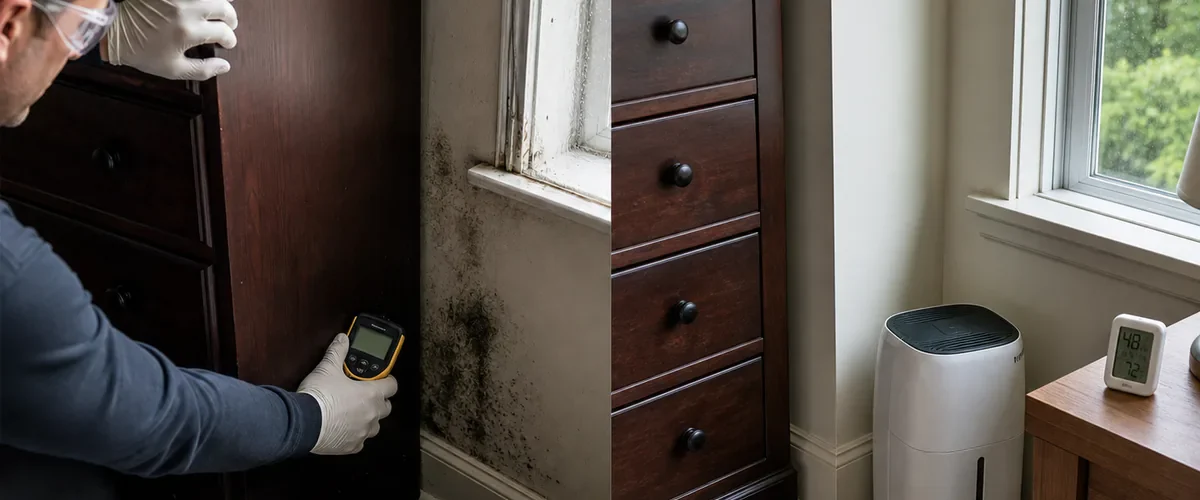
Look above, behind, and beside the patch. A roof leak may leave a brown edge near the ceiling. A pipe leak can soften drywall. Condensation often forms on cold outside walls, behind furniture, or around windows.
Use your senses without pressing your face close. Musty odor, peeling paint, swollen trim, or a wall that feels damp can point to hidden moisture. Do not open a wall simply to investigate; disturbing a cavity may release more dust and spores.
Repair plumbing, roof, gutter, or seal failures first. If the source is uncertain, ask a qualified building or moisture professional to inspect it.
Decide Whether This Is a DIY Job
A small patch on a washable hard surface may be manageable. The U.S. Environmental Protection Agency uses about 10 square feet, roughly a three-by-three-foot area, as a point where many homeowners should consider professional guidance.
Get professional help after major flooding, sewage water, repeated hidden growth, HVAC contamination, or a large area. People with asthma, strong mold allergies, lung disease, or weakened immune systems should ask a healthcare professional before entering the space.
Renters should photograph the area, report it in writing, and follow local housing rules rather than covering it with paint.
Prepare the Room Without Spreading Spores
Keep children and pets away. Wear gloves, eye protection, and a well-fitting respirator appropriate for the work. Open a window when outdoor conditions allow, but do not aim a fan across mold and into the home.
Move clean items away gently. Do not dry-brush, sand, or scrape moldy paint. Those actions can send particles into the air.
Never mix bleach, vinegar, ammonia, peroxide, dish soap, toothpaste, or other cleaners. A viral four-ingredient spray can create irritating fumes, unstable mixtures, damaged paint, and a false sense of safety.
Clean Hard Surfaces, Remove Ruined Porous Materials
For a small washable hard surface, use detergent and water as recommended for that finish. Dampen the area, wipe or scrub without splashing, then remove residue and dry the surface completely.
Test painted walls in a hidden spot. Too much water can soak drywall, and rough scrubbing can strip paint. Do not paint or caulk over active growth.
Porous materials are different. Mold can grow inside ceiling tile, insulation, carpet backing, and paper-faced drywall. Badly wet or moldy pieces may need controlled removal and replacement. A stain that looks clean on the surface does not prove the inside is clear.
Do Not Chase a White Wall at Any Cost
Some discoloration remains after proper cleanup. Repeatedly bleaching or grinding the area may damage the wall while doing little about moisture. The goal is a dry, sound surface, not a chemical smell or instant bright color.
Dry the Area Fast and Completely
Use exhaust ventilation and a dehumidifier sized for the room when helpful. Empty and clean the machine as directed. Keep indoor humidity low enough to prevent condensation; a simple humidity meter can reveal patterns.
Pull furniture a little away from cold walls so air can move. Run bathroom and kitchen exhaust fans to the outdoors during moisture-producing activities. Wipe window condensation instead of letting it soak trim.
Wet building materials should be dried promptly. If a wall stays soft, cool, or damp after the visible surface dries, stop and investigate further.
Watch the Same Spot for Four Weeks
Take a clear photo after cleanup. Check the area every few days, especially after rain, showers, cooking, or cold nights. Note humidity and any odor.
If dots return, paint bubbles, or the wall becomes damp again, the source is still active. Do not repeat the same spray. Recheck the roof, plumbing, ventilation, insulation, or exterior drainage.
Look for a Pattern, Not Just a Patch
Mold after rain points toward the roof, siding, window flashing, or drainage. Growth after showers suggests bathroom ventilation. A winter-only corner often means warm indoor air is meeting a cold surface.
Write down when the mark changes and what happened beforehand. A simple moisture diary helps a contractor test the right area instead of opening several dry walls.
Do not trust a cheap moisture meter as a final diagnosis. Readings vary by material and hidden metal. Use it as one clue alongside professional inspection when the problem continues.
The Step That Keeps Mold Away
Cleaning removes what you can see. Moisture control changes the condition that lets mold grow.
Fix the water source, choose cleanup based on the material and size, protect yourself, and dry the area fully. That is why one careful repair can succeed where ten “miracle” sprays fail.