A low green rosette survives the mower, foot traffic, summer heat, and wet spring soil. Many gardeners pull it without looking. The five to nine strong veins under each leaf reveal a plant with a much more interesting story.
Broadleaf plantain, or Plantago major, is a common perennial lawn weed. It is not the banana-like fruit called plantain. Before keeping, eating, or removing it, identification comes first.
Look for the Ground-Hugging Rosette
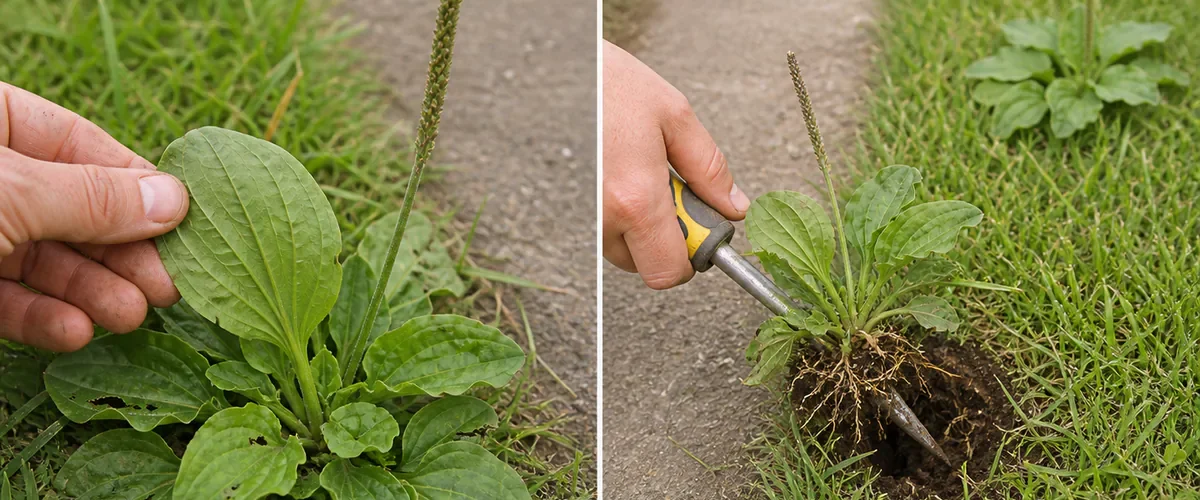
Leaves grow from a central crown instead of along a tall leafy stem. Each leaf is broadly oval, narrows toward its base, and often has a slightly wavy edge.
Turn a leaf over. Several thick veins run from the base toward the tip in near-parallel lines. Mature plants send up leafless green flower spikes from the center. The tiny flowers are easy to miss.
The plant usually stands only a few inches tall before the spikes rise. It can regrow when part of the crown remains after pulling.
Do Not Trust One Photo
Blackseed plantain, narrowleaf plantain, young hostas, and other rosette plants can confuse beginners. Leaf shape also changes with age, shade, mowing, and stress.
Use several features: leaf arrangement, vein pattern, flower spike, crown, roots, and local range. Compare with a university extension guide or ask a local botanist.
Never taste a wild plant to identify it. Do not rely on an app result alone when food or skin use is planned.
What Its Location May Tell You
Broadleaf plantain tolerates compacted soil, mowing, trampling, and both wet and dry periods. A patch beside a path may be showing where feet and wheels press air from the soil.
It also grows in nutrient-rich topsoil and compost, so its presence is not a complete soil test. One weed cannot diagnose every lawn problem.
Check drainage, sunlight, mowing height, and traffic. A laboratory soil test can answer nutrient and pH questions that a weed cannot.
Reasons to Leave One Small Patch
The low leaves cover bare soil and can add plant diversity to an informal yard. Flower spikes produce many seeds, and the plant has a long history of food, fiber, and traditional use in different cultures.
That history is interesting, but it does not prove every online medical claim. A garden plant is not a replacement for wound care, asthma treatment, diabetes medicine, antibiotics, or professional advice.
Keep it only where local rules allow and where it will not crowd a vegetable bed or spread into a neighbor’s lawn.
Food Use Requires More Than Identification
Some cultures eat young broadleaf plantain leaves. Older leaves can be fibrous. Anyone considering wild food should learn from a qualified local expert and confirm the species, site history, and personal health risks.
Do not harvest near roads, treated lawns, pet waste, industrial land, floodwater, or places sprayed with herbicide. Washing cannot remove every contaminant.
Allergies, medicines, pregnancy, and health conditions can change what is safe. Ask a healthcare professional before using concentrated teas, tinctures, oils, or supplements.
Remove It Without Making the Patch Bigger
For a small lawn patch, pull when soil is moist. Grip near the crown and lift the crown with the roots. Fill the opening with soil and grass seed suited to the site.
Cut flower spikes before seeds mature if you want to slow spreading. Mowing alone may not remove the low crown.
If using a lawn herbicide, identify the plant, read the entire label, and use only a product labeled for that site. Broadleaf weed killers can injure flowers, vegetables, trees, and nearby habitat.
Stop the Seed Cycle Early
Each upright spike can carry many small seeds. Bag mature spikes before digging the crown, especially when the soil is dry and seed heads crumble easily. Do not shake them across a compost pile.
A well-managed hot compost system may handle some weed material, but home piles do not always reach an even seed-killing temperature. Put seeded plants in the disposal stream recommended by your local authority.
Check the site again after rain. Young rosettes are easier to remove than established crowns, and repeated early action prevents one patch from becoming a lawn-wide problem.
Clean soil from tools before carrying them to another bed, so loose seed and crown pieces stay contained.
Fix the Bare Ground Too
Relieve traffic, improve drainage, and maintain a healthy lawn at the correct mowing height. Otherwise, another plantain seed may fill the same open space.
The Five Veins Are Only the Beginning
Those bold leaf veins can start an identification, not finish it. Check the full rosette, flower spikes, growing site, and a trusted local guide.
Then choose with purpose. Keep a controlled patch for diversity, remove it before seed, or improve the compacted lawn around it. The valuable part is not a miracle cure. It is learning what the plant reveals before treating every unfamiliar leaf as trash.