A glass of salt looks like the cheapest cleaning kit in the house. Online lists send it into drains, washing machines, gardens, ovens, and even fires. A few grains can genuinely help with a fresh spill or sturdy pan. The wrong handful can corrode metal, scratch a finish, kill plants, or make a blockage worse.
What Salt Can Do
Salt crystals are mildly abrasive and attract some moisture. Dissolved salt changes how water freezes and can help form a brine. Those properties explain its useful jobs, but they do not make salt a disinfectant, deodorizer, pesticide, or universal stain remover.
Four Sensible Household Uses
Lift a fresh wet spill
On a colorfast washable fabric or unfinished sturdy surface, salt may absorb part of a fresh watery spill. Blot first, apply a small amount briefly, then remove it and follow the item’s care instructions. Test in a hidden area because dyes and finishes vary.
Add grip on an icy step
A small amount can melt ice, but repeated use harms concrete, metal, soil, pets’ paws, and plants. Shovel first, use the minimum, keep runoff away from beds, and choose a deicer approved for the surface and local conditions.
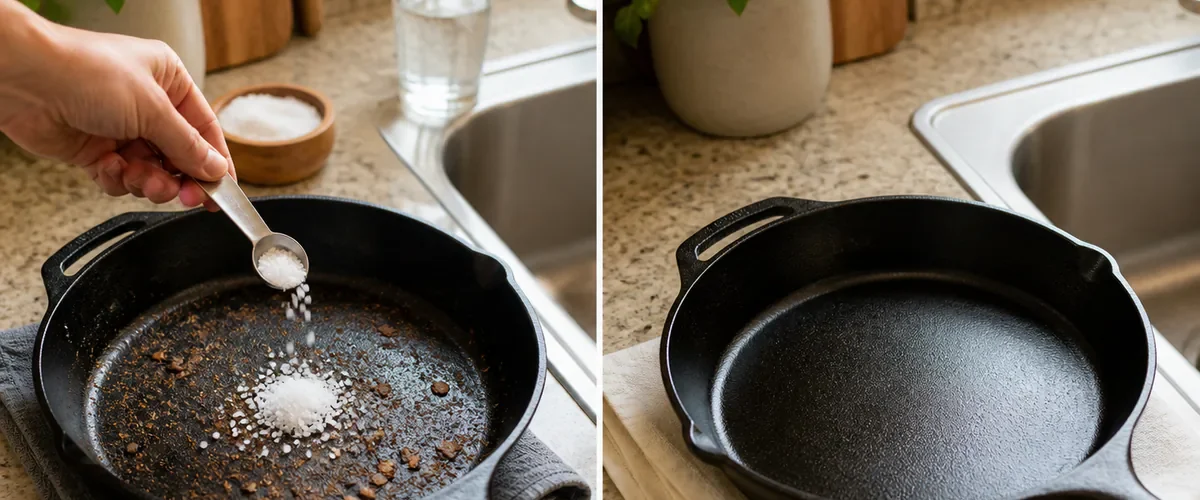
Scrub sturdy uncoated cookware
Coarse salt can help loosen residue from some cast-iron pans without a long soak. Follow the cookware maker’s directions, avoid aggressive pressure, rinse quickly if recommended, dry completely, and restore seasoning. Never use it on nonstick or delicate polished finishes.
Chill a sealed drink faster
Salt added to an ice-water bath lowers its freezing point, helping a sealed can or bottle cool quickly. Keep the container closed, use a sturdy bowl, and rinse the outside before opening. Do not use cracked glass or leave the salty water on metal surfaces.
Popular Salt Tricks to Skip
Do not pour salt down a slow drain. It does not dissolve hair, grease, or solid obstructions and may settle into the blockage. Use a drain screen, remove accessible debris, try a plunger made for the fixture, or call a plumber.
Do not scatter salt for ants or weeds. It damages soil structure and can injure nearby roots for a long time. Seal entry gaps, clean food trails, use targeted enclosed bait where appropriate, and pull weeds or cover bare soil.
Salt does not sanitize a cutting board or sponge. Wash food-contact items with hot soapy water and use an approved sanitizer when required. Replace damaged boards and sour sponges instead of masking odor.
Never Throw Salt on a Kitchen Fire
Although a large commercial quantity can sometimes smother a tiny flame, reaching for a glass of salt wastes time and can splash burning grease. Turn off heat only if safe, cover the pan with a metal lid or baking sheet, and use the correct fire extinguisher. Never use water. Leave and call emergency services if the fire is not immediately controlled.
Surfaces Salt Can Damage
Salt encourages corrosion on many metals. Crystals can scratch glass, acrylic, stone sealers, stainless finishes, and appliance coatings. Salty water can stain leather and some fabrics. Check the manufacturer’s care guide before using any abrasive.
Vacuum or wipe escaped crystals rather than grinding them under shoes. After an approved use, remove residue and dry the surface. Keep the container closed in a dry cupboard so it does not clump or spill near cleaners.
The One-Glass Rule That Actually Helps
Keep cleaning salt in its original food container or a clearly labeled dry jar. Never store an unlabeled mixture near food. Salt combined with water should usually be made fresh and discarded after the approved job, since a cloudy reused solution can carry dirt rather than remove it.
When a trick involves an appliance, its manual outranks household advice. Dishwasher, washer, iron, refrigerator, and oven materials differ by model. Adding salt to the wrong compartment can trigger corrosion or damage a water-softening system. Use only products and quantities named by the manufacturer.
Do not begin by pouring the whole glass. Identify the material and problem, test a teaspoon in a hidden area, and stop if the surface changes. Often the safest solution is dish soap, water, a purpose-made product, or a mechanical tool.
Salt is valuable because it is predictable, not miraculous. Use its abrasion, moisture, or brine properties for a narrow job. Keeping it out of pipes, soil, delicate finishes, and fires solves more problems than any viral list of eight tricks.
When uncertain, always stop and choose the gentler proven method first.
Salt also belongs away from electronics. Crystals and salty moisture can enter controls, charging ports, television vents, and appliance seams, where they encourage corrosion. Unplug equipment and follow its official cleaning directions instead. For valuable stone counters, antique metal, rugs, or upholstery, ask the installer or a professional cleaner before trying an abrasive home method.