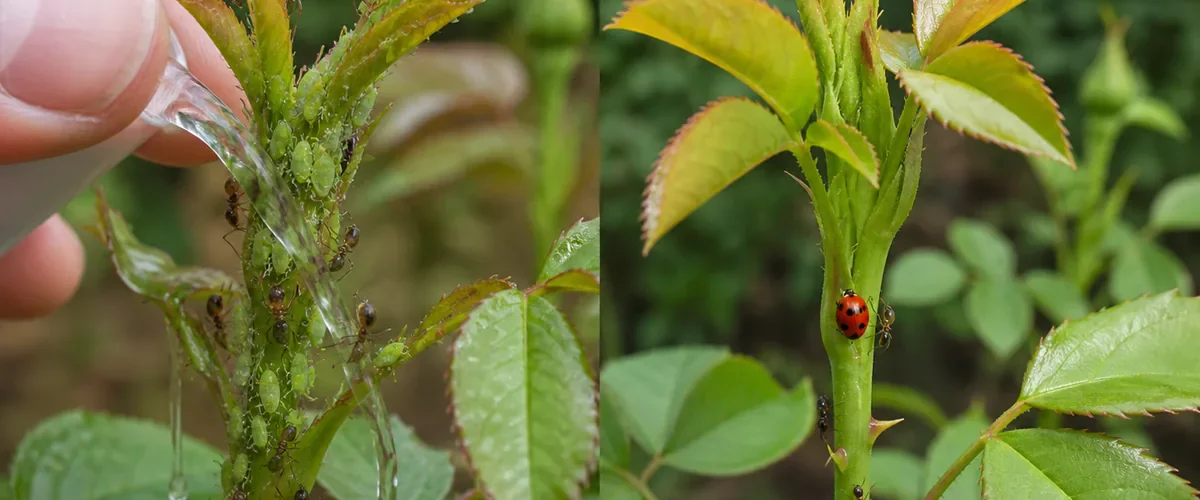
You wash aphids from a rose on Monday. By Thursday, they are crowded on the newest buds again, and ants are marching up the stem. The spray did not fail by accident. Ants often protect honeydew-producing aphids, so treating only the visible cluster can leave the system that supports it untouched.
Confirm the Pest Before Mixing Anything
Aphids are small, soft insects that gather on tender shoots and leaf undersides. They may be green, black, gray, or pink. Curled leaves, sticky honeydew, and shed white skins are common clues. Ant traffic suggests the colony is being visited for sweet honeydew.
Do not confuse aphids with beneficial insects or their larvae. Lady beetle larvae look unusual but eat many aphids. Take a clear photo and use a local extension or trusted identification guide before spraying.
The First Move Is Surprisingly Simple
Support the stem and rinse aphids away with a firm stream of plain water. Reach the leaf undersides without blasting flowers apart. Repeat every few days while checking new growth. On a small houseplant, wipe colonies with a damp cloth and isolate the pot from other plants.
Prune one badly infested tip if the plant can spare it. Seal the waste before disposal. Do not compost material covered with active pests unless the pile becomes hot enough and is managed correctly.
Stop Ants From Rebuilding the Colony
Ants may chase away aphid predators and move aphids to fresh stems. Remove branches that touch walls or nearby plants when appropriate. On woody trunks, a commercial sticky barrier can interrupt traffic, but never place sticky material directly on bark. Wrap or guard the trunk exactly as the product label directs.
Use enclosed ant bait stations where permitted, positioned away from children, pets, pollinators, and irrigation. Baits work through the colony and should not be combined with a repellent spray beside them. Follow local rules and the entire label.
When Plain Water Is Not Enough
Choose insecticidal soap labeled for the plant and aphids. Test a small section, avoid heat and direct sun, and cover leaf undersides. Soap must contact the insect while wet and usually needs repeat applications. Rinse or wait according to the label.
Horticultural oil may be another labeled option. Some plants are sensitive, and oils can injure foliage during high heat or when combined too closely with sulfur products. The label decides the plant, weather, interval, and harvest safety.
Why the “Tear Gas” Kitchen Spray Is Risky
Strong garlic, chili, onion, or essential-oil mixtures can irritate eyes and lungs. Their strength changes with every batch, and they may burn leaves or harm beneficial insects. A mixture that makes you cough is not a sign that it is safe or effective.
Never spray while bees are visiting flowers. Do not combine dish detergent, vinegar, bleach, alcohol, pepper, and oils into a mystery pesticide. Household products are not automatically tested for plant safety, edible crops, or environmental effects.
Make the Plant Less Inviting
Excess nitrogen creates tender growth aphids love. Feed only when needed and at the label rate. Give the plant suitable light and water so it can tolerate minor feeding. Inspect new purchases before placing them beside established plants.
Encourage lady beetles, lacewings, hoverflies, and tiny parasitoid wasps by growing diverse small flowers and avoiding broad insecticide use. These helpers rarely erase every aphid, but they can keep numbers below damaging levels.
A Seven-Day Control Routine
Weather changes the plan. Do not spray soap before rain, during drought stress, or when leaves are hot. Water a thirsty plant at the root and wait for mild conditions. Move indoor plants away from direct sun until wet foliage dries, while keeping airflow around them.
Continue checking for two weeks after numbers fall. Eggs or hidden insects may create a second wave. Record which stems and neighboring plants are affected. Repeated trouble on the same weak plant may point to poor light, root stress, or excessive feeding that needs correction.
Day one: identify the pest, photograph the worst stem, and rinse. Day three: check the same buds, remove a heavily infested tip, and note ant trails. Day five: block or bait ants safely. Day seven: rinse again or use one labeled product if colonies are still growing.
The powerful trick is not a burning spray. It is breaking the partnership between aphids and ants while preserving the insects that help you. Once that cycle is interrupted, the new leaves finally get a chance to open cleanly.
Keep observing those leaves.
Indoor growers should also inspect the windowsill, neighboring pots, and saucers. Ants may be entering for food elsewhere rather than nesting in the plant. Remove crumbs and standing water, seal safe entry points, and keep bait outside the potting mix. Quarantine the affected plant until two careful inspections find no growing aphid colony.