A lemon left loose in the refrigerator slowly shrinks, softens, and grows a dull patch. A lemon prepared for the freezer can still brighten a sauce months later. That is the honest secret behind keeping lemons for a very long time: stop trying to keep them “fresh” for a year and preserve the parts you actually use.
How Long Fresh Lemons Really Last
Whole lemons keep only a short time at room temperature. Refrigeration extends their useful life, often to several weeks, but temperature, age at purchase, and damage matter. Store dry, unwashed fruit in the produce drawer or a clean food-safe bag that limits moisture loss without trapping condensation.
Check the bag weekly. Remove any fruit with mold, leaking juice, or a fermented smell so it does not spoil the rest. A firm lemon with minor skin marks may still be usable, but a soft moldy fruit belongs in the waste.
The Freezer Method That Lasts
Freeze whole lemons
Wash under running water, scrub gently, and dry completely. Place whole lemons in a freezer bag, press out extra air, label the date, and freeze. Thawed whole lemons become soft, so use them for juice, cooking, or zesting while partly frozen rather than as fresh slices.
Freeze slices or wedges
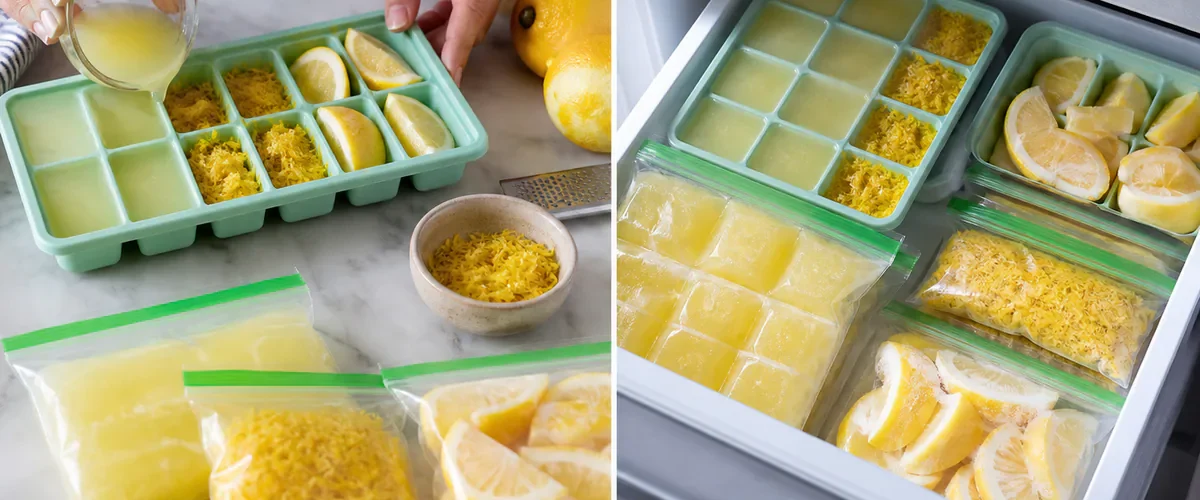
Cut clean lemons on a clean board. Remove seeds, arrange pieces on a lined tray without touching, and freeze until firm. Transfer them to a dated freezer container. Individual pieces can go straight into cooked dishes or drinks, though their texture will be softer.
Freeze juice and zest separately
Grate only the colored outer peel before juicing; the white pith is bitter. Freeze zest in a thin layer or small portions. Pour juice into a clean ice tray, freeze, then move the cubes into a sealed bag. Measure one cube once so recipes remain easy.
Quality and Food Safety
Freezing keeps food safe for a long time when the freezer remains at 0°F or -18°C, but flavor and aroma slowly fade. For best quality, use lemons within several months. A power outage or thawed freezer changes the safety decision; follow official local food-safety guidance.
Label every package. Rotate older portions forward. Do not refreeze lemons that sat warm for hours, and never taste questionable fruit to decide whether it is safe.
What About a Jar That Claims One Year?
Salt-preserved lemons are a traditional food, but they are not made safe by guessing at a social-media recipe. Acidity, salt level, cleanliness, container, temperature, and storage instructions all matter. Use a tested recipe from a reliable canning or food-safety authority and follow it exactly.
Preserved lemon also tastes salty and fermented, not fresh. It is excellent in certain cooked dishes but cannot replace a fresh wedge in every recipe. Refrigerate after opening when the tested instructions require it.
Storage Mistakes That Waste the Fruit
Do not seal wet lemons in a warm bag; trapped moisture encourages decay. Do not store them beside a moldy fruit. Avoid dipping fingers or used utensils into frozen juice portions, which introduces contamination.
Wax, oil, salt, or baking soda rubbed on the peel will not keep a raw lemon fresh for a year. Never use bleach, dish soap, or household cleaner on produce. Running water and gentle friction are enough before cutting.
Choose the Form Before You Store
For zest, choose unwaxed fruit when available and still wash it. A microplane removes the fragrant outer layer with less bitter pith. Spread zest thinly before freezing so it remains easy to pinch rather than becoming one hard block.
For juice, leave a little empty space in rigid containers because liquid expands. Food-safe freezer bags can freeze flat and stack neatly. Protect every portion from air to reduce freezer burn and from strong-smelling foods that can change the delicate citrus aroma.
If you use zest for baking, grate first. If you squeeze juice into dressings, freeze measured cubes. If you cook with wedges, tray-freeze them. Matching the frozen form to the recipe prevents a hard whole lemon from becoming another forgotten object.
The one-year promise becomes truthful only when “fresh” is replaced with “safely preserved.” Refrigerate this month’s lemons and freeze the rest in useful portions. You will stop throwing away moldy fruit and still have bright lemon flavor waiting when the bowl is empty.
Thaw Only What You Need
Move a juice cube or wedge directly into a hot recipe when suitable. For cold recipes, thaw a portion in a covered container in the refrigerator. Do not leave cut citrus at room temperature for hours. Once thawed, use it promptly and keep it chilled.
Frozen zest can be added without thawing. Break off a measured pinch with a clean spoon, return the package immediately, and keep moisture out. Repeated warming and refreezing creates ice crystals and steals aroma, so several small bags work better than one large package opened every day.