Mint can fill a pot with fragrant leaves, then suddenly become tall, bare, and tired. The plant is not asking for a miracle drink. It is usually asking for a wider root space, an even supply of moisture, enough light, and a haircut before flowers take over.
Give Mint Its Own Wide Pot
Mint spreads through underground stems and quickly fills a small container. Choose a wide pot with several drainage holes and fresh potting mix. Keeping it in a container also prevents many mint varieties from running through garden beds.
Repot when roots circle tightly, water rushes straight through, or growth dries unusually fast. Move up one container size, loosen the outer roots gently, and keep the crown at the same depth. A giant pot stays wet too long, so increase size in steps.
Find the Light Sweet Spot
Mint grows well with several hours of sun, but harsh afternoon heat can scorch or wilt container leaves. Morning sun and bright afternoon shade work well in hot climates. In cool regions, it may enjoy longer sun.
Indoors, use the brightest suitable window and rotate the pot every few days. Long gaps between leaves signal low light. Acclimate a plant gradually when moving it outdoors so leaves do not burn.
Keep Moisture Even, Not Swampy
Push a finger into the top inch of mix. Water when it begins to feel dry, then soak until extra water drains. Empty the saucer. Mint dislikes becoming bone dry, but roots also need oxygen and can rot in standing water.
A thin organic mulch can slow summer drying outdoors. Keep it away from the stems and check beneath it before watering. A fixed daily schedule fails because heat, wind, pot size, and season change how quickly water disappears.
The Pruning Move That Creates More Leaves
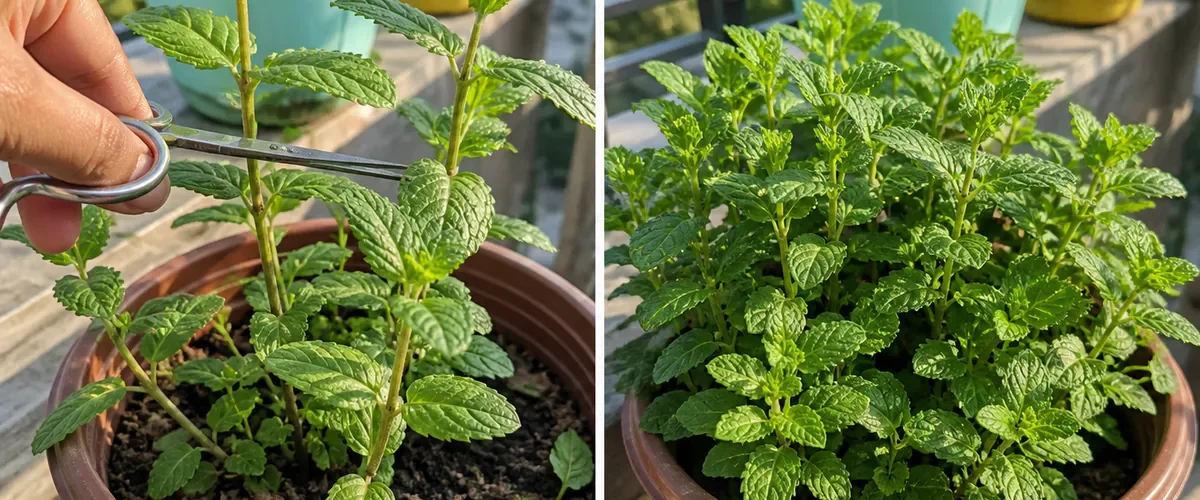
Once stems have several leaf pairs, pinch or cut just above a node. Two side shoots often develop below the cut, making the plant bushier. Harvest several stem tips rather than stripping every leaf from one branch.
Remove flower buds when leaf production is the goal. Before flowering, mint often has its strongest kitchen aroma. If the plant becomes leggy, cut it back by about one-third, water normally, and allow new shoots to form. Avoid removing all green growth from a weak plant.
Feed Lightly
Fresh potting mix may support growth for weeks. Later, a container plant can receive a balanced liquid fertilizer at the label rate during active growth. Too much nitrogen creates soft stems with weaker flavor and may increase pest problems.
Yellow leaves are not an automatic fertilizer request. Check soggy roots, drought, low light, crowded growth, and spider mites or aphids first. Correcting the cause works better than adding an unknown kitchen mixture.
Turn One Healthy Stem Into Another Pot
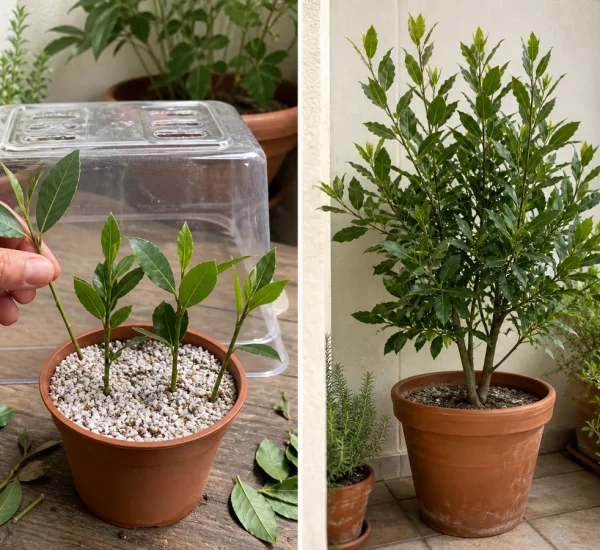
Cut a healthy 4-to-6-inch tip just below a node. Remove lower leaves and place the bare nodes in clean water. Keep leaves above the water and provide bright indirect light. Change the water every few days.
When several roots reach an inch or two, move the cutting into damp potting mix. Hold the soil evenly moist for the first days while water roots adjust. Start more than one cutting because not every stem succeeds.
Watch for Rust and Pests
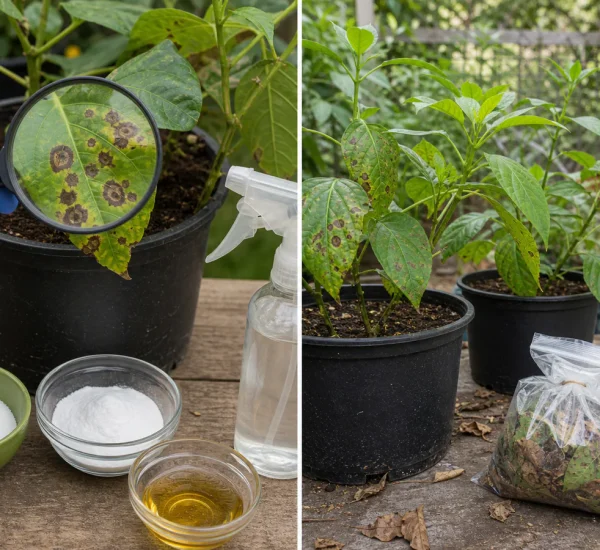
Give stems airflow and water the mix rather than wetting leaves late in the day. Orange spots beneath leaves may indicate mint rust. Isolate the pot, remove affected material, clean tools, and avoid propagating diseased stems. Follow local advice for severe disease.
Rinse small aphid colonies with water. Fine webbing and pale speckles can signal spider mites, especially indoors. Inspect leaf undersides and use a product labeled for edible herbs if treatment is needed.
The Lush Mint Routine
Seasonal changes are normal. Outdoor mint may die back after frost and return from healthy roots in spring. Reduce watering when growth slows, but do not leave a container bone dry for months. Protect pots from repeated freeze-thaw damage according to the local climate.
When harvesting for food, rinse leaves under cool running water and dry gently. Avoid taking foliage recently treated with a product unless its label allows harvest and the waiting period has passed. Healthy-looking leaves are not proof that an unlabeled spray is food-safe.
Every few days, check moisture, turn an indoor pot, and harvest above a node. Every few weeks, look for roots crowding drainage holes and remove flower buds. Replace exhausted mix or divide an overgrown plant when needed.
The gardener’s trick is a rhythm, not a secret ingredient. Give mint room, steady moisture, useful light, and regular cuts. The reward is a low, branching plant that keeps offering fragrant handfuls instead of one brief tower of leaves.
Harvest again after strong new shoots appear.
Label the variety when growing several mints, since flavor and vigor differ.