A weak plant and a pest problem can appear on the same afternoon. That is why a homemade liquid promising faster growth and fewer insects sounds like a miracle. One pour, two problems solved. Yet this shortcut often fails for a simple reason: poor growth and pest damage are not the same problem.
A plant may be pale because it lacks light, sits in wet soil, or needs nutrients. Aphids, scale, and spider mites each need a different response. Before mixing anything in the kitchen, spend five minutes finding out what the plant is actually telling you. That small check can save leaves, roots, helpful insects, and money.
Why the miracle garden mixture disappoints
Plant food supports growth by supplying measured nutrients. Pest control targets a known insect or disease. A liquid strong enough to kill soft-bodied insects may also burn tender leaves. A weak compost drink may feed soil life but do little against an established pest colony.
This does not mean natural gardening is useless. It means the best natural method begins with a diagnosis. Healthy growth comes from good growing conditions. Pest prevention comes from inspection, cleanliness, airflow, and quick action.
First, check why growth has slowed
Look at light and water
Move beyond the top inch of soil. Push a finger or wooden stick a little deeper. If the mix stays wet for many days, roots may be short of oxygen. If it pulls away from the pot and water rushes down the sides, the root ball may be too dry.
Then check light. Long, weak stems and large gaps between leaves often point to low light. Bleached patches can mean sudden, harsh sun. Correct these basic conditions before adding fertilizer. Food cannot repair roots that are sitting in water or leaves growing in darkness.
Feed only when the plant can use it
For container plants, choose a complete fertilizer labeled for that plant type and follow the lowest suggested rate. Established garden beds often benefit from finished compost worked lightly into the surface. More is not better. Excess fertilizer can damage roots, create soft growth, and wash into drains.
Do not feed a severely wilted, heat-stressed, or newly repotted plant. Water correctly, improve its setting, and allow it to settle first. A small recovery is more valuable than a dramatic dose.
Then identify the pest
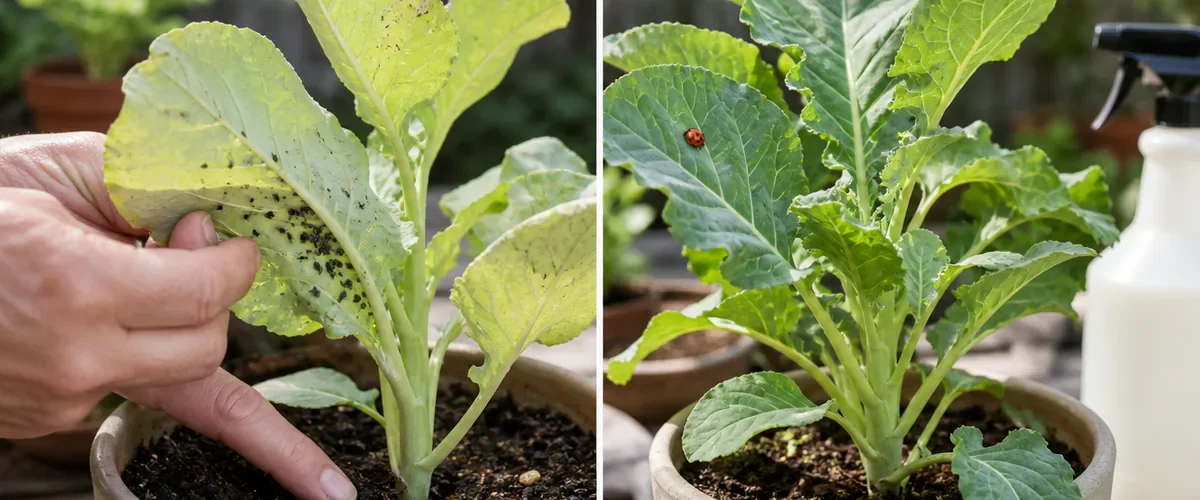
Turn leaves over and inspect stems, buds, and the soil line. Aphids gather in groups and leave sticky honeydew. Scale insects look like small fixed bumps. Spider mites may cause pale speckling and fine webbing. Fungus gnats fly near damp potting mix, while their larvae favor wet organic matter.
If you cannot see an insect, do not assume one is present. Yellowing can come from watering trouble, old leaves, cold damage, or nutrient imbalance. Take a clear photo and compare it with guidance from a local extension service or trusted garden center.
A safer two-part plan that works
Start with the least harmful control. Isolate an infested houseplant. Prune a few heavily damaged leaves with clean tools. Knock aphids from sturdy plants with a stream of water. Wipe scale from a small plant carefully and keep checking for new crawlers.
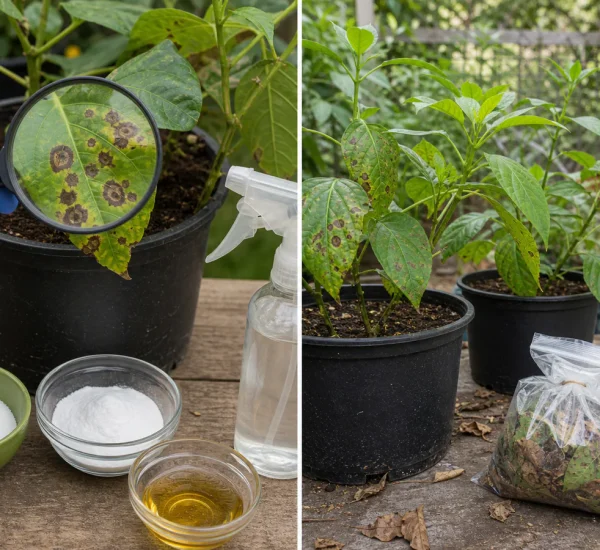
For a continuing problem, use a plant-labeled insecticidal soap or horticultural oil that names the pest and crop. Read the whole label. Test one small area, avoid hot sun, and never spray open flowers when bees are visiting. Homemade soap, vinegar, salt, garlic, or chili mixtures can have unknown strength and may injure leaves.
At the same time, improve the plant’s care. Give it suitable light, drainage, room for air to move, and a measured feeding plan. This is the honest version of the two-in-one garden trick: two problems, two careful responses.
Common mistakes that make both problems worse
- Spraying first and looking later: The wrong spray delays useful treatment.
- Feeding damaged plants heavily: Stressed roots can be burned by a strong dose.
- Using kitchen cleaner on leaves: Degreasers and concentrated dish liquids are not plant products.
- Repeating treatment daily: Even a labeled product can cause damage when overused.
- Ignoring ants: Ants may protect honeydew-producing aphids or scale and lead you back to the colony.
Build prevention into a weekly routine
Once a week, look beneath several leaves while watering. Remove dead material, empty standing water, and clean used pots before replanting. Space plants so leaves are not pressed together. Quarantine new houseplants for a short period before placing them with the collection.
Keep brief notes about watering, feeding, and treatment. If the plant improves, you will know which change mattered. If it does not, you can adjust one condition instead of adding another mystery ingredient.
The surprising truth behind the promise
The miracle is not hidden in one bottle. It is the moment you stop treating every yellow leaf and every insect in the same way. Check the roots, light, and moisture. Name the pest. Feed modestly and choose the gentlest proven control.
That approach may sound less dramatic than a secret mixture, but it produces the result gardeners actually want: stronger plants, fewer pests, and no scorched leaves the next morning.