I used to drop garlic skins straight into the trash. They looked too thin to matter and too papery to reuse. Then I noticed how quickly a handful disappeared inside a healthy compost pile. Garlic peels can be useful, but the popular jar-of-water trick gives them powers they do not really have.
Soaked garlic peel water is not a complete fertilizer, and it is not a proven cure for every pest. Used carelessly, wet peels can smell, grow mold, and attract fungus gnats indoors. The better secret is simpler: keep them clean, keep them dry until use, and send them where natural breakdown is welcome.
What garlic peels actually contain
Garlic skins are plant material. Like onion skins and vegetable trimmings, they contain carbon-based matter and small amounts of minerals. Compost organisms can break that material down and return part of it to the soil.
However, a handful of peels does not provide the balanced nitrogen, phosphorus, potassium, and micronutrients a growing plant may need. The amount released into a jar of water is unknown. Color or a strong smell does not prove the liquid is powerful plant food.
The best garden use: add them to compost
Prepare the peels
Save only clean skins from sound garlic. Do not use peels that are oily, salty, moldy, or mixed with meat juices. Let damp skins air-dry before storing them, because moisture inside a closed container encourages decay.
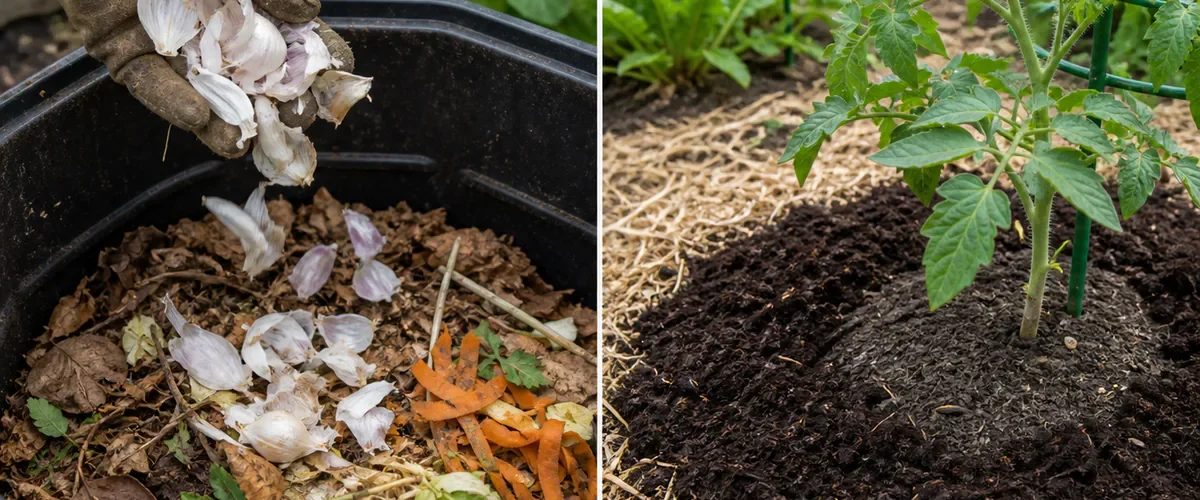
When you have a small handful, tear or crush the skins. Smaller pieces expose more surface area and usually break down faster. Add them to a working compost pile or worm-free outdoor compost system with other kitchen scraps.
Balance wet scraps with dry material
Garlic peels alone will not make good compost. Mix them with varied green materials, then cover them with dry leaves, shredded plain cardboard, or another brown material. The pile should feel like a wrung-out sponge, not a dripping bag.
Turn or mix the pile when it becomes packed down. Finished compost should look dark and crumbly, smell earthy, and no longer show recognizable food scraps. Only then should it be used around plants.
Why raw peels do not belong on indoor soil
A decorative layer of garlic skins may seem harmless. In a warm, damp pot, however, raw scraps can become a food source for mold and fungus gnat larvae. They can also make watering uneven by forming a dry mat on top.
Houseplants have limited soil and slower airflow than an outdoor compost pile. Add finished compost only when the plant and potting mix can use it. For most indoor pots, a measured houseplant fertilizer is easier to control.
What about garlic peel water?
Many recipes suggest soaking peels for a day or several days, then pouring the brown liquid onto every plant. The problem is that there is no reliable home measurement for its strength or nutrient balance. A long soak can also turn into an unpleasant, low-oxygen brew.
If you still wish to experiment, treat it as a small trial rather than a miracle fertilizer. Use fresh, clean peels and water, make a weak short soak, strain it, and test a little on the soil of one nonvaluable outdoor plant. Do not store the liquid, spray food crops, or pour it repeatedly into wet pots. Stop if the soil smells sour or the plant reacts badly.
Important safety warnings
Garlic can be harmful to dogs and cats when enough is eaten. Keep peels, soaking jars, compost buckets, and finished mixtures where pets cannot reach them. Do not invite children to handle old, fermented liquid.
Never spray concentrated garlic mixtures into your eyes, onto skin, or near pollinators. Homemade garden sprays do not have a tested label telling you which plants tolerate them. A substance being natural does not automatically make it gentle.
Three mistakes that waste the peels
- Sealing damp skins in a jar: They may mold before you use them.
- Burying a thick clump beside roots: A wet pocket of scraps can reduce airflow and smell.
- Replacing real plant care: Peel water cannot correct poor light, damaged roots, or a serious nutrient shortage.
A simple kitchen-to-garden routine
Keep a small ventilated container for clean, dry vegetable scraps. Empty it into the outdoor compost often. Cover each fresh addition with dry brown material, check moisture, and let the pile do the slow work.
When the compost is mature, spread a thin layer over garden soil or blend an appropriate amount into new beds. Keep it away from direct contact with tender stems. Water normally and watch the plants over time.
The real reason to keep garlic peels
Garlic skins are worth saving because they are free organic material, not because they hide a magical chemical. Composting turns a kitchen leftover into a stable soil amendment while reducing waste.
That result is quieter than a viral overnight transformation, yet it is dependable. Save the clean peels, skip the smelly indoor jar, and let a balanced compost pile turn them into something the garden can truly use.