A single rosemary stem can look unchanged in a glass for days. Then one morning, a pale root appears near the lower node. That small thread is the beginning of a new fragrant plant, but only if the cutting was young, clean, and kept in the right water.
Rosemary can root in water, although success is not guaranteed and some varieties root more easily in a light propagation mix. Taking several cuttings gives you a better chance. The key is choosing nonflowering growth and moving rooted stems into soil before the water roots become long and fragile.
Take the cutting at the right time
Choose a healthy plant that is free from pests and disease. Spring through early summer is often useful because stems are growing actively, but mild conditions matter more than the calendar. Avoid taking material during extreme heat, frost, or when the parent plant is wilted.
Look for a flexible green tip that has begun to firm but is not thick, brown wood. A nonflowering shoot spends more energy on roots. If every tip carries blooms, pinch the flowers from your chosen piece, understanding that it may root more slowly.
Make one clean rosemary cutting
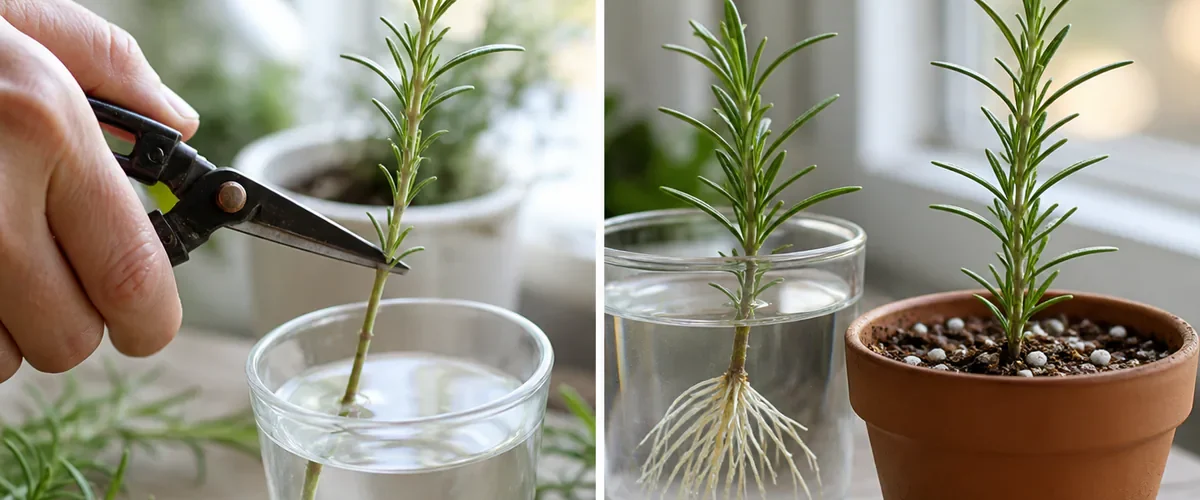
Clean pruning snips with an appropriate disinfecting method and let them dry. Cut a stem about four to six inches long just below a leaf node. Do not crush it with dull scissors.
Remove the leaves from the lower two inches, leaving a healthy tuft at the top. Those bare nodes are where roots may form. Never strip the bark or mash the stem; an open wound increases the chance of rot.
Take three or four cuttings rather than removing a large branch. Spread cuts around the parent plant so it keeps a balanced shape.
Set up the water glass
Use a clean narrow glass or jar. Add enough room-temperature water to cover the bare nodes while keeping every leaf above the surface. Crowded leaves under water decay quickly.
Place the glass in bright, indirect light. Strong midday sun can heat the water and wilt the cutting. A dark corner slows the process. Normal room warmth and gentle airflow are better than a cold windowsill or heater.
Change the water every few days, or sooner if it clouds. Rinse the glass and return the stems gently. Top-ups alone can leave old plant material behind.
What to expect while roots develop
Rooting may take several weeks. The cutting can lose one or two lower leaves, but the stem should remain firm and fresh-smelling. A black, slimy base or sour water means that piece has failed and should be discarded.
Do not add sugar, honey, fertilizer, aspirin, or kitchen scraps to the glass. A cutting without roots cannot use a strong feed well, and added organic material can support microbes. Clean water and a healthy node are enough for this stage.
Not every cutting will root. That is normal. Keep the successful stems and compost healthy failed material only if it is free from disease.
Move water roots into potting mix
Transplant when several roots are roughly one to two inches long. Very long water roots tangle and may break during the move. Choose a small pot with generous drainage and fill it with a light, well-draining mix suitable for Mediterranean herbs.
Make a hole first so the roots do not have to push through dry mix. Hold the cutting at the original depth, spread the roots gently, and firm the mix around them. Water once to settle everything, then let the excess drain completely.
For the first week or two, keep the mix lightly moist rather than soaked while the water roots adjust. Maintain bright indirect light, then introduce stronger sun gradually. New growth is the best sign that the cutting has settled.
Three reasons rosemary cuttings fail
- The stem is old and woody: Mature growth often roots more slowly than a flexible tip.
- Leaves sit in water: Decaying foliage clouds the glass and can rot the stem.
- The new pot stays wet: Rosemary roots need oxygen and dislike heavy, waterlogged soil.
Care for the young rosemary plant
Once established, move the plant toward six or more hours of sun if the variety and climate allow. Water deeply, then let the upper mix begin to dry. Do not keep a saucer full.
Pinch only a small tip after clear new growth appears. Heavy harvesting too soon removes the leaves that power root development. Feed lightly, if at all, because rich fertilizer can create soft, weak growth and reduce the compact habit gardeners value.
One stem becomes a fresh beginning
The glass is not magic. It simply lets you watch a process usually hidden in soil. A well-chosen stem, clean water, and patient timing give rosemary the chance to build roots.
Move it before those roots become fragile, provide drainage and sun, and that small cutting can grow into a useful new herb without harming the generous parent plant.