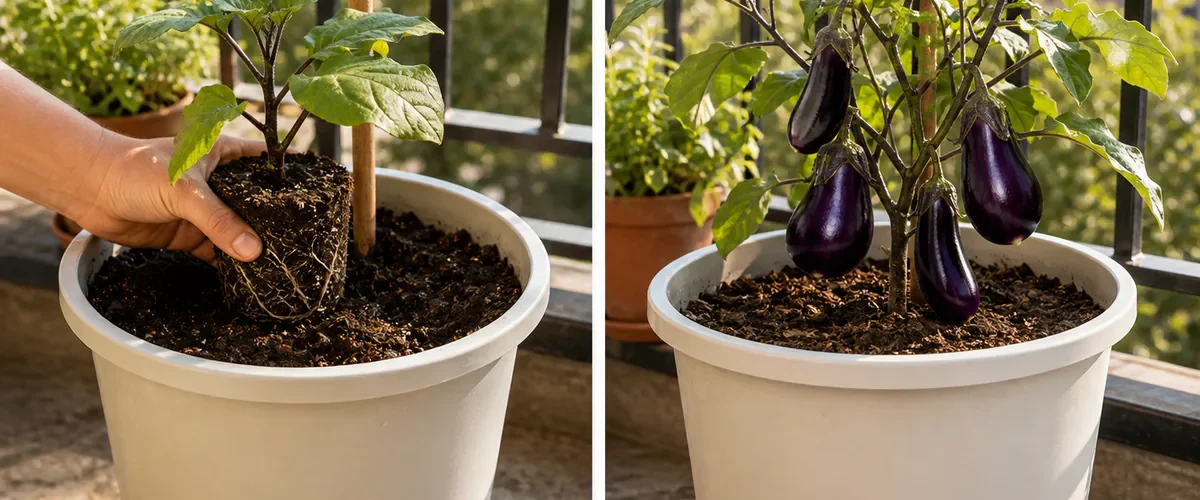
A balcony can look too small for eggplants until one glossy purple fruit appears beneath the leaves. The plant is not tiny, but it does not need a traditional garden. Give one compact variety a large sunny container, steady warmth, and support, and the harvest can surprise you.
The pot is only the beginning. Eggplants are hungry, sun-loving plants with deep roots and heavy fruit. Crowding several seedlings into a decorative planter usually produces more leaves and fewer eggplants. One strong plant in the right setup is the better promise.
Choose a variety made for limited space
Look for compact, patio, or early-maturing eggplant varieties described for containers. Small-fruited types often ripen more reliably in short seasons and place less weight on stems. Read the seed packet or plant label for mature height, days to harvest, and recommended spacing.
Buy a sturdy transplant with green leaves and no pests. Avoid plants already root-bound, flowering heavily in a tiny cell, or showing dark stem damage. If starting seed, begin early enough for your climate and provide strong light.
Give one plant a genuinely large pot
Use at least a five-gallon container for a compact plant; seven to ten gallons gives roots and moisture more room in hot weather. The pot should be roughly 14 inches wide or larger and have several open drainage holes.
Choose a container you can manage when filled. Dark plastic heats quickly, while unglazed clay dries fast. A light-colored pot or outer shade can protect roots on a hot balcony. Never place a heavy container where it could fall or overload a railing.
Fill it with airy vegetable potting mix
Garden soil becomes dense in a pot and may carry weeds or disease. Use fresh, high-quality potting mix labeled for vegetables. Blend in finished compost only if the mix and crop guidance allow it, keeping the texture loose.
Leave an inch of space below the rim for watering. Plant the eggplant at the same depth it grew in its nursery pot, firm gently, and water until moisture drains from the bottom.
Sun and heat drive the harvest
Eggplants need at least six to eight hours of direct sun, and more can help where summers are mild. Watch the actual balcony for a full day; walls and neighboring buildings can reduce light.
These warm-season plants dislike cold soil and frost. Move them outdoors only when nights are reliably warm for the variety. If the balcony becomes extremely hot, protect the root zone, water carefully, and consider light afternoon shade during dangerous heat.
Water deeply without drowning the roots
Check the mix below the surface. When the upper inch begins to dry, water slowly until excess runs out. In fruiting weather, a large pot may need frequent checks. A saucer should protect the floor but must not remain full.
Repeated wilting can cause flowers or young fruit to drop. Constantly wet mix can suffocate roots. A thin layer of clean mulch helps reduce swings, but keep it away from the stem.
Feed for flowers and fruit, not endless leaves
Container nutrients wash out over time. Use a fertilizer labeled for fruiting vegetables and follow its directions. Do not double the rate. Excess nitrogen can produce a large leafy plant with delayed flowering.
Begin with a measured schedule and adjust only when plant color and product guidance support it. Never apply concentrated fertilizer to dry, wilted roots.
Support and pollinate the plant
Install a stake or small cage at planting time so roots are not damaged later. Tie stems loosely with soft material as they grow. Check ties because branches thicken quickly.
Eggplant flowers can pollinate themselves, but wind and insects help move pollen. On a sheltered balcony, gently tap the flower cluster around midday or touch the back of open flowers with an electric toothbrush held nearby. Do not damage the petals or work during extreme heat.
Watch for the problems containers attract
Inspect leaf undersides for aphids, whiteflies, spider mites, and flea beetle damage. Remove a small pest outbreak early with the least harmful control and use only products labeled for edible eggplants. Avoid spraying open flowers when pollinators visit.
Yellow leaves can also mean water stress, poor light, root trouble, or nutrition problems. Identify the cause before spraying or feeding.
Harvest while the skin is glossy
Fruit size depends on variety. Harvest when the skin is richly colored and glossy and the flesh springs back slightly under gentle pressure. Dull, hard fruit with brown seeds is often overmature.
Wear gloves if the prickly calyx irritates you. Cut the fruit with clean pruners and leave a short stem. Pulling can tear the branch. Regular harvesting encourages the plant to keep using energy on younger fruit.
The balcony result that feels impossible
A small space succeeds by giving one plant enough of everything: root room, sun, water, measured food, and support. The container does not need to be pretty, but it must drain and stay stable.
Choose a compact variety and keep harvesting the glossy fruit. One well-managed pot can make a balcony feel far more productive than its square footage suggests.