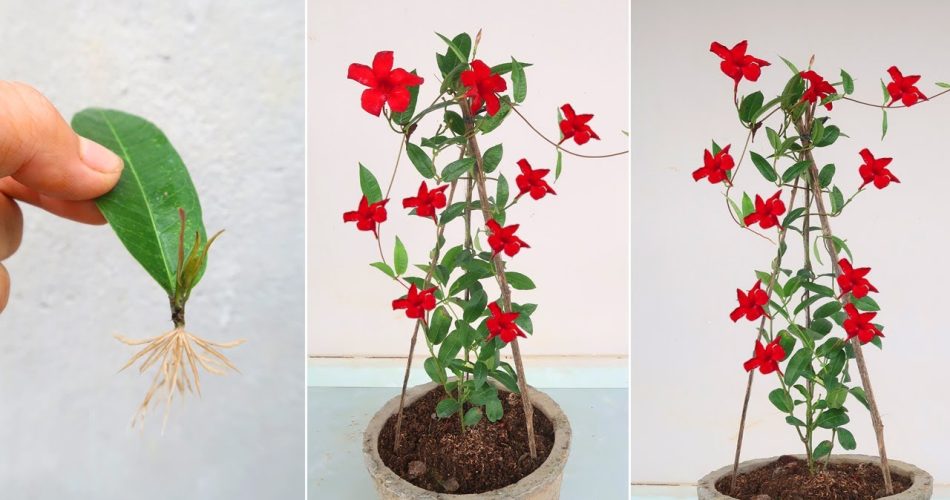
Growing flowering plants, especially those with bell-shaped flowers, from leaves can be a bit challenging, as many plants are more commonly propagated from seeds, cuttings, or division. However, some plants can be propagated from leaves, and you can experiment with this method. Here’s a general guide that you can try:
Materials Needed:
- Healthy Parent Plant:
- Choose a flowering plant with red bell-shaped flowers that can potentially be propagated from leaves.
- Sharp Knife or Scissors:
- Use a clean and sharp tool for cutting the leaves.
- Rooting Hormone (Optional):
- Rooting hormone can aid in the development of roots.
- Potting Mix:
- Prepare a well-draining potting mix suitable for the specific plant you are trying to propagate.
- Containers or Pots:
- Choose small containers or pots with drainage holes for planting the leaf cuttings.
- Watering Can:
- For watering the soil and leaf cuttings.
Steps:
- Select Healthy Leaves:
- Choose healthy leaves from the flowering plant. Look for leaves that are free from pests, diseases, or any damage.
- Cut Leaf Sections:
- Use a sharp knife or scissors to cut sections of the leaves. Aim for sections that are around 4-6 inches in length. Make the cuts just below a node (where the leaf attaches to the stem).
- Prepare the Cuttings:
- If the leaves are large, you can cut them into smaller sections, each containing a portion of the main vein. Ensure that each section has a few inches of the main vein attached.
- Optional: Apply Rooting Hormone:
- If you have rooting hormone, dip the cut end of each leaf section in it following the manufacturer’s instructions. This step can enhance root development.
- Plant the Cuttings:
- Plant the leaf sections in small containers filled with the prepared potting mix. Insert them about 1 to 2 inches into the soil. Plant multiple leaf sections in the same container if desired.
- Watering:
- Water the soil thoroughly after planting. Keep the soil consistently moist but not waterlogged.
- Create a Humid Environment (Optional):
- Cover the containers with plastic wrap or place them in plastic bags to create a humid environment. This can promote successful rooting.
- Place in Indirect Light:
- Position the containers in a location with bright, indirect light. Avoid direct sunlight initially.
- Monitor and Wait:
- Keep an eye on the leaf cuttings for signs of new growth and root development. It may take several weeks for roots to form.
- Transplanting:
- Once the leaf cuttings have developed a good root system and new leaves, they can be transplanted into larger containers or directly into the garden.
Additional Tips:
- Species-Specific Considerations:
- Some plants are more likely to succeed with leaf propagation than others. It’s essential to know the specific requirements of the plant you are trying to propagate.
- Patience is Key:
- Growing plants from leaf cuttings requires patience. Be patient and provide consistent care.
- Research the Plant Species:
- Understanding the specific needs of the plant species you are trying to propagate is crucial. Some plants may have unique requirements for successful leaf propagation.
Remember, success rates can vary, and not all plants respond well to leaf propagation. This method is more commonly used for certain species of plants, so it’s always a good idea to do some research on the specific plant you are trying to propagate. Additionally, even if successful, the resulting plant may take some time to mature and produce flowers. Happy gardening!
Show Comments