The pale drop on a dark shirt looks like a stain, so the first instinct is to wash it harder. Nothing comes out. That is because chlorine bleach often removes dye instead of leaving colored dirt behind.
You cannot wash missing color back into the fibers. You can stop fresh bleach from causing more damage, then disguise, redye, patch, or redesign the affected area.
Act Fast While the Fabric Is Still Wet
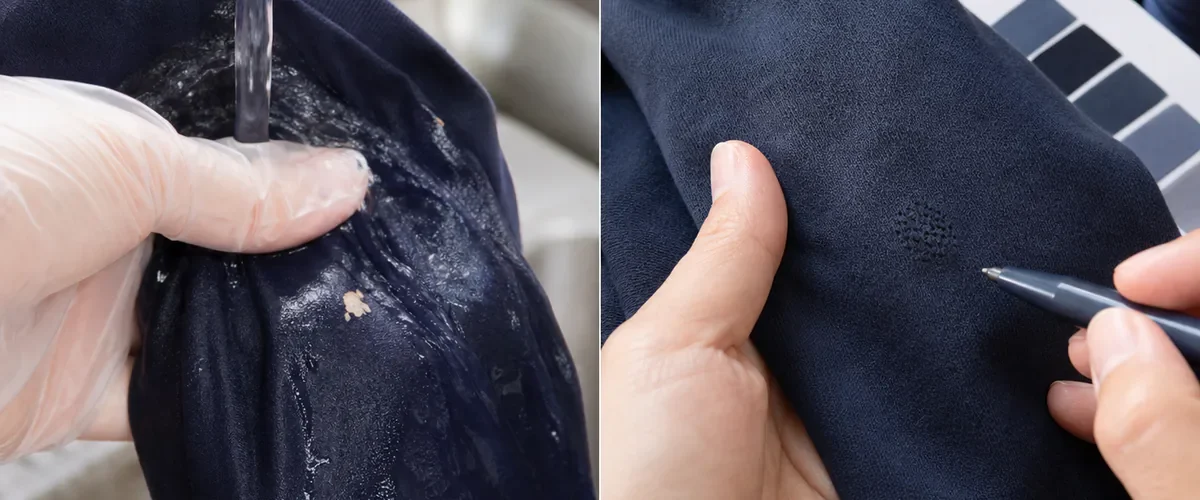
Remove the garment without spreading liquid onto skin or other clothes. Wearing gloves, rinse the area thoroughly with cool running water as the bleach label directs. Keep runoff away from acids, ammonia, and other cleaners.
Wash the item separately according to its care label. Do not add vinegar to “neutralize” bleach; acid and chlorine residue can release dangerous gas. Do not apply ammonia, alcohol, peroxide, or a homemade chemical paste.
If bleach reached eyes or skin, follow the product first-aid directions and contact local poison or medical help when advised.
Confirm That Color Is Missing
After washing and drying, inspect the mark in daylight. Bleach damage often looks lighter than the surrounding fabric, sometimes orange, pink, yellow, or white. The edges may be sharp where a drop landed.
Check the fibers. A rough, thin, or weak spot means the chemical affected more than color. Pulling or rubbing may create a hole.
A normal food or grease stain usually adds color and may respond to stain treatment. A bleach mark is a local dye loss, so ordinary remover cannot lift it.
Try a Fabric Marker for a Tiny Dot
A color-matched fabric marker can hide a small spot on a solid dark garment. Test inside a hem first. Compare the color only after it dries, because wet ink looks darker.
Place cardboard behind the layer, dab lightly from the center outward, and build color slowly. Do not soak the fabric or use a random permanent marker on a valuable item.
The repair may fade during washing and may not match under every light. It works best when the dot is smaller than a coin and away from a worn fold.
Redye a Larger Garment Carefully
Whole-garment dye can make a large mark less obvious, but results depend on fiber. Cotton, linen, wool, nylon, polyester, and blended fabrics require different products and temperatures.
Read the care label and dye instructions. Polyester may need high heat that a stretch blend cannot tolerate. Existing stitching, logos, and synthetic panels may take color differently.
A dye bath usually darkens the whole garment; it does not guarantee a perfectly even repair. A professional cleaner or dye specialist is safer for expensive clothing.
Turn the Damage Into a Design
An embroidered flower, visible mending patch, pocket, fabric paint design, or carefully planned tie-dye effect can cover damage without pretending it vanished.
Stabilize weak fibers from the back before stitching. Use rounded edges on patches so corners do not peel. Washable fabric paint should be compatible with the fiber and allowed to cure exactly as directed.
Do not add more bleach for a reverse-dye design unless the fabric label, product label, ventilation, and protective steps all support it. More bleach can weaken the cloth and create fumes.
Repurpose Fabric That Cannot Be Repaired
A shirt with damage near the hem may become a cleaning cloth, tote panel, quilt square, or garden-work layer. Cut away weakened fibers and keep bleach-damaged rags away from tasks involving other chemicals.
Do not repurpose badly weakened fabric for oven mitts, child products, pet toys, or anything that must hold weight or resist heat.
Test the Strength Around the Mark
After the item is rinsed, washed, and dry, hold the area against a light. Thin fibers may appear more transparent. Gently flex the fabric without pulling hard. Cracking, dust, or a widening gap means the cloth needs reinforcement.
Place a soft patch behind a weak area before decorating the front. A repair that restores color but ignores damaged fibers may split during the next wash.
Prevent the Next Pale Spot
Wear old light-colored clothing and gloves when using bleach. Move colored laundry out of the room, close the bottle after measuring, and wipe exterior drips with the method on the label.
Use only the labeled amount and dispenser. Never pour bleach directly onto fabric unless a product specifically says to. Check that the washer dispenser flushes correctly so residue does not reach the next dark load.
Hair products, acne treatments with benzoyl peroxide, bathroom cleaners, and pool chemicals can also lighten fabric. Wash hands and let treated skin dry before touching colored towels.
The Shirt Is Damaged, Not Finished
The honest answer is surprising: a bleach spot cannot be removed because the missing dye is already gone.
Rinse fresh exposure safely, then choose a repair that matches the size and fabric. A careful marker touch, full redye, patch, or new design can keep a favorite garment useful long after a normal stain remover has nothing left to remove.