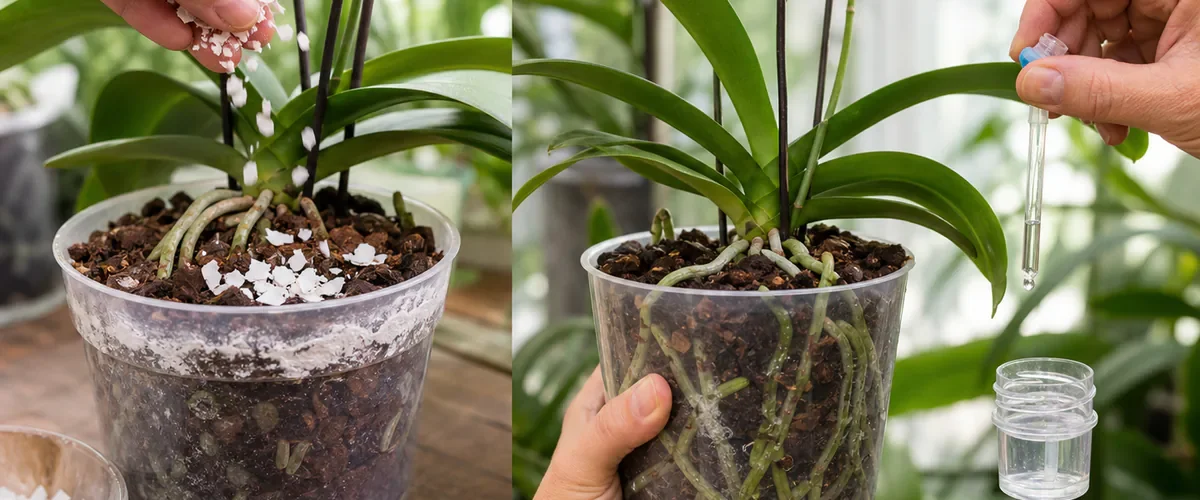
Crush one eggshell into white powder, sprinkle it over an orchid, and wait for a year of flowers. That is the promise. Since eggshells are mostly calcium carbonate, the trick sounds both natural and scientific.
The missing detail is speed. Calcium carbonate dissolves slowly, especially in an airy bark pot, and it can raise pH. Eggshell powder is not a balanced fertilizer and cannot tell an orchid when to bloom. Used without testing, it may change the root zone while providing little immediate nutrition.
What Eggshells Actually Add
Clean eggshell is largely calcium carbonate with small amounts of other material. Calcium supports cell structure, but plants need it in a dissolved form their roots can take up.
Grinding creates more surface area, yet the release still depends on acidity, water, and time. Large shell pieces can remain visible for months or years.
An orchid also needs nitrogen, phosphorus, potassium, magnesium, and micronutrients. A shell supplies no reliable complete formula, so it should never replace proper orchid fertilizer.
Why pH Matters to Orchid Roots
Many cultivated orchids absorb nutrients best within a mildly acidic root environment. Calcium carbonate neutralizes acid. Repeated shell additions can push pH upward, especially when tap water is already alkaline.
At an unsuitable pH, nutrients may be present but difficult for roots to use. Leaves can show deficiencies even while more fertilizer is added.
Test irrigation water and drainage water if pH or mineral buildup is a concern. Do not correct numbers blindly with kitchen ingredients.
Eggshell Tea Is Not a Measured Solution
Pouring hot water over shells does not make them dissolve completely in an hour. The finished liquid has no known calcium concentration and no balanced nutrient profile.
Raw shell residue can carry food material that smells or supports microbes. Boiling, drying, or washing may improve cleanliness, but it does not turn the liquid into a complete orchid feed.
Never spray homemade eggshell water over flowers and leaf joints. Spots, residue, and trapped crown moisture can create new problems.
Use a Fertilizer Made for the Job
Select a complete orchid fertilizer or a suitable container-plant formula. Follow its instructions for concentration and frequency. If your water is very pure or low in calcium and magnesium, ask a knowledgeable local grower whether a calibrated supplement is appropriate.
Apply fertilizer to healthy roots during active growth. Do not feed heavily to force a sick, dormant, or rootless plant. Flush the pot with plain water at intervals to reduce salts.
White deposits, damaged root tips, or a crusted pot need investigation before another product is added.
Make Light the First Bloom Check
A Phalaenopsis in a dim corner may grow dark leaves but no flower spike. Move it gradually into brighter filtered light, protecting leaves from hot direct sun.
Other orchids have different needs. Paphiopedilums, Cattleyas, Dendrobiums, and Oncidiums do not share one light or flowering formula. Identify the genus and follow its cycle.
Leaves adapting to better light do not need to become pale or burned. Change exposure slowly and watch temperature near the window.
Respect the Plant’s Season
Many orchids flower once a year or after a specific period of growth. Some need a modest difference between day and night temperatures. Others bloom from a mature new pseudobulb.
A plant cannot remain in peak bloom every day without rest and renewed growth. Even long-lasting flowers naturally fade. Care after flowering builds the energy for the next cycle.
Water for Roots, Not a Calendar
Check the pot’s weight, root color, medium, and room conditions. Water thoroughly when needed and let the pot drain. Keep water out of the crown of moth orchids.
Old decomposed bark stays wet and loses air. Repot into fresh species-appropriate medium when the mix breaks down or roots become crowded, usually after flowering or as new roots begin.
Firm roots and active tips matter more than any powder on the surface.
Record the date of each new root, leaf, and spike. A simple growth log reveals the orchid’s natural season and prevents you from crediting one recent kitchen treatment for work the plant began months earlier.
Send Shells to the Compost
Eggshells can join a managed compost pile, where they become one small component among varied materials. Rinse them, crush them if desired, and let the composting process work.
Finished compost can benefit suitable garden soil, though most epiphytic orchids should not be potted in dense compost. The right destination depends on the plant.
The Bloom Trick Is Not Hiding in Breakfast
Eggshell calcium is real, but the leap from calcium to endless orchid flowers is not. Release is slow, dosage is unknown, and pH can move in the wrong direction.
Keep breakfast scraps out of the bark. Match light and temperature to the orchid, protect airy roots, and feed with a measured complete formula. When the next spike appears, it will be the result of a healthy cycle rather than a white powder promise.