A flat mat of red stems appears between the vegetables, and the first instinct is to pull it. The leaves look too fleshy for an ordinary weed. That pause matters, because the plant may be edible purslane, a crisp green used in kitchens around the world.
But “may be” is the important phrase. Garden plants must be identified with certainty before they become food. Purslane has dangerous look-alikes, and a useful edible plant can still be contaminated by sprays, road runoff, or animal waste.
Learn the Signs of True Purslane
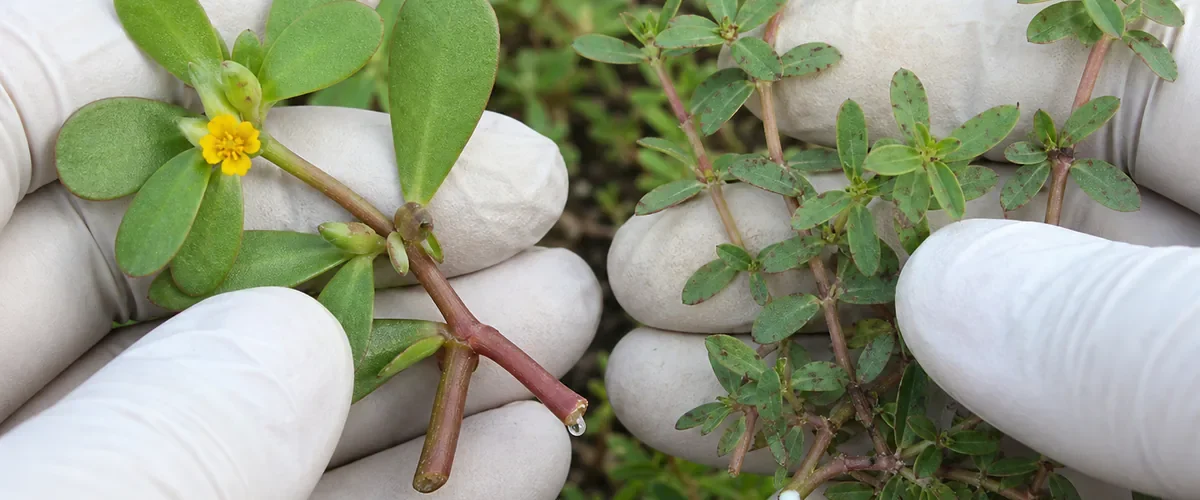
Common purslane, Portulaca oleracea, grows low along the ground. Its stems are smooth, fleshy, and often reddish. The small succulent leaves are smooth-edged and cluster along those spreading stems.
Tiny yellow flowers may open in bright light. Broken purslane stems contain clear watery moisture, not white milky sap.
Photographs alone can mislead because color and leaf size change with conditions. Use a reliable regional plant guide or ask a local expert to confirm the whole plant, including stem, leaves, flowers, and growing habit.
Do Not Confuse It With Spurge
Some low-growing spurges form mats in the same places. Their leaves are usually thinner and arranged differently, and broken stems release a white milky latex that can irritate skin and eyes.
Never taste a plant as an identification test. Wear gloves when examining an unknown weed and wash after handling it. If milky sap touches eyes, rinse and seek appropriate medical advice.
When any feature is uncertain, do not eat the plant. Removing one questionable patch is safer than gambling on a salad.
Check Where the Plant Grew
Correct identification does not remove contamination. Avoid plants from roadsides, parking lots, treated lawns, industrial ground, pet areas, and places sprayed with herbicide or pesticide.
Do not harvest from soil that may contain heavy metals or old building debris. Floodwater and untreated manure can also carry harmful organisms.
The safest choice is purslane grown from edible seed in clean soil, using water and garden products intended for food crops.
Why Gardeners Choose to Keep It
Purslane tolerates heat and dry periods thanks to its succulent tissues. Its living mat can shade bare soil, and its flowers can serve small pollinators.
The plant is edible and contributes fiber, vitamins, minerals, and alpha-linolenic acid, a plant omega-3 fat. Those nutrients make it an interesting vegetable, not a cure for depression, diabetes, inflammation, or heart disease.
Health conditions require qualified care. Food can support a varied diet, but strong treatment claims do not belong on a handful of leaves.
Know Who Should Be Cautious
Purslane contains oxalates. People with certain kidney stone risks, kidney disease, or medically restricted diets should ask a clinician or registered dietitian whether it suits them.
Anyone who is pregnant, breastfeeding, taking medicines, or managing a health condition should not use concentrated purslane extracts as a remedy without professional guidance.
Start any unfamiliar edible green with a small food portion. Stop if an allergic or digestive reaction occurs.
Harvest Without Spreading It Everywhere
Snip clean young tips before large numbers of seeds mature. Purslane can produce many seeds and may become difficult to control in a small garden.
Carry cut stems in a container rather than dropping fragments. Pieces can sometimes root where nodes touch moist soil. Remove unwanted plants before they set seed and dispose of them according to local weed guidance.
Keeping one managed patch gives you the benefits without surrendering every bed.
Wash and Prepare It Like a Vegetable
Rinse harvested purslane under clean running water, separating branches so soil and insects wash away. Remove damaged, slimy, or discolored sections.
Young leaves and tender stems have a juicy, slightly tart taste. They can be used in salads, sandwiches, cooked dishes, or pickles when a trusted recipe calls for them.
Refrigerate promptly in a clean container and use while fresh. Washing cannot make a plant from contaminated ground safe.
Keep one confirmed sample or clear photograph while preparing the rest, so every stem on the cutting board can be checked again.
Let It Teach You About the Bed
Purslane often appears where soil is disturbed, warm, and relatively open. Its presence is a clue about conditions, but one plant cannot diagnose soil compaction, calcium deficiency, or every other problem claimed online.
Use a soil test and direct observation before amending the bed. Adding lime or nutrients based only on a weed can create a new imbalance.
Keep the Treasure, Lose the Miracle Claims
True purslane can be a useful edible crop, a tough groundcover in managed spaces, and an unexpected addition to summer meals. Those are good reasons to look twice before pulling it.
Confirm the identity, know the site’s history, control the seeds, and treat it as food rather than medicine. The treasure is not that one weed cures everything. It is that a plant many people overlook can earn a careful place in the garden.