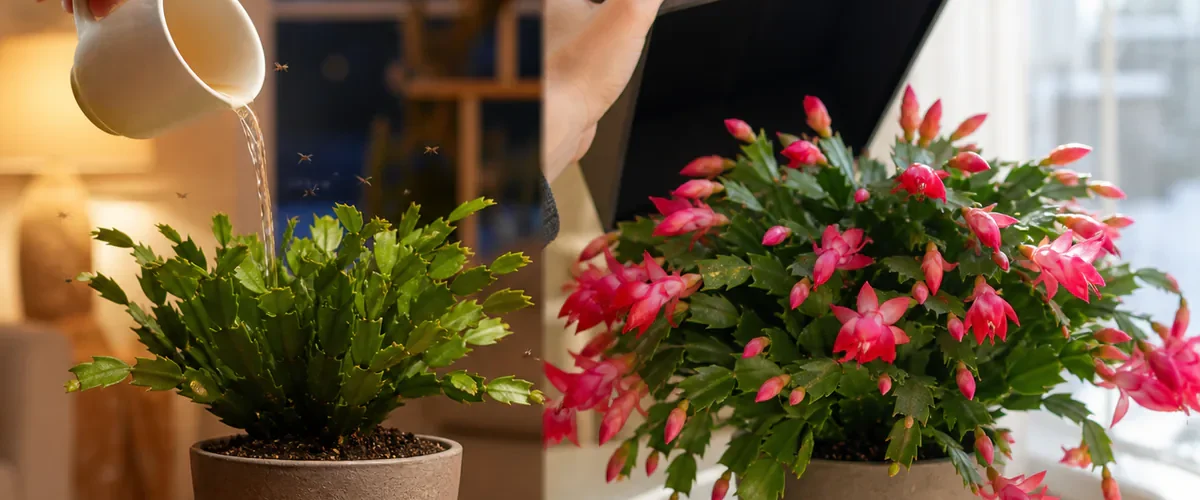
All summer, the Christmas cactus grew glossy green segments but no buds. Then six weeks after the evenings became longer and cooler, tiny points appeared at the tips. The change felt sudden, yet the plant had been reading the season every night.
A holiday cactus does not need sugar water or a mystery fertilizer to flower. It needs the right species care and a dependable bud-setting signal. For many Thanksgiving and Christmas cacti, about six weeks of long, uninterrupted nights and cooler temperatures can unlock the display.
Make Sure It Is a Holiday Cactus
Holiday cacti are forest plants in the genus Schlumbergera, not desert cacti. Their flat, joined stems grow in shaded, humid habitats, so their care is different from a sun-loving barrel cactus.
Thanksgiving cactus often has pointed teeth along each segment. Christmas cactus has smoother, rounded edges, while Easter cactus belongs to a related group and follows a different flowering timetable. Identifying the plant helps you choose the right season and rest period.
Give It Six Weeks of Honest Nights
When nights stay around 60 to 65 degrees Fahrenheit, many holiday cacti need at least 12 hours of complete darkness each night for roughly six weeks. Even a lamp switched on briefly can interrupt the signal.
Place the plant in a room that naturally stays dark, or cover it with a breathable box at the same time each evening. Uncover it in the morning and give it bright, indirect light. Do not let a cover press on the stems or trap heat.
Cooler nights around 55 degrees can also encourage buds, sometimes with less dependence on day length. Protect the plant from frost, hot radiators, cold glass, and sudden drafts. Temperatures above about 65 at night can delay blooming.
Use Daylight to Build the Energy First
Long nights start the signal, but the plant still needs light during the day. Set it near a bright window where direct midday sun is filtered. Pale or reddish segments can point to excess light, while weak new growth in a dim room may leave too little stored energy for a generous display.
During summer, a protected outdoor spot in part shade can support growth. Move the plant gradually so the leaves do not burn, watch for pests, and bring it indoors before frost threatens. Check the pot carefully before it returns to the house.
Water for a Forest Cactus, Not a Desert
Water thoroughly when the upper part of the mix begins to dry, then let excess water leave the pot. Do not allow the roots to sit in a filled saucer. The mix should be airy and well drained, but the plant should not remain bone dry for long periods.
During bud formation, aim for steady moisture. A severe dry spell followed by a flood can cause stress and bud drop. Check with a finger and lift the pot to learn its watered and dry weights rather than watering on a fixed weekday.
The Sugar-Water Mistake
Plants make their own sugars through photosynthesis. Adding table sugar to the pot does not replace suitable light. It can encourage microbes, attract pests, leave sticky residue, and upset the root zone.
Use a complete houseplant fertilizer only during active growth, normally from spring through late summer, and follow its label. Stop or reduce feeding as the plant enters its autumn bud-setting period. Too much fertilizer can burn roots and push leafy growth at the wrong time.
What to Do When Buds Appear
Once buds form, return the plant to its display spot with bright indirect light and stable temperatures. Move it gently and avoid turning it again and again. A sudden change in light direction, temperature, or moisture can make buds fall.
Keep it away from heating vents and cold doors. Water when needed, but never leave the pot soaking. The flowers will last longer in a comfortably cool room than beside a hot radiator.
Why the Six-Week Signal Sometimes Fails
- A room light breaks the dark period each evening
- Night temperatures stay too warm
- The plant receives harsh sun and becomes stressed
- Roots remain waterlogged in dense potting soil
- Heavy fertilizer continues during bud setting
A recently repotted or unhealthy plant may need a season to rebuild. Check for mites, mealybugs, root damage, and poor drainage. Do not force a struggling plant with extra fertilizer.
Pot size matters too. Holiday cacti often bloom well when slightly snug, while an oversized pot holds wet mix around a small root system. Repot only when needed, usually after flowering, and choose a container with an open drainage hole.
Care After Flowering
Let the plant rest slightly drier after the flowers fade. When fresh growth begins, resume normal watering and light feeding. Prune by twisting off a few stem sections after bloom if you want a fuller shape; those healthy pieces can also be rooted.
Your Christmas cactus is not waiting for a magical spoonful. It is waiting for the season to feel right. Give it six weeks of uninterrupted long nights, cool air, steady moisture, and bright daytime light. When the buds finally appear, the change seems sudden because the patient work happened in the dark.