The orchid had healthy leaves but no new spike. A jar of onion-peel and rice water promised flowers all year, so one cup seemed worth trying. Yet the better clue was beside the pot: the plant was sitting in a dim corner with roots that stayed wet for days.
A monthly cup can support an orchid when it contains a properly diluted, labeled fertilizer and the plant is actively growing. It cannot replace light, air around the roots, or correct watering. Skip the kitchen mixture, read the roots, and make each cup match the orchid’s real needs.
Why Onion Peels and Rice Water Are Uncertain
Onion skins and rice rinse water contain variable materials, but there is no reliable label telling you the nutrient strength, balance, salt level, or safe dose. Fermented leftovers can smell, grow microbes, attract flies, and break down in the pot.
Orchid bark is airy by design. Pouring cloudy organic liquid through it can leave fine residue and keep the center wet. Spraying food mixtures on leaves may also encourage spotting, especially if liquid sits in the crown overnight.
Do not use kitchen scraps as a cure for pests or fungus. Identify the problem and choose a treatment labeled for orchids and the confirmed issue.
Build the Monthly Cup Correctly
Choose a water-soluble houseplant or orchid fertilizer. Confirm that the label allows use on your orchid and follow its mixing rate. Many home growers use a reduced rate, but the product directions and plant response should guide the amount.
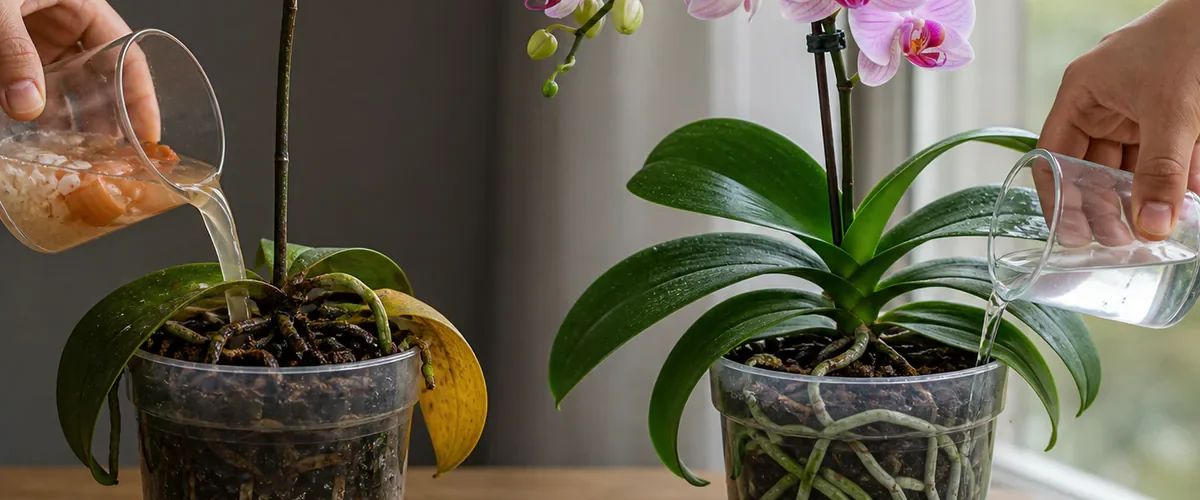
Mix only what you need with suitable water in a clean container. Apply it to already moist roots during active growth, allowing the solution to drain completely. One measured cup may suit a small pot, while a larger basket needs more liquid for even wetting. The goal is not the cup itself; it is a light, even feed with no standing solution.
Never let the pot sit in fertilizer water. Empty the decorative cover or saucer. Keep solution out of the crown, where trapped moisture can lead to rot.
Check the Roots Before Feeding
Healthy Phalaenopsis roots are usually firm, turning green when wet and silvery as they dry. Brown, hollow, or mushy roots cannot use more fertilizer. They need a drainage and root-health check.
If bark has broken into dark, dense crumbs or stays wet for a long time, repot after flowering or when new roots begin, using an airy orchid mix. Remove only dead roots with clean tools. Do not bury the crown.
Light Is the Bloom Trigger You Can See
Many moth orchids grow well in bright, indirect light near an east or west window. Very dark green leaves and no flowers may signal too little light, while yellow patches and hot leaves can mean too much direct sun.
Increase light gradually. A sheer curtain can soften harsh afternoon sun. Keep foliage away from hot glass and cold drafts. Some Phalaenopsis need a gentle drop in night temperature to begin a flower spike, but sudden chills are not helpful.
Read the New Growth Before Expecting Flowers
A new leaf should become firm and at least close to the size of the older leaves. Fresh root tips are green or reddish and look smooth, while a flower spike often has a flatter, mitten-shaped tip. Strong roots and a mature new leaf show that the plant has gathered energy. Fertilizer cannot force an immature orchid to skip that work.
When a spike appears, support it gently as it lengthens. Attach clips loosely and turn the pot as little as possible once buds form. A sudden move, cold draft, or dry spell can make unopened buds drop.
Water the Pot, Not the Calendar
Feel the mix, watch the roots, and lift the pot. Water when the species and potting medium are ready, then drain thoroughly. A weekly schedule can be too often in cool weather and too slow in a warm, bright room.
Flush the pot with plain water periodically to carry away fertilizer salts. White crust on bark, pot rims, or roots is a warning to stop feeding and rinse the medium. Too much fertilizer burns root tips and can delay the flowers you hoped to encourage.
Use room-temperature water and water early enough for leaves to dry before night. Blot any liquid that settles in the crown with clean paper. Good air movement helps surfaces dry, but do not place the orchid in a hard heating or cooling draft.
Common Monthly-Feeding Mistakes
- Feeding a plant with rotten or dry roots
- Pouring fertilizer onto completely dry bark
- Using onion or rice water with unknown strength
- Letting liquid collect inside the crown or saucer
- Expecting fertilizer to overcome poor light
Know What Blooming Really Means
Most common home orchids do not flower every month of the year. A healthy Phalaenopsis may bloom about once a year, and its flowers can last for weeks or months. Growth between displays is not failure; leaves and roots are storing the strength for the next spike.
Use the monthly cup only while the orchid is growing and only at the label rate. Pause when the plant is stressed, newly repotted, or resting. With brighter indirect light, airy roots, careful watering, and gentle nutrition, that simple cup can help wake a future display without turning the pot into a kitchen experiment.