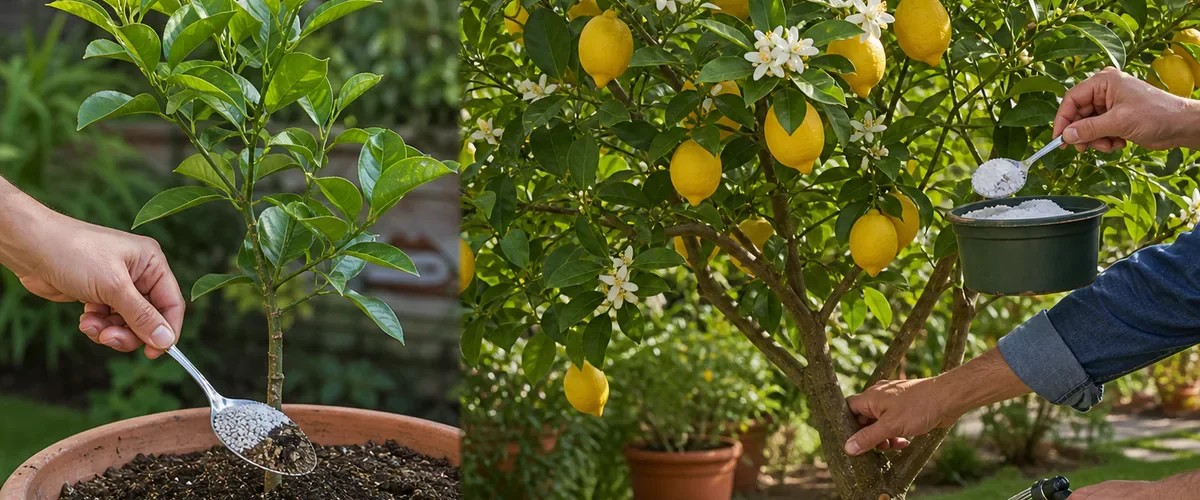
The lemon tree had glossy leaves and not one fruit. A spoonful of ash, manure, and urea promised to make it overflow. Instead, the hidden question came first: was this young tree even old enough, sunny enough, and healthy enough to bloom?
No single spoon can guarantee lemons all year. Fruit depends on variety, climate, tree age, light, water, flowering, and balanced nutrition. A measured citrus fertilizer can help when the tree needs it, but concentrated kitchen-style mixtures can burn roots or push leaves at the expense of flowers.
Check Whether the Tree Is Ready to Fruit
A grafted lemon tree may bear while still fairly young. A seed-grown tree can take many years and may never match the parent fruit. Look near the lower trunk for a graft union and keep shoots that grow beneath it removed, because those belong to the rootstock.
Season matters too. Some lemons flower and fruit more than once in warm climates, while cold winters limit the cycle. A promise of fruit every month does not fit every variety or region.
Count Blossoms Before Blaming Fertilizer
If the tree never blooms, focus on age, sun, pruning, cold exposure, and excess nitrogen. If it blooms but fruit never starts, watch pollinator activity and indoor conditions. If tiny fruit forms and falls, review moisture swings, heat, pests, and crop load.
This three-stage check prevents one spoon from becoming the answer to every problem. Photograph the tree at bloom and again two weeks later. The pictures reveal whether the failure happens before flowers, during pollination, or after fruit set.
Give the Canopy Enough Sun
Lemon trees usually need at least six to eight hours of direct sun for strong flowering. A tree under a roof or deep inside a room may stay green without building enough energy for fruit.
Move a container gradually toward brighter light so leaves do not scorch. Outdoors, reduce shade from nearby plants when practical. Keep the trunk protected from sudden harsh exposure if the canopy has been heavily thinned.
Water Deeply, Then Let Air Return
Water the full root zone and allow excess water to drain. Container trees need open drainage holes and a mix that does not stay soggy. Water again based on soil moisture, heat, wind, and pot size rather than a rigid weekday.
Dry roots can drop flowers and tiny fruit. Constantly wet roots lose oxygen and may rot. A finger check, moisture probe, and the weight of a pot give better clues than the surface color alone.
Replace the Miracle Spoon With a Measurement
Choose a citrus fertilizer labeled for the tree and your growing setting. Read the three nutrient numbers, measure the tree or container as directed, and divide the yearly amount across the recommended local seasons.
Recommendations change with climate and soil. A local extension service or soil test can reveal whether nitrogen or a micronutrient is actually low. Apply fertilizer over the active root area, keep it away from the trunk, and water it in as the label directs.
Urea is highly concentrated nitrogen. Guessing several grams per hole can burn container roots, while excess nitrogen creates lush green shoots with fewer flowers. Wood ash raises soil pH and adds salts; it can worsen iron problems in alkaline ground. Manure must be properly composted and used at a suitable rate.
Do not mix all three because each sounds useful. Nutrients are helpful only in the right balance.
Protect Flowers and Tiny Lemons
Most common lemons are self-fertile, but bees and other insects improve pollination. Avoid spraying open flowers. An indoor flowering tree may benefit from a gentle shake or a soft brush moved between flowers.
Heat waves, frost, drought, and sudden watering changes can make small fruit drop. Some natural thinning is normal because a tree sets more fruit than it can mature. Keep care steady instead of adding another fertilizer dose.
Prune for Health, Not a Shock
Remove dead, crossing, damaged, and rootstock shoots with clean tools. Avoid severe pruning just before bloom because you may cut away flowering wood and expose the trunk. A container tree also needs enough leaves to feed its developing crop.
Common Reasons a Lemon Tree Stays Empty
- It is a young seedling rather than a mature grafted tree
- It receives too little direct sun
- Roots swing between drought and waterlogging
- Too much nitrogen drives leaf growth
- Cold, heat, or pests damage flowers
Use the New Growth as Your Report
Healthy shoots, firm leaves, active roots, and seasonal flowers tell you more than a viral dose. Record feeding dates and amounts. If leaf veins stay green while tissue yellows, or growth remains weak, seek a local diagnosis before adding minerals.
Inspect leaves for scale, mites, aphids, and citrus leafminer damage. Treat only after identification, and follow local rules because permitted citrus products differ by location. Keep mulch several inches away from the trunk and protect the graft union from buried soil.
The one-spoon trick is tempting because fruit feels like an instant reward. The real trigger is a mature tree with sun, balanced nutrition, healthy roots, and steady moisture. Measure those conditions first, and the lemons that follow will be a harvest the tree can actually support.