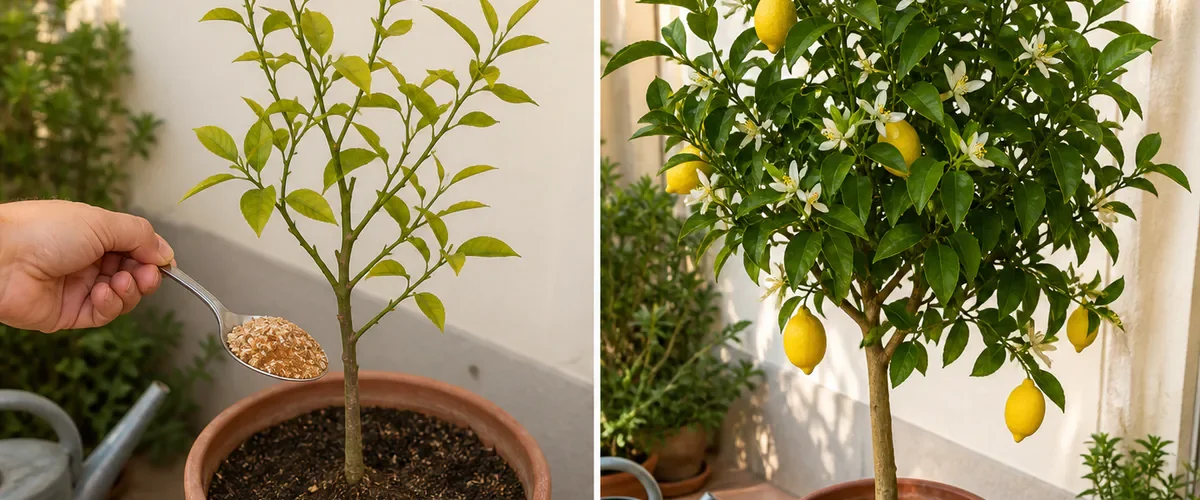
The homemade mixture sounds irresistible: oats, cinnamon, brown sugar, and water rested for two days, then diluted around a lemon tree. One spoonful is said to unlock endless flowers. It is cheap, fragrant, and easy. It is also impossible to measure like real fertilizer.
A healthy lemon tree can produce a breathtaking wave of blossoms, but no kitchen spoon controls that moment. Getting a lemon tree to bloom depends on maturity, light, roots, water, temperature, and correctly measured nutrition.
Why the Sweet Oat Mixture Is Unpredictable
Oats contain nutrients, but a spoonful does not show how much nitrogen, phosphorus, or potassium reaches the roots. Cinnamon is not a complete plant food. Sugar mainly feeds microorganisms and can encourage odors, mold, ants, or fungus gnats in a pot.
Resting the mixture warmly for two days begins an uncontrolled fermentation. Its microbes, acidity, and nutrient availability are unknown. Applying it every two weeks could keep container soil wet and add organic residue without correcting the nutrient the tree actually lacks.
The First Flower Secret Is the Tree’s Age
A grafted lemon from a nursery can flower much sooner than a seedling. A tree grown from a grocery-store seed may stay juvenile for years and may never copy the parent fruit. No fertilizer can force a young seedling past that biological stage overnight.
Keep the plant label. It tells you the variety, rootstock, expected size, and whether the tree is suited to a container or local climate.
Give the Leaves Enough Light to Build Flowers
Citrus needs very bright light. Indoors, place the tree at the sunniest suitable window and rotate it for balanced growth. Supplemental grow lights may be needed through dark seasons.
Move an indoor tree outside gradually after frost risk passes. Start in shade, then increase sun over a week or more. A sudden jump into full summer sun can bleach leaves and set the plant back.
Make the Root Zone Drain and Breathe
Use a container with large drainage holes and an airy citrus or acid-loving potting mix. Never fill the bottom with a solid layer that blocks drainage. Repot when roots circle densely or the mix has collapsed, choosing a pot only one size larger.
Water thoroughly when the upper mix begins to dry, then empty the saucer. Repeated drought can cause flowers and tiny fruit to drop; constant wetness damages roots and creates similar wilt.
Replace One Mystery Spoon With a Measured Plan
Use a fertilizer labeled for citrus or acid-loving plants. Follow its rate for the tree’s size, container, and season. Extension guidance often divides a yearly nitrogen amount into several timed applications rather than delivering one heavy dose.
Container citrus may be fed at reduced strength during active growth because nutrients wash out with drainage. Stop or reduce feeding when growth slows, based on the product and local guidance. More nitrogen can produce many leaves without the flower response you want.
Read the Leaves Before Adding Iron
Yellow leaves do not name one deficiency. Waterlogged roots, high soil pH, low nitrogen, iron problems, cold, and pests can create different patterns. Test garden soil and ask a local extension service for help before adding individual minerals.
Adding iron blindly can waste money and create imbalance. Fixing pH and root health may be what allows existing nutrients to become available.
Expect a Natural Flowering Rhythm
Many lemon trees bloom in waves rather than carrying the same number of flowers every week. Weather, variety, recent fruit load, and stored energy all affect the next flush. A branch that rested after a heavy crop may bloom less while the tree rebuilds.
Take a monthly photo from the same angle and note watering, feeding, temperature, and new growth. This simple record reveals slow progress that daily checking hides. It also helps you connect a setback with a heat wave, cold window, missed watering, or fertilizer change.
Protect the Buds That Finally Appear
- Keep moisture steady during flowering and fruit set.
- Avoid moving the tree repeatedly between hot, cold, dark, and bright places.
- Watch for scale, whiteflies, and spider mites.
- Do not prune heavily just before flowering.
- Keep the tree away from heating vents and freezing glass.
Indoor flowers may need pollination help. Gently touch a soft artist’s brush from flower to flower, or lightly shake the branches when blooms are open. Not every flower becomes a lemon, and a young tree may naturally drop fruit it cannot support.
Use Kitchen Scraps Through Compost
If reducing waste is the goal, compost suitable oat scraps in a managed pile or bin. Finished compost can improve outdoor soil when used appropriately. Do not bury fresh cereal, sugar, or spice around indoor roots.
One spoon promises endless lemon blossoms because mystery is exciting. The real transformation is even better: a mature tree in strong light, growing in airy roots, receiving measured water and nutrition. Build those conditions and the flower buds no longer need a miracle story.