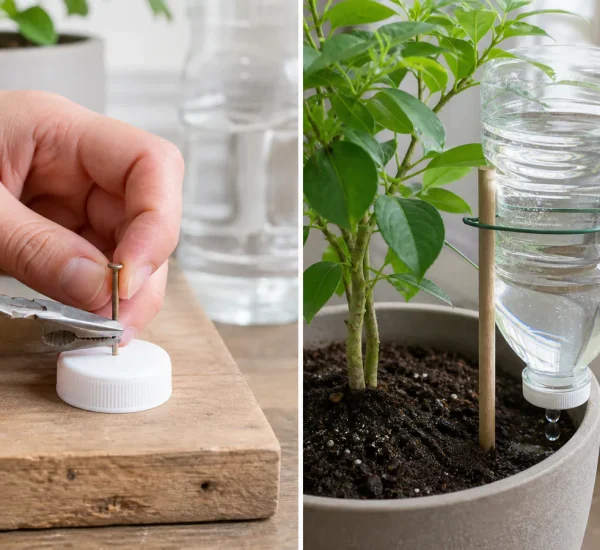
The bottle trap looks convincing: a sweet liquid at the bottom, a cut plastic funnel at the top, and nowhere obvious for an insect to escape. Within hours, a few small flies may collect inside. Then a mosquito lands on your arm beside it.
A homemade bottle trap for flies and mosquitoes can catch certain flies attracted to fermenting food. It is far less dependable for biting mosquitoes. Understanding that difference turns a clever craft into one useful tool instead of a false promise.
Why the Funnel Trap Catches Some Flies
Fruit flies follow the odor of fermenting fruit, vinegar, beer, or sweet liquid. They pass through the narrow funnel toward the smell and may struggle to find the small exit. Houseflies can also enter baited outdoor traps, though the correct bait and placement differ.
Mosquitoes seek carbon dioxide, warmth, body odors, and water suitable for laying eggs. Sugar water alone does not copy a person, and a homemade yeast mixture does not provide reliable bite protection.
Build a Small Indoor Fruit-Fly Trap
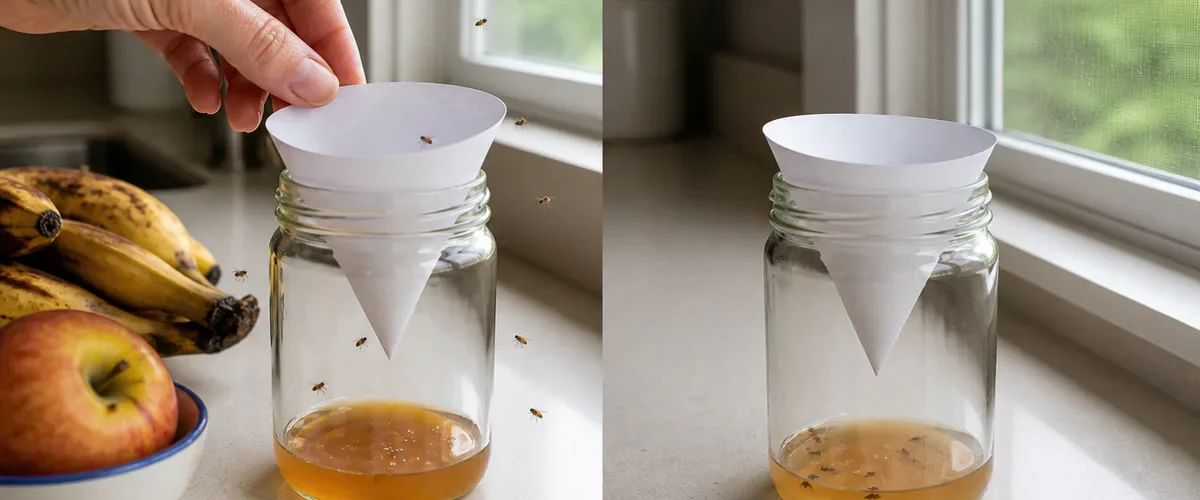
For tiny flies hovering around ripe produce, use a clean jar rather than a large plastic bottle. Add a shallow layer of apple cider vinegar or a small piece of overripe fruit. Make a paper cone with a tiny opening and place it above the bait without letting the tip touch liquid.
Alternatively, cover the jar with paper and make a few small holes. Label the trap, keep it away from children and pets, and place it beside the suspected source but away from food preparation.
Check it daily. Seal and discard the contents, wash the jar, and refresh only if flies remain. A neglected trap becomes another source of odor and breeding material.
The Source Must Leave Before the Flies Do
- Refrigerate ripe fruit or use it promptly.
- Clean juice, wine, and syrup spills under appliances.
- Rinse recycling and empty the kitchen bin.
- Scrub the drain opening and disposal according to appliance directions.
- Check onions, potatoes, and compost for decay.
- Wash cloths and mop heads that smell sour.
A trap may reduce adult fruit flies, but eggs and larvae remain in the wet food film where they developed. Remove that material or the next group will appear.
Do Not Use a Sweet Trap Beside the Bed
A fermenting bottle can attract insects toward the place you hoped to protect. Outdoor fly traps often smell strong and should be positioned according to their label, away from doors, patios, and dining areas. A homemade trap has no tested placement or capture rate.
Do not add insecticide, bleach, fuel, or essential oil to bait. Never seal an actively fermenting mixture in a rigid bottle because gas pressure can build.
For Mosquitoes, Remove Water Instead of Adding It
Inspect the property weekly. Empty and scrub plant saucers, buckets, toys, birdbaths, and other containers. Cover stored water and clear gutters. Mosquito eggs and larvae can develop in very small amounts.
If standing water cannot be emptied and will not be used for drinking, choose a registered larvicide labeled for that situation. Follow every direction and keep untreated bait water from becoming a new nursery.
Protect People With Proven Barriers
Repair window and door screens, use air conditioning where available, and consider a fan for outdoor seating. Wear loose long sleeves and pants when mosquito activity is high.
Apply an EPA-registered repellent according to its label. Effective active ingredients include DEET, picaridin, IR3535, oil of lemon eucalyptus or PMD, and 2-undecanone. Some have age restrictions, so check before applying them to children.
Know Which Small Fly You Are Seeing
Fruit flies are tan and gather near produce. Drain flies look fuzzy and rest near plumbing. Fungus gnats are dark, delicate insects that rise from wet potting mix. Treating all three with the same sweet bait misses their breeding sites.
Place a clear cup over a suspect drain overnight without blocking normal ventilation; finding flies beneath it can help locate activity. Clean plumbing mechanically and repair leaks rather than pouring dangerous chemical combinations down the pipe.
Count Results Instead of Trusting the First Catch
Write down roughly how many flies you see before cleaning, then check the same area for three mornings. A successful cleanup should produce a clear downward trend. One crowded trap can look impressive while fresh adults continue emerging nearby.
If numbers stay flat, move the trap only after searching for another source. Look beneath the refrigerator, inside recycling, around a floor drain, and in damp houseplant soil. Identification and source removal do more work than adding stronger bait.
When to Call for Help
Large houseflies can point to trash, animal waste, or a dead animal. Repeated drain flies may signal a broken pipe or sewer problem. Heavy mosquitoes can require a local control program. A pest professional can identify the insect before treatment begins.
The five-minute bottle trap earns its place when small food-seeking flies enter it. The honest surprise is that mosquitoes play by different rules. Trap the right fly, remove the breeding source, and use proven protection for every bite.